Attila’s Hunnish horde had disintegrated shortly after …
Years: 460 - 471
Attila’s Hunnish horde had disintegrated shortly after his death, its members disappearing, probably through cultural assimilation.
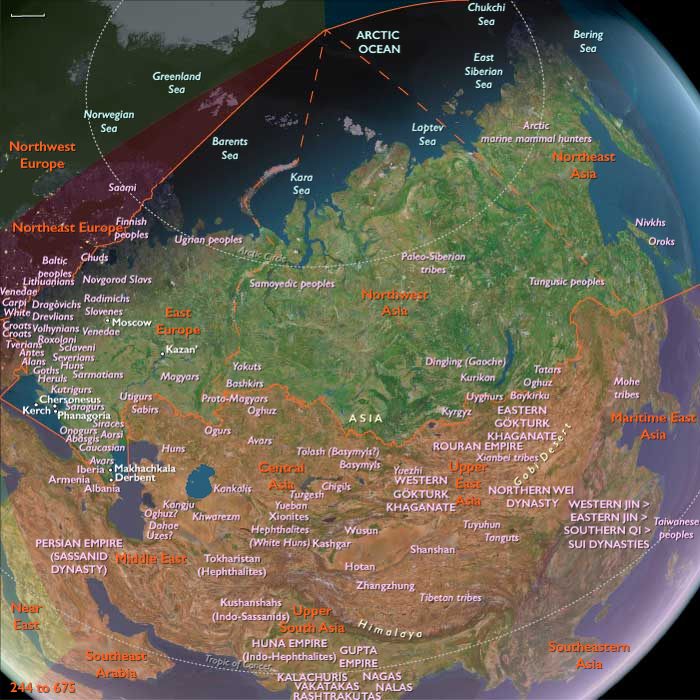
The dissolution of the Hunnish empire sparks a great migration among the Slavic tribes, who move northward into the upper Dnepr region, westward as far as the Elbe, and southward and eastward around and through the Carpathians.
Some groups eventually settle in Bohemia, Bulgaria, and Macedonia; others enter present Romania and the Plain of Hungary.
They will eventually form three main groups, which will become, respectively, East Slavs, or Antae (the future Great Russians, White Russians, and Ukrainians); West Slavs, or Venedi (the future Poles, Czechs, Slovaks and Wends); and South Slavs, or Sklaveni (the future Bosnians, Bulgarians, Croats, Dalmatians, Macedonians, Montenegrins, Serbs, and Slovenes, as well as, arguably, most speakers of modern Greek).
People
Groups
- Huns
- Hunnic Empire
- Roman Empire: Theodosian dynasty (Constantinople)
- Slavs, East
- Slavs, West
- Slavs, South
- Roman Empire, Western (Ravenna)
Topics
Subjects
Regions
Subregions
Related Events
Filter results
Showing 10 events out of 58640 total
Xie He writes his Six Canons of Painting, the earliest work on the theory of art, taken from the preface to his book The Record of the Classification of Old Painters.
The Six Principles are:
• Spirit Resonance, or vitality, and which translates to the nervous energy transmitted from the artist into the work.
Xie He says that without Spirit Resonance, the overall energy of a work of art, there is no need to look further.
• Bone Method, or the way of using the brush.
This refers not only to texture and brush stroke, but to the close link between handwriting and personality.
In Xie’s time, the art of calligraphy is inseparable from painting.
• Correspondence to the Object, or the depicting of form, which includes shape and line.
• Suitability to Type, or the application of color, including layers, value and tone.
• Division and Planning, or placing and arrangement, corresponding to framing, composition, space and depth.
• Transmission by Copying, or the copying of models, not only from life but also the works of antiquity.
The skillfully rendered landscapes and genre paintings of Taoist Gu Kaizhi conform to the artistic precepts set forth by Xie He.
East Central Europe (460–471 CE): Post-Hunnic Realignments, Ostrogothic and Gepid Dominance, and Tribal Adaptations
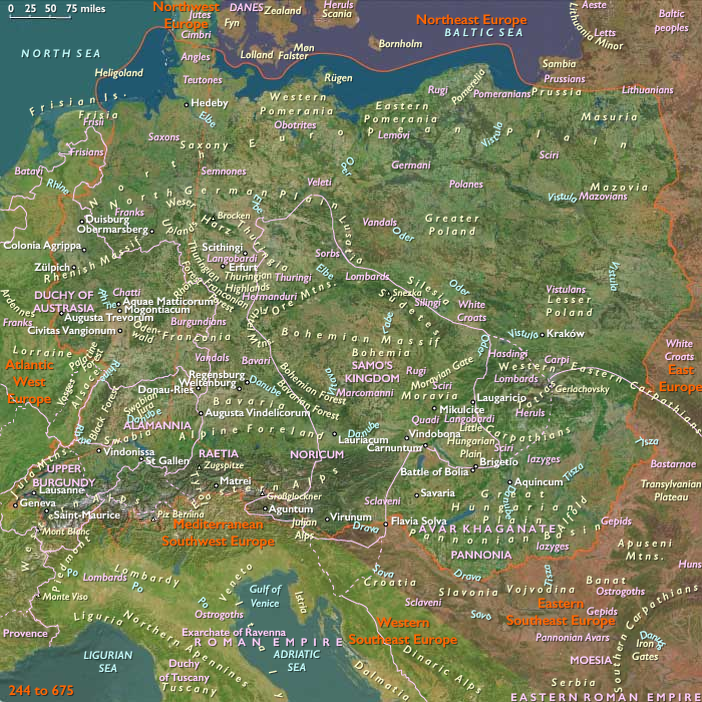
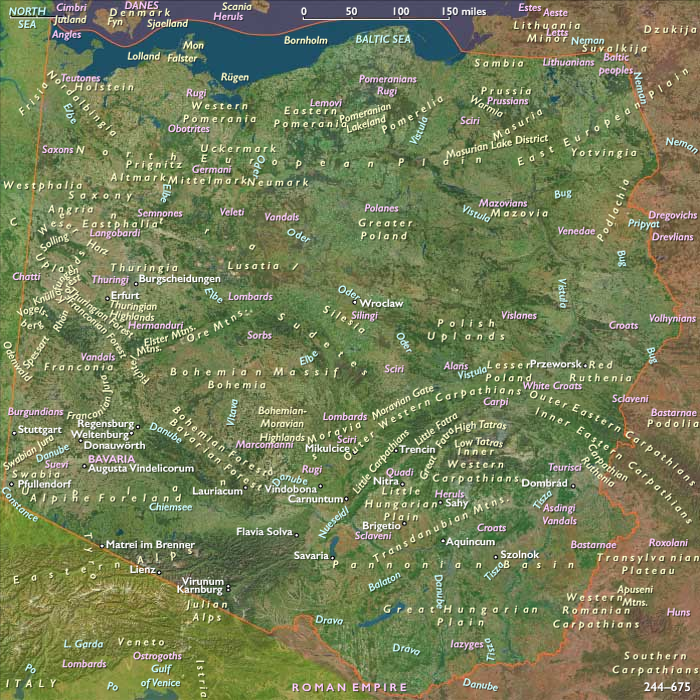
Between 460 and 471 CE, East Central Europe—including Poland, Czechia, Slovakia, Hungary, and those portions of Germany and Austria lying east of 10°E and north of a line stretching from roughly 48.2°N at 10°E southeastward to the Austro-Slovenian border near 46.7°N, 15.4°E—experienced a dynamic period of tribal realignment and regional restructuring following the collapse of the Hunnic Empire. The vacuum of power created after Attila’s death allowed prominent Germanic tribes, especially the Ostrogoths under leaders like Theodemir, and the Gepids under King Ardaric, to assert dominance, profoundly reshaping regional politics. Roman provincial administration in territories such as Pannonia Savia and Pannonia Secunda dissolved entirely, marking a definitive end to coherent Roman control in these areas. Amid these shifting conditions, the Rugii retained diplomatic autonomy along the upper Tisza, while the proto-Slavic communities continued their steady adaptation and cultural resilience.
Political and Military Developments
Ostrogothic and Gepid Ascendancy
-
Following the collapse of the Hunnic Empire, regional power coalesced around two primary Germanic tribal groups: the Ostrogoths (under chieftains including Theodemir and his son, Theodoric the Great) and the Gepids, led by King Ardaric, who established significant control over much of modern Hungary and surrounding territories.
-
These tribes became dominant political forces, reshaping the balance of power across former Roman frontier provinces and initiating new alliances and rivalries.
Final Dissolution of Roman Provincial Administration
-
By this period, Roman administrative structures along the Danube frontier, particularly in the provinces of Pannonia Savia and Pannonia Secunda, had completely collapsed. Former provincial territories came definitively under the control of Germanic tribes, notably the Gepids and Ostrogoths, fundamentally altering the region's governance.
Rugian Diplomatic Stability
-
The Rugii skillfully maintained diplomatic neutrality and autonomy along the upper Tisza, securing their position by carefully managing relations with Ostrogothic, Gepid, and residual Roman factions.
Economic and Technological Developments
Localized Economic Networks
-
Economic life further decentralized, with local communities relying increasingly on agriculture, livestock raising, and localized trade. Ostrogothic and Gepid dominance brought stability to certain regional markets, enabling gradual economic recovery in areas of sustained tribal control.
Diminished Infrastructure Maintenance
-
Roman-era infrastructure continued its steady decline, although existing fortified settlements and roads remained functional, minimally maintained by new tribal authorities to support governance and security needs.
Cultural and Artistic Developments
New Cultural Blending under Ostrogothic and Gepid Influence
-
Material culture, including jewelry, pottery, and metalwork, began reflecting Ostrogothic and Gepid cultural identities. Artistic styles demonstrated a distinctive fusion, combining previous Hunnic influences with renewed Germanic traditions and residual Roman aesthetics.
Proto-Slavic Cultural Stability
-
Proto-Slavic populations sustained traditional social practices and cultural traditions, cautiously incorporating external influences without losing core elements of their communal identities.
Settlement and Urban Development
Partial Stabilization and Revival of Settlements
-
Former Roman settlements such as Carnuntum, Vindobona, and Aquincum persisted as diminished yet functional military and administrative outposts, now under Ostrogothic and Gepid influence, providing limited regional stability.
Continued Importance of Augusta Vindelicorum (Augsburg)
-
Augusta Vindelicorum (modern Augsburg), originally the Roman-founded capital of the Celtic Vindelici in southwestern Bavaria, remained a strategically significant settlement. Its location on key communication and trade routes connecting former Roman provinces like Raetia and Noricum to the broader East Central European region sustained its importance during this transitional era.
Rugian Communities as Regional Anchors
-
Rugian settlements along the upper Tisza continued thriving, becoming dependable centers of local economic and political stability through their careful diplomatic policies.
Social and Religious Developments
Ostrogothic and Gepid Tribal Structures
-
Ostrogothic and Gepid leadership solidified hierarchical structures built around powerful warrior elites. These tribes reasserted traditional Germanic practices and rituals, strengthening internal cohesion and legitimacy.
Rugian Diplomatic Adaptation
-
Rugian leadership maintained stability by skillfully negotiating alliances and neutrality with powerful neighbors, preserving their autonomy and cultural traditions.
Proto-Slavic Social Cohesion
-
Proto-Slavic communities retained cohesive social hierarchies, community structures, and traditional religious practices, enabling cultural resilience amid ongoing geopolitical shifts.
Long-Term Consequences and Historical Significance
The era 460–471 CE marked a critical transitional phase in East Central Europe’s historical trajectory. The collapse of Hunnic authority facilitated the rise of powerful tribes like the Ostrogoths and Gepids, who decisively reshaped regional politics and culture. The complete dissolution of Roman provincial governance in Pannonia Savia and Pannonia Secunda underscored the finality of Rome's retreat from the region. At the same time, urban centers such as Augusta Vindelicorum maintained regional importance through strategic trade and connectivity. The diplomatic adaptability of groups like the Rugii and the resilience of proto-Slavic communities provided essential stability and continuity. These transformations laid important foundations for subsequent political and cultural developments, significantly influencing the region’s transition from late antiquity toward early medieval Europe.
Eastern Southeast Europe (460–471 CE): Stability, Growth, and Strategic Adjustments
Settlement and Migration Patterns
Ongoing Population Adjustments
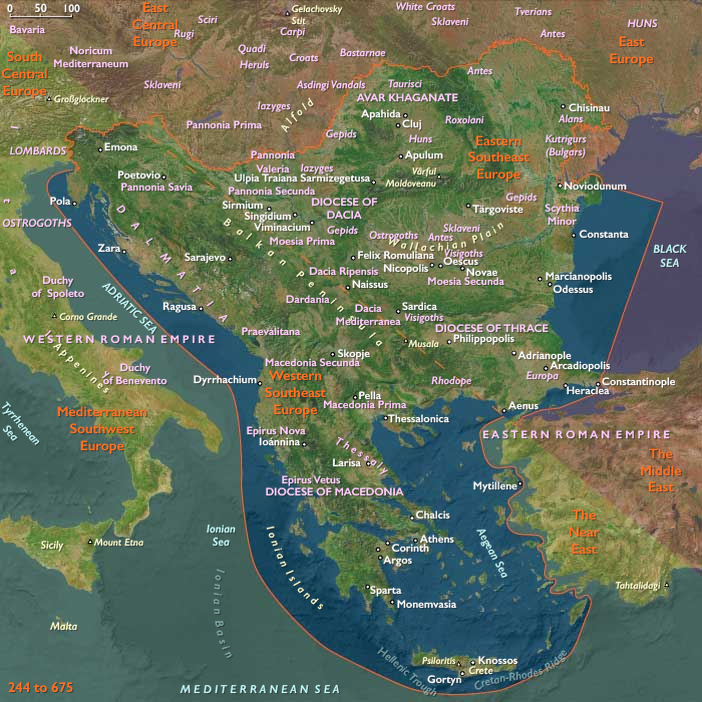
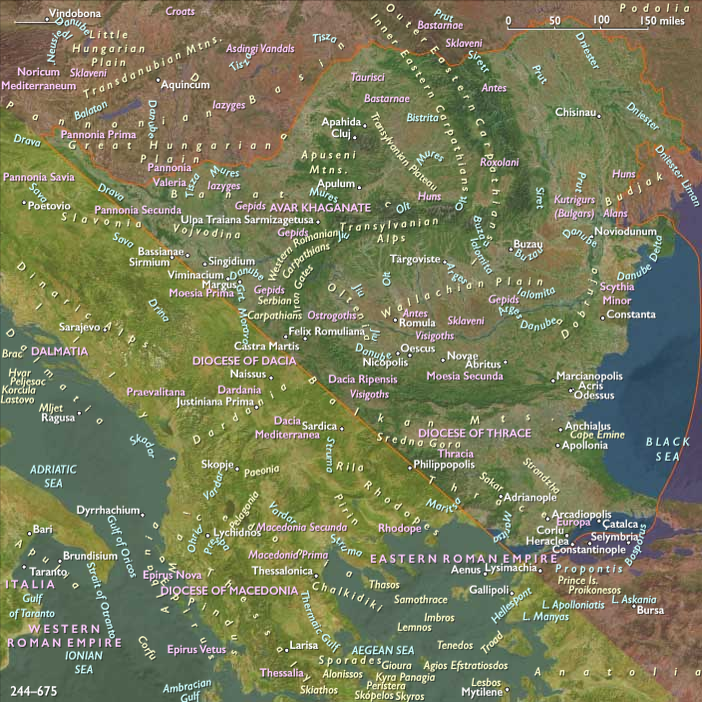
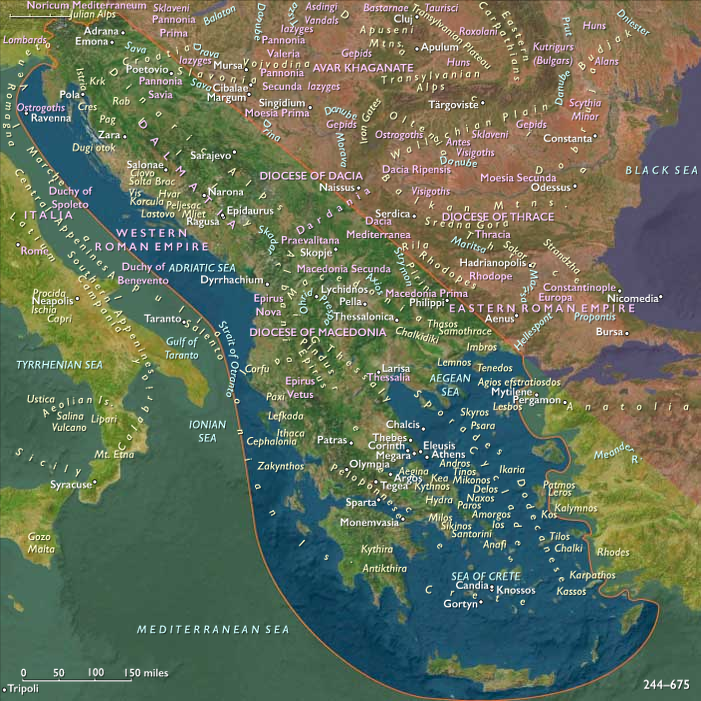
From 460 to 471 CE, Eastern Southeast Europe continued experiencing significant population shifts, partly resulting from prior invasions and migrations. Settlements stabilized further, strategically adapting to new demographic realities and maintaining a balance between urban and rural communities. The dissolution of Attila’s Hunnic Empire after his death triggered extensive migrations among Slavic tribes, who spread widely into regions such as Bohemia, Bulgaria, Macedonia, and the Carpathian Basin. These movements laid foundations for distinct East Slavic, West Slavic, and South Slavic groups, profoundly reshaping the ethnic landscape.
Reinforcement of Urban Centers
Urban centers such as Constantinople and Philippopolis continued to reinforce their defenses and infrastructures. Enhanced fortifications and strategic urban planning provided greater security and resilience against potential future threats, supporting sustained urban prosperity and population stability.
Economic and Technological Developments
Sustained Economic Stability
Economic conditions improved steadily, supported by stable agricultural productivity and the revitalization of trade networks. Constantinople remained central to regional economic activity, anchoring commerce and facilitating prosperity throughout Eastern Southeast Europe. However, a joint expedition by the Eastern and Western Roman Empires against the Vandals in North Africa during this era ended disastrously, severely straining the imperial treasury and influencing economic conditions.
Military and Technological Enhancements
Technological advancements, particularly in military infrastructure and defensive strategies, continued to evolve. Enhanced fortifications, innovative military logistics, and strategic deployment of resources bolstered regional security, economic stability, and defensive preparedness.
Cultural and Artistic Developments
Continued Cultural Flourishing
Cultural and artistic endeavors continued to flourish, blending classical heritage with Christian themes. Artistic production, including public monuments, religious architecture, and mosaics, emphasized regional identity and spiritual values.
Intellectual and Scholarly Activity
Educational and scholarly institutions maintained active roles in preserving and promoting classical and theological knowledge. These institutions supported intellectual vitality, adapting scholarship to contemporary social and political contexts, ensuring ongoing cultural continuity and development.
Social and Religious Developments
Effective Provincial Administration
Administrative systems further refined their operations, enhancing local governance, military preparedness, and civic oversight. These improvements in provincial administration significantly contributed to regional stability, ensuring effective governance despite external pressures and internal economic strains.
Deepening Christian Influence
Christianity solidified its influence, increasingly integrated into regional social, cultural, and political structures. Expansion of ecclesiastical infrastructure, such as churches and monastic communities, reinforced Christianity’s pivotal role in societal cohesion, providing moral and social support during periods of instability.
Long-Term Consequences and Historical Significance
The period from 460 to 471 CE marked enhanced regional stability, strategic population adjustments due to widespread Slavic migrations, and sustained cultural and economic growth despite significant economic challenges. These developments reinforced Eastern Southeast Europe's resilience, significantly shaping its historical trajectory and laying critical foundations for the region’s evolving identity and stability in subsequent centuries.

The balance of imperial power changes when the Eastern and Western emperors open a joint campaign against the Vandals in North Africa, embarking a fleet of one thousand one hundred and thirteen ships carrying an army of one hundred thousand men.
The vast expedition is a disaster, leaving the Roman treasury in near bankruptcy for a generation.
The Middle East: 460–471 CE
Peroz I and Sassanian Struggles
The era from 460 to 471 CE witnesses the challenging reign of Peroz I (459–484 CE) in the Sassanian Empire, marked by persistent internal instability and external military pressure. After seizing power from his brother Hormizd III, Peroz is confronted by ongoing challenges, including tribal revolts and internal dissent that strain the empire's resources and cohesion.
Conflict and Turmoil in the East
Peroz I’s reign is notably troubled by persistent conflicts with the Hephthalites, a formidable nomadic confederation in Central Asia. In 469 CE, Peroz leads a major campaign against these powerful adversaries, attempting to reclaim and secure Sassanian territories in the eastern regions. However, this military initiative culminates in a disastrous defeat. Peroz is captured and humiliated, forced into paying an enormous ransom and agreeing to tribute payments, significantly weakening Sassanian authority and prestige.
Religious and Cultural Dynamics
Despite the external crises, the empire continues its internal cultural and religious developments. Zoroastrianism remains the state religion and experiences revitalization as the Sassanian leadership increasingly promotes its centralization to unify the populace. Religious tolerance varies, but the broader social stability allows the Jewish academies in Babylonia to persist as vital centers of learning, nurturing significant intellectual traditions that influence Jewish life profoundly.
Armenian Affairs and the Struggle for Autonomy
Armenia, still under Persian influence, experiences continuous attempts by Sassanian authorities to reinforce their rule, especially through religious conformity. Nevertheless, the Armenians firmly maintain their cultural and religious identity. The Armenian Church, now an essential bastion of national unity, resists pressures from the Persian court, preserving Armenian Christianity's independence and distinctiveness.
Stability and Roman-Persian Relations
Relations between the Sassanian and Eastern Roman (Byzantine) empires remain relatively stable. Both empires focus predominantly on internal affairs and frontier security, avoiding significant open warfare. This mutual restraint provides a degree of economic and political stability, enabling cities along the frontier, particularly in Roman-held Syria, to maintain their prosperity and cultural dynamism.
Thus, the years from 460 to 471 CE encapsulate a period of significant struggle and resilience in the Sassanian Empire, marked by military setbacks, religious centralization, and cultural endurance amidst geopolitical and internal challenges.
The nomadic Turko-Mongol group called the Hephthalites, or White Huns, conquer the remnants of the Kushan Empire and begin to invade India from Bactria through the passes of the northwest.
The White Huns have succeeded in reducing the formerly prosperous and powerful Gupta empire to a beleaguered remnant kingdom in Bengal.
Skandagupta manages to rally Gupta strength for a while, but after his death in 467, the situation deteriorates under his half-brother, brother, Purugupta.
As the Huna consolidate their conquests in western India, dissension within the royal Gupta family adds to the problem.
Mediterranean Southwest Europe (460–471 CE): Late Imperial Decline and Visigothic Expansion
The era 460–471 CE in Mediterranean Southwest Europe is characterized by deepening imperial decline, increasing Visigothic territorial ambitions, and the ongoing shift from Roman central authority toward regional governance under barbarian rule.
Visigothic Power under King Theodoric II and Euric
During this period, the Visigoths under King Theodoric II (r. 453–466 CE) and subsequently King Euric (r. 466–484 CE) significantly expand their influence in southern Gaul and much of Iberia. Euric, particularly ambitious and politically adept, consolidates Visigothic authority, aggressively pushing Roman administrative structures to the periphery and establishing what will soon emerge as a fully autonomous Visigothic kingdom.
Vandal Occupation of Corsica and Sardinia
Between about 456 and 460 CE, the Vandals under Genseric briefly occupy coastal cities in Corsica and Sardinia, an occupation formalized through an agreement with the Roman emperor Majorian. However, this presence is short-lived: in 466 CE, the Roman general Marcellinus, possibly encouraged by Pope Hilarius, successfully regains control of these territories. These events illustrate the ongoing Roman efforts and struggles to maintain territorial integrity amidst escalating barbarian pressures.
Roman Imperial Weakness and Fragmentation
The Western Roman Empire, under emperors such as Majorian (r. 457–461 CE) and Anthemius (r. 467–472 CE), increasingly struggles with internal factionalism, military revolts, and external threats. Despite valiant efforts to reassert imperial authority and reclaim lost territories, their reigns are marked by limited success and persistent instability.
Economic and Social Transitions
Economically, the region undergoes significant transitions as imperial taxation and monetary systems collapse, replaced gradually by localized economies under barbarian and regional aristocratic control. This shift results in a more fragmented socio-economic landscape, laying the foundation for medieval feudal structures.
Christian Ecclesiastical Strength and Cultural Continuity
Amid political and economic upheaval, the Church remains an essential stabilizing institution. Bishops and local religious leaders assume greater authority, influencing both local governance and broader cultural traditions. Artistic expressions continue to reflect Christian themes, demonstrating the lasting vitality and resilience of Mediterranean Southwest Europe's cultural traditions.
Artistic and Architectural Legacy
Cities such as Ravenna continue to produce significant architectural and artistic works, notably exquisite mosaics and ecclesiastical buildings reflecting a blend of Roman and early medieval artistic styles. These achievements underscore the ongoing cultural vibrancy and sophisticated craftsmanship of the period.
Legacy of the Era
The era 460–471 CE further accelerates the transformation of Roman authority into localized, predominantly Visigothic rule. This period significantly shapes the region's political structure, economic practices, and cultural identity, marking a definitive step toward the medieval world and away from classical Roman traditions.
It was a partial, limited and short-lived occupation of some coastal cities.
In 466, the Roman general Marcellinus, possibly encouraged by Pope Hilarius, succeeded in regaining control of the island.
North Africa (460–471 CE)
Vandal Consolidation, Mediterranean Influence, and Internal Tensions
Between 460 and 471 CE, the Vandal Kingdom solidifies its position in North Africa, exerting formidable maritime influence across the Mediterranean and further embedding itself into the region's social, religious, and economic fabric.
Under the rule of King Genseric, Vandal naval dominance remains unchallenged, granting the kingdom substantial leverage in Mediterranean politics and commerce. Utilizing Carthage as a strategic naval base and capital, Genseric orchestrates frequent maritime raids against coastal settlements and Roman-controlled territories, including Italy, Sicily, and other Mediterranean islands. These actions underscore the Vandals’ crucial role in destabilizing Roman maritime authority and further weakening the already beleaguered Western Roman Empire.
Religious persecution under Vandal rule continues with intensity, especially targeting orthodox Christians who reject Arian Christianity, the Vandals' state-sanctioned faith. Orthodox bishops face exile, imprisonment, and severe restrictions on worship, forcing many orthodox communities underground. Despite these hardships, orthodox Christians persist resiliently, maintaining their doctrinal traditions covertly, thus preserving an influential spiritual and social presence in North Africa.
Economic conditions within the Vandal Kingdom become increasingly stable during this era. Genseric implements organized administrative structures to effectively manage agricultural resources—particularly grain and olive oil exports—vital for sustaining economic stability and maritime dominance. Expropriation of Roman estates continues, reallocating land and resources to loyal Vandal nobility, fundamentally reshaping rural landholding patterns.
Urban centers such as Leptis Magna and Caesarea (Cherchell) successfully adapt to Vandal administration, maintaining relative commercial prosperity through adjusted Mediterranean trade networks. Nevertheless, their traditional elite structures shift significantly as Roman aristocratic influence diminishes in favor of new, Vandal-appointed authorities.
In the hinterlands, Berber tribes maintain substantial independence, regularly contesting Vandal authority and periodically disrupting economic activities and territorial control. Vandal efforts to fully integrate or subdue these tribal groups meet persistent resistance, resulting in ongoing frontier tensions and regional instability.
By the end of 471 CE, the Vandal Kingdom has achieved significant consolidation of its political and economic power. Though internal religious conflicts and persistent Berber opposition continue, North Africa firmly stands as a formidable maritime power, having definitively transformed from a Roman province into a central player in the late antique Mediterranean geopolitical landscape.
Years: 460 - 471
People
Groups
- Huns
- Hunnic Empire
- Roman Empire: Theodosian dynasty (Constantinople)
- Slavs, East
- Slavs, West
- Slavs, South
- Roman Empire, Western (Ravenna)