
The Siege of Aurelianum and Aetius' Counteroffensive …
Years: 451 - 451
June
The Siege of Aurelianum and Aetius' Counteroffensive (June 451 CE)
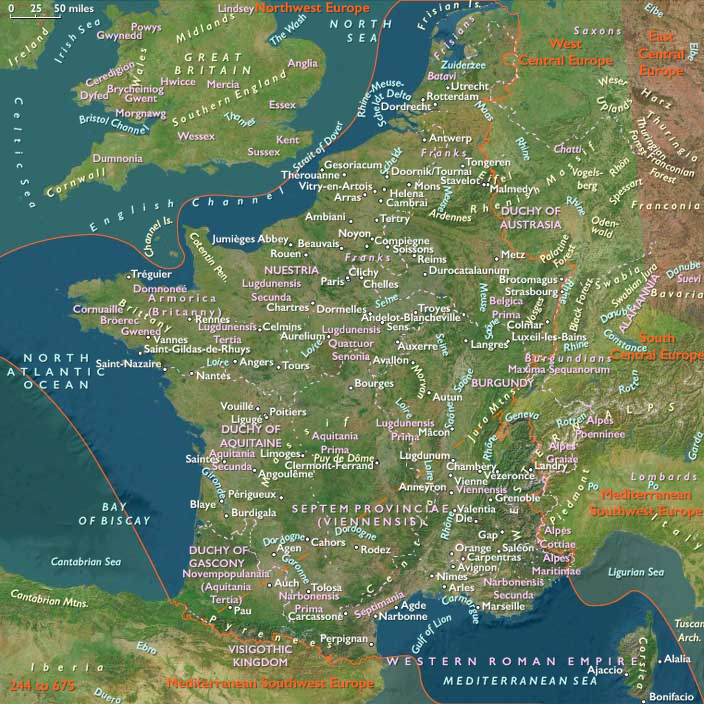
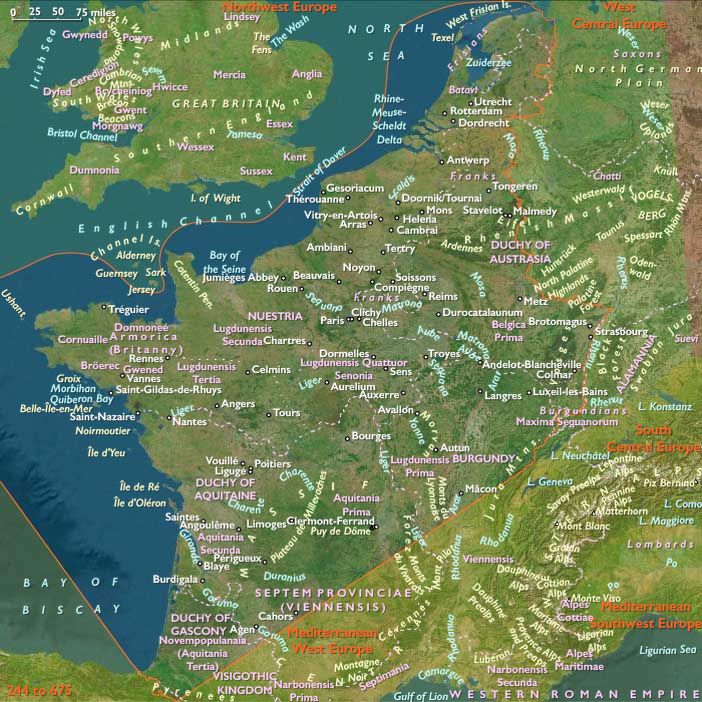
By June 451 CE, Attila the Hun marches on Aurelianum (modern Orléans), a key fortified city on the Loire River. As the Hunnic army approaches, the city's defenders—aware of the destruction wrought on Metz, Rheims, and other towns—shut the gates, forcing Attila to lay siege.
The Strategic Importance of Aurelianum
Aurelianum holds immense strategic value in the struggle for Gaul:
- It serves as a gateway to central and southern Gaul, controlling access to both Roman strongholds and Visigothic territories.
- Its defensive walls make it one of the most secure Gallo-Roman settlements, potentially slowing the Huns' advance.
- If Attila captures the city, it could allow him to cut off Roman and Visigothic forces from uniting.
Aetius Mobilizes in Response
Upon learning of Attila’s invasion, Flavius Aetius, the magister militum of the Western Roman Empire, moves quickly from Italy into Gaul. Recognizing that Rome cannot defeat the Huns alone, he secures a crucial alliance with Theodoric I, the Visigothic king based in Toulouse.
Together, the Roman-Visigothic coalition rallies additional forces, including:
- Burgundians
- Alans under King Sangiban (who held Orléans but was suspected of wavering in loyalty)
- Other Roman-allied federates
The Turning Point in the Campaign
As Aetius and Theodoric’s army advances, Attila faces the prospect of being trapped between the city's defenders and the approaching coalition forces. The siege of Aurelianum thus becomes a critical moment in the war—if Attila fails to take the city quickly, he risks being forced into open battle on unfavorable terms.
The decisive confrontation will soon unfold at the Battle of the Catalaunian Plains, where the fate of Roman Gaul will be determined.
Locations
People
Groups
- Scirii (East Germanic tribe)
- Gallia Lugdunensis (Roman province)
- Gallia Belgica (Roman province)
- Rugii (East Germanic tribe )
- Gepids (East Germanic tribe)
- Goths (East Germanic tribe)
- Heruli (East Germanic tribe)
- Huns
- Thuringii (Germanic tribe)
- Gaul, Diocese of
- Hunnic Empire
- Roman Empire: Theodosian dynasty (Constantinople)
- Ostrogoths, Realms of the
- Gaul, Praetorian prefecture of
- Roman Empire, Western (Ravenna)
Topics
- Late Antiquity
- Migration Period
- Hun Raids on the Roman Empire
- Fall of the Western Roman Empire
- Migration Period Pessimum
Commodoties
Subjects
Regions
Subregions
Years: 451 - 451
June
Locations
People
Groups
- Scirii (East Germanic tribe)
- Gallia Lugdunensis (Roman province)
- Gallia Belgica (Roman province)
- Rugii (East Germanic tribe )
- Gepids (East Germanic tribe)
- Goths (East Germanic tribe)
- Heruli (East Germanic tribe)
- Huns
- Thuringii (Germanic tribe)
- Gaul, Diocese of
- Hunnic Empire
- Roman Empire: Theodosian dynasty (Constantinople)
- Ostrogoths, Realms of the
- Gaul, Praetorian prefecture of
- Roman Empire, Western (Ravenna)
Topics
- Late Antiquity
- Migration Period
- Hun Raids on the Roman Empire
- Fall of the Western Roman Empire
- Migration Period Pessimum
Commodoties
Subjects
Regions
Subregions