
Filters:
Atlantic West Europe (988–999): Consolidation of Capetian …
Years: 988 - 999
Atlantic West Europe (988–999): Consolidation of Capetian Rule and Regional Dynamics
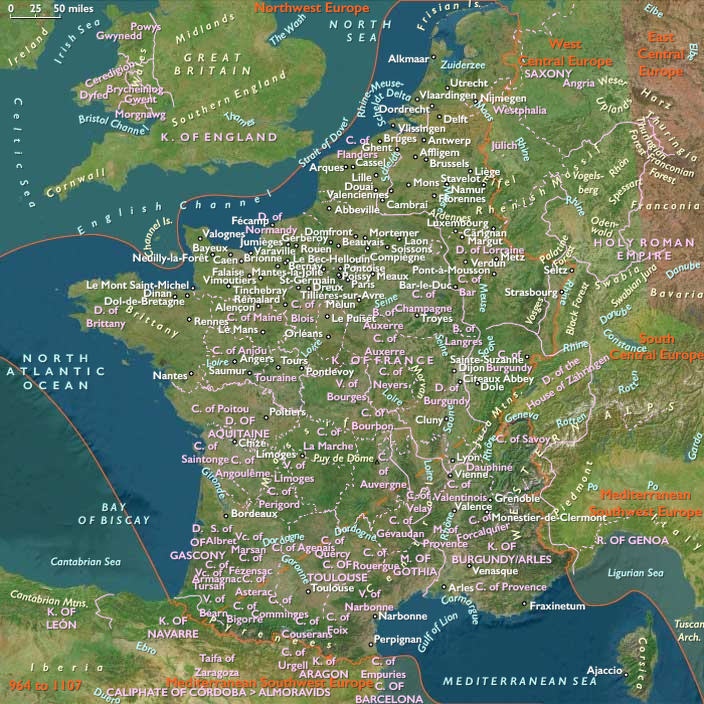
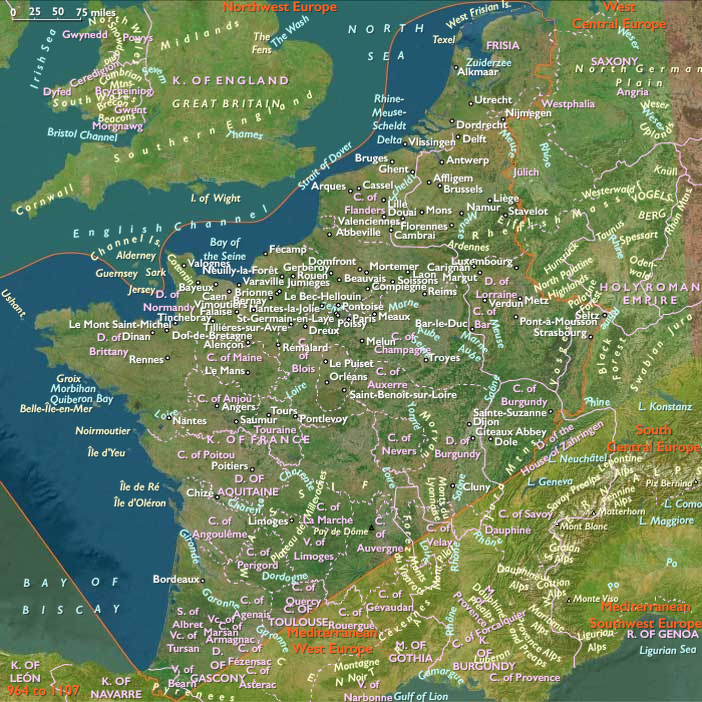
Between 988 and 999, Atlantic West Europe—including the Low Countries, Normandy, Brittany, Aquitaine, Burgundy, central France, Alsace, and Franche-Comté—saw the early consolidation of Capetian authority, continued growth in regional autonomy, and strengthening of ecclesiastical influence, all against the backdrop of increasing feudal decentralization.
Political and Military Developments
-
France: Capetian Consolidation
- Hugh Capet (r. 987–996) firmly established Capetian authority, securing his dynasty's succession by crowning his son Robert II as co-king in 987, thus beginning a hereditary monarchy.
- Robert II (the Pious, r. 996–1031) began his reign by reinforcing royal influence over the nobility, although central authority remained limited outside Île-de-France.
-
Normandy: Ducal Power and Stability
- Richard I of Normandy (r. 942–996) maintained internal cohesion and secured his Duchy's frontiers, preparing the path for the prosperous reign of his successor, Richard II (r. 996–1026).
-
Aquitaine and Burgundy: Local Autonomy
- William IV of Aquitaine (r. 963–990) and William V (r. 990–1030) managed their territories with significant independence, emphasizing stability and economic prosperity.
- Otto-William, Count of Burgundy, strengthened local control, maintaining effective autonomy and regional stability despite nominal loyalty to Capetian rule.
-
Brittany: Struggle for Internal Control
- Brittany experienced internal conflicts after Conan I’s death (992), complicating efforts to maintain regional autonomy against increasing external influences from Normandy and Capetian France.
Economic and Social Developments
-
Feudal Decentralization
- Feudalism deepened throughout the region, reinforcing the power of local counts and dukes who managed estates with minimal royal interference.
- Peasant populations increased in stability as agricultural techniques improved, supporting gradual demographic growth.
-
Commercial and Urban Development
- Maritime trade expanded significantly in the Low Countries, particularly in Bruges, which served as a burgeoning trade hub linking Northern and Southern Europe.
Cultural and Intellectual Developments
- Monastic Revival and Scholarship
- Cluniac monasteries expanded significantly, becoming major centers of intellectual activity, manuscript production, and theological study.
- Monastic scriptoria preserved ancient texts and produced religious literature that deeply influenced Western Christendom.
Religious Developments
- Expansion of Cluniac Reforms
- The influence of the Abbey of Cluny expanded widely, advocating for greater clerical independence from secular powers, and reforming ecclesiastical governance.
- These reforms reshaped religious practice and institutional autonomy across Atlantic West Europe.
Legacy and Significance
The era 988–999 was crucial for setting long-term regional patterns:
- The Capetian dynasty secured its hold on the French throne, laying the foundation for enduring stability.
- Regional rulers maintained substantial autonomy, shaping distinct political identities for Normandy, Aquitaine, Brittany, and Burgundy.
- The continued rise of feudalism shaped the socio-economic landscape for centuries to come.
- Cluniac reforms significantly impacted the religious and cultural life of the region, influencing European Christianity far beyond its borders.
People
- Conan I of Rennes
- Hugh Capet
- Louis V, King of Western Francia
- Otto-William
- Richard I of Normandy
- Richard II, Duke of Normandy
- Robert II of France
- William IV, Duke of Aquitaine
- William V, Duke of Aquitaine
Groups
- Franks
- Aquitaine, (Carolingian) Kingdom of
- Francia Occidentalis (West Francia, or France), Kingdom of
- Normandy, Duchy of
- Arles, Kingdom of, or Second Kingdom of Burgundy
- Brittanny, Duchy of
- Burgundy, County of
- Aquitaine, (Angevin) Duchy of
- France, (Capetian) Kingdom of
Subjects
Regions
Subregions
Years: 988 - 999
People
- Conan I of Rennes
- Hugh Capet
- Louis V, King of Western Francia
- Otto-William
- Richard I of Normandy
- Richard II, Duke of Normandy
- Robert II of France
- William IV, Duke of Aquitaine
- William V, Duke of Aquitaine
Groups
- Franks
- Aquitaine, (Carolingian) Kingdom of
- Francia Occidentalis (West Francia, or France), Kingdom of
- Normandy, Duchy of
- Arles, Kingdom of, or Second Kingdom of Burgundy
- Brittanny, Duchy of
- Burgundy, County of
- Aquitaine, (Angevin) Duchy of
- France, (Capetian) Kingdom of
Subjects
Regions
Subregions