
Atlantic West Europe (952–963): Regional Dominance and …
Years: 952 - 963
Atlantic West Europe (952–963): Regional Dominance and the Emergence of Capetian Power
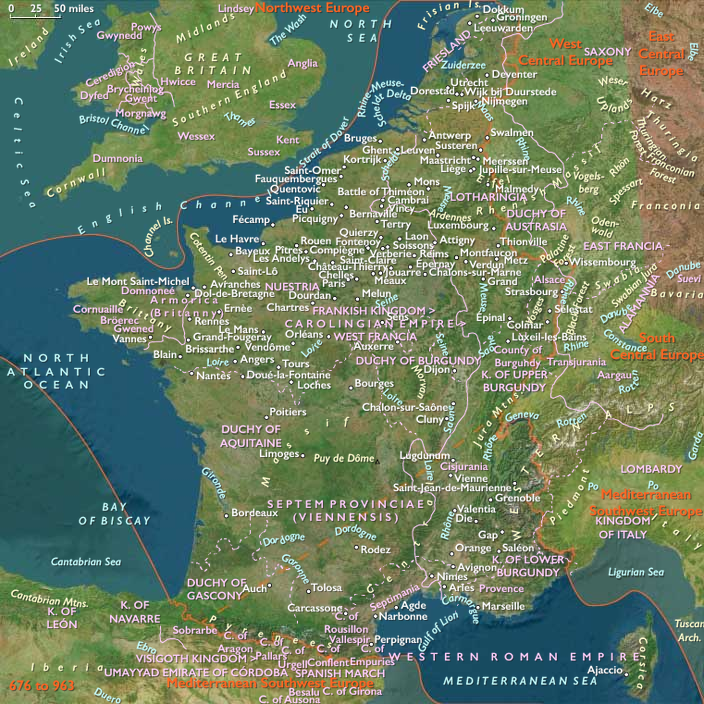
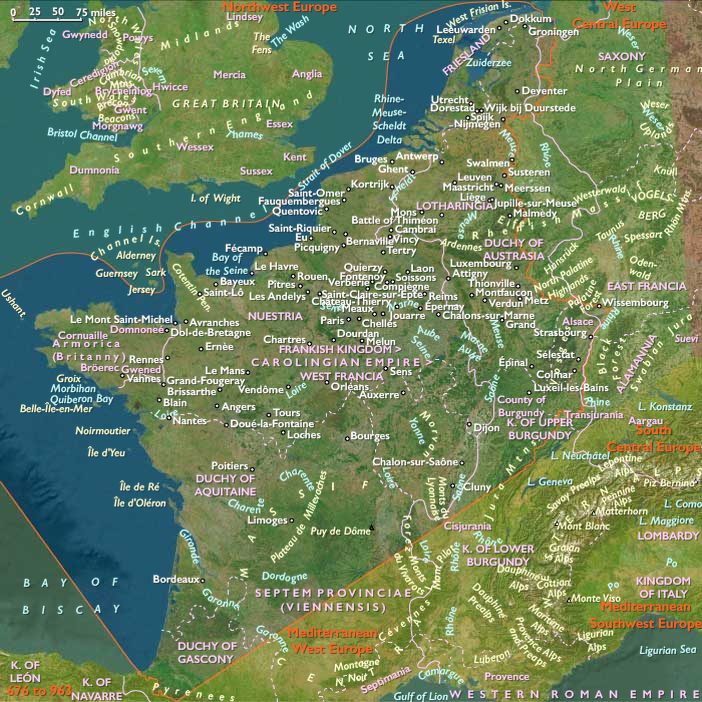
From 952 to 963, Atlantic West Europe continued to evolve politically, economically, and culturally. Regional rulers solidified their domains amid weakening royal authority, paving the way for the rise of the Capetian dynasty, while economic growth and monastic reforms further enriched the cultural landscape.
Political and Military Developments
-
West Francia: Prelude to Capetian Ascendancy
- The reign of Lothair (r. 954–986) began amid ongoing fragmentation, challenged by powerful nobles such as Hugh the Great, Duke of the Franks, who extended his influence in the north, setting the stage for Capetian rule.
- Upon Hugh the Great’s death in 956, his son, Hugh Capet, inherited significant territorial and political influence, foreshadowing the shift toward a new royal dynasty.
-
Normandy: Consolidation of Ducal Power
- Richard I ("the Fearless") (r. 942–996) further secured Normandy’s independence and territorial integrity. He strengthened alliances through marriage and diplomacy, ensuring stability and economic prosperity.
-
Aquitaine: Stability under William Towhead
- Duke William III ("Towhead") (r. 935–963) maintained firm control of Aquitaine, fostering internal peace, promoting cultural patronage, and resisting external interference from royal authorities, solidifying Aquitaine’s autonomy.
-
Flanders and Anjou: Continued Expansion
- Arnulf I of Flanders (r. 918–965) bolstered his realm's economic power through trade, fortifying key urban centers such as Bruges and Ghent, further establishing Flanders as a vibrant commercial hub.
- Fulk II ("the Good") of Anjou (r. 942–960) effectively expanded his territory along the Loire Valley, strengthening Angevin political dominance and laying the foundation for future growth under his descendants.
-
Burgundy: Stable Kingship under Conrad
- Conrad I ("the Peaceful"), king of Burgundy (r. 937–993), maintained peace and prosperity in Upper Burgundy (Kingdom of Arles), emphasizing diplomatic and familial alliances, providing stable leadership throughout the region.
Economic and Social Developments
-
Maritime and Commercial Growth
- Trade flourished, especially in Normandy and Flanders, with Rouen, Bruges, and Ghent thriving as important centers for regional commerce, facilitating extensive trade networks across Northern and Western Europe.
-
Agricultural Productivity and Urban Expansion
- Improvements in agriculture led to surplus production and population growth, supporting urbanization across central France, Aquitaine, Burgundy, and the Low Countries. This growth stimulated local markets and artisanal industries.
Religious and Cultural Developments
-
Cluniac and Monastic Reform Movements
- The Cluniac reforms gained widespread adoption, significantly influencing monastic life and spiritual renewal in Aquitaine, Burgundy, and the Loire Valley. Monasteries served as vital centers for intellectual revival, manuscript production, and religious education.
-
Early Scholasticism and Cultural Revival
- Monastic schools in Tours, Cluny, and Auxerre emerged as critical educational and intellectual hubs, preserving classical learning, encouraging scholarly debate, and cultivating the roots of early scholastic thought.
Legacy and Significance
By 963, Atlantic West Europe had experienced key transformations:
- Regional powers such as Normandy, Aquitaine, Anjou, Flanders, and Burgundy had solidified political autonomy amid declining Carolingian authority, establishing lasting patterns of territorial governance.
- Economic growth, driven by thriving commerce and agricultural expansion, facilitated significant urban and demographic developments.
- Monastic reforms and intellectual revival laid cultural and spiritual foundations for medieval European society, influencing subsequent generations.
These trends significantly shaped the region, setting the stage for the impending rise of the Capetian dynasty and the vibrant cultural and economic era that followed.
People
- Arnulf I
- Conrad of Burgundy
- Fulk II
- Hugh Capet
- Hugh the Great
- Lothair of France
- Richard I of Normandy
- William III, Duke of Aquitaine
Groups
- Franks
- Breton people
- Christianity, Chalcedonian
- Aquitaine, (Carolingian) Kingdom of
- Frankish, or Carolingian (Roman) Empire
- Norse
- Brittany, Kingdom of
- Francia Occidentalis (West Francia, or France), Kingdom of
- Burgundy, Upper, Kingdom of
- Lotharingia, Kingdom of
- Flanders, County of
- Anjou, County of
- Burgundy, Lower, Kingdom of
- Normandy, Duchy of
Topics
Commodoties
Subjects
Regions
Subregions
Related Events
Showing 10 events out of 52909 total
Years: 952 - 963
People
- Arnulf I
- Conrad of Burgundy
- Fulk II
- Hugh Capet
- Hugh the Great
- Lothair of France
- Richard I of Normandy
- William III, Duke of Aquitaine
Groups
- Franks
- Breton people
- Christianity, Chalcedonian
- Aquitaine, (Carolingian) Kingdom of
- Frankish, or Carolingian (Roman) Empire
- Norse
- Brittany, Kingdom of
- Francia Occidentalis (West Francia, or France), Kingdom of
- Burgundy, Upper, Kingdom of
- Lotharingia, Kingdom of
- Flanders, County of
- Anjou, County of
- Burgundy, Lower, Kingdom of
- Normandy, Duchy of
Topics
Commodoties
Subjects
Regions
Subregions