
Atlantic West Europe (928–939): Dynastic Realignments and …
Years: 928 - 939
Atlantic West Europe (928–939): Dynastic Realignments and Rising Regional Powers
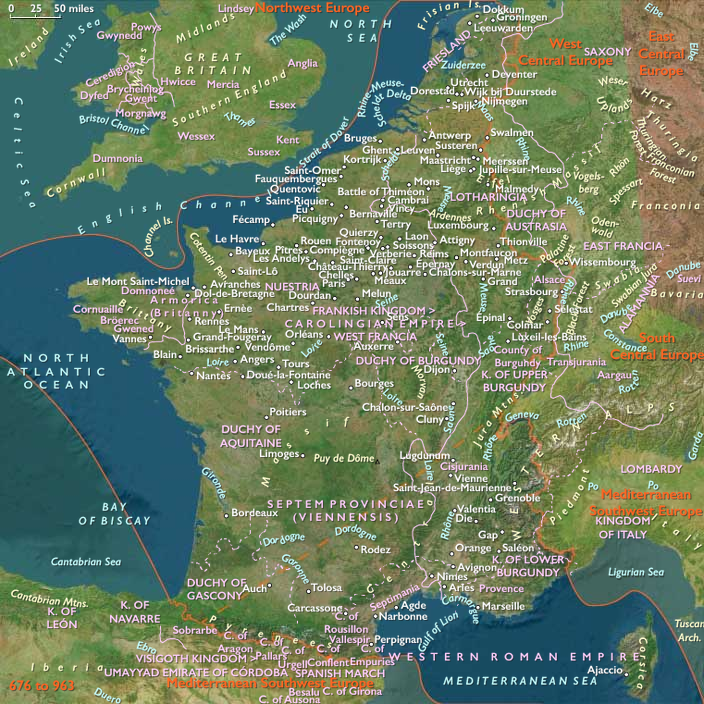
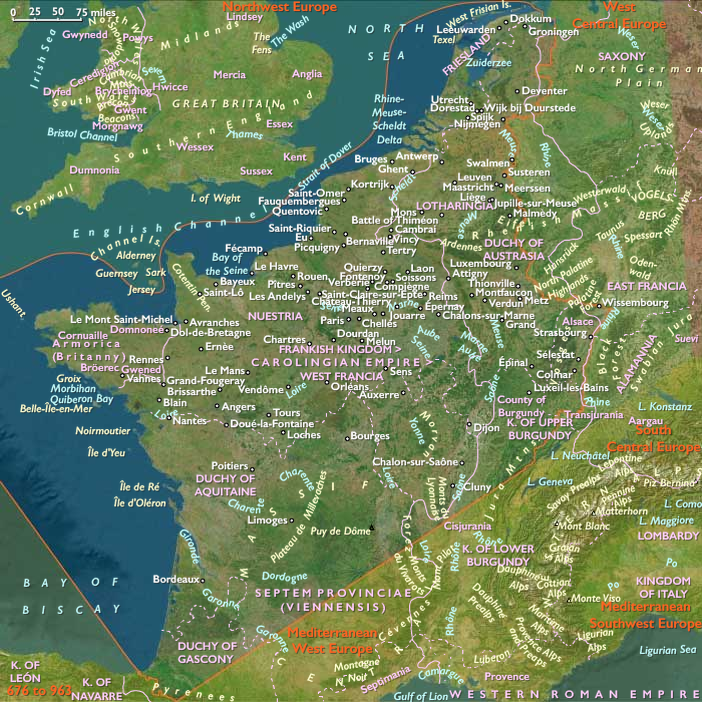
From 928 to 939, Atlantic West Europe experienced significant dynastic shifts, deepened fragmentation of royal authority, and the consolidation of regional principalities, particularly in Normandy, Aquitaine, Burgundy, Anjou, and Flanders. Political instability persisted, but economic recovery and cultural growth were increasingly evident.
Political and Military Developments
-
West Francia: Continued Fragmentation
- King Rudolph of Burgundy (r. 923–936) struggled to assert royal authority, facing powerful regional magnates. Upon his death, Louis IV ("d'Outremer"), son of the exiled Charles the Simple, returned from England to claim the throne (936), attempting to restore Carolingian legitimacy amidst growing noble independence.
-
Normandy: Establishment of Ducal Authority
- William Longsword (r. 927–942), son of Rollo, succeeded in consolidating Normandy’s internal governance, securing stronger territorial control and building diplomatic relationships with neighboring Frankish lords, notably marrying into Breton nobility.
-
Aquitaine: Strengthened Ducal Autonomy
- Ebalus Manzer (r. 927–935) and William III ("Towhead") (r. 935–963) maintained internal cohesion in Aquitaine, preserving regional autonomy and promoting stability through patronage of religious institutions and strategic alliances.
-
Flanders and Anjou: Territorial Consolidation
- Arnulf I of Flanders (r. 918–965) further strengthened his control, fortifying key cities such as Ghent and Bruges, enhancing their economic and strategic positions in the region.
- Fulk I ("the Red") of Anjou (r. 898–942) continued aggressive expansion along the Loire Valley, establishing a foundation for future Angevin prominence.
-
Burgundian Realignments
- Rudolph II, King of Upper Burgundy, extended his influence into northern Italy (931), briefly combining the crowns of Upper Burgundy and Italy. Upon his death (937), regional power dynamics shifted as his son Conrad succeeded him, focusing more inwardly on Burgundian affairs.
Economic and Social Developments
-
Urban and Commercial Growth
- Economic activity expanded significantly, notably in Flanders (Bruges, Ghent) and Normandy (Rouen), where strengthened political stability and maritime trade enhanced commercial vitality.
- Agricultural expansion continued across central France and Aquitaine, supporting population growth and early urbanization.
-
Integration and Cultural Fusion
- In Normandy, Norse settlers integrated further, blending culturally with local Franks, enhancing economic productivity and social cohesion.
Religious and Cultural Developments
-
Expansion of Cluniac Reform
- The Cluniac monastic reform continued to spread rapidly, influencing religious life across Aquitaine, Burgundy, and the Loire Valley, advocating spiritual renewal and ecclesiastical autonomy from secular control.
-
Monastic Scholarship and Education
- Monastic centers, notably Tours, Cluny, and Auxerre, expanded their educational role, preserving classical knowledge and fostering early scholastic developments.
Legacy and Significance
By 939, Atlantic West Europe had witnessed:
- Continued erosion of centralized Carolingian authority, increasingly replaced by independent regional principalities in Normandy, Flanders, Aquitaine, Burgundy, and Anjou.
- Solidified regional identities and political structures, setting the stage for later medieval geopolitical configurations.
- Strengthened economic recovery and trade expansion, particularly in maritime and agricultural economies.
- Growing cultural dynamism driven by monastic reform and intellectual revival, laying essential foundations for the cultural renaissance of the High Middle Ages.
These developments collectively reinforced the regional principalities that characterized Atlantic West Europe’s trajectory into the mid and late medieval periods.
People
- Arnulf I
- Charles the Simple
- Conrad of Burgundy
- Ebalus Manzer
- Fulk I
- Louis IV, King of Western Francia
- Louis the Blind
- Odo of France
- Robert I of France
- Rollo of Normandy
- Rudolph II of Burgundy
- Rudolph of France
- William I of Normandy
- William III, Duke of Aquitaine
Groups
- Franks
- Breton people
- Christianity, Chalcedonian
- Aquitaine, (Carolingian) Kingdom of
- Frankish, or Carolingian (Roman) Empire
- Norse
- Brittany, Kingdom of
- Francia Occidentalis (West Francia, or France), Kingdom of
- Burgundy, Upper, Kingdom of
- Lotharingia, Kingdom of
- Flanders, County of
- Anjou, County of
- Burgundy, Lower, Kingdom of
- Normandy, Duchy of
Topics
Subjects
Regions
Subregions
Years: 928 - 939
People
- Arnulf I
- Charles the Simple
- Conrad of Burgundy
- Ebalus Manzer
- Fulk I
- Louis IV, King of Western Francia
- Louis the Blind
- Odo of France
- Robert I of France
- Rollo of Normandy
- Rudolph II of Burgundy
- Rudolph of France
- William I of Normandy
- William III, Duke of Aquitaine
Groups
- Franks
- Breton people
- Christianity, Chalcedonian
- Aquitaine, (Carolingian) Kingdom of
- Frankish, or Carolingian (Roman) Empire
- Norse
- Brittany, Kingdom of
- Francia Occidentalis (West Francia, or France), Kingdom of
- Burgundy, Upper, Kingdom of
- Lotharingia, Kingdom of
- Flanders, County of
- Anjou, County of
- Burgundy, Lower, Kingdom of
- Normandy, Duchy of
Topics
Subjects
Regions
Subregions