
Atlantic West Europe (916–927): Emergence of Regional …
Years: 916 - 927
Atlantic West Europe (916–927): Emergence of Regional Powers and Continued Carolingian Decline
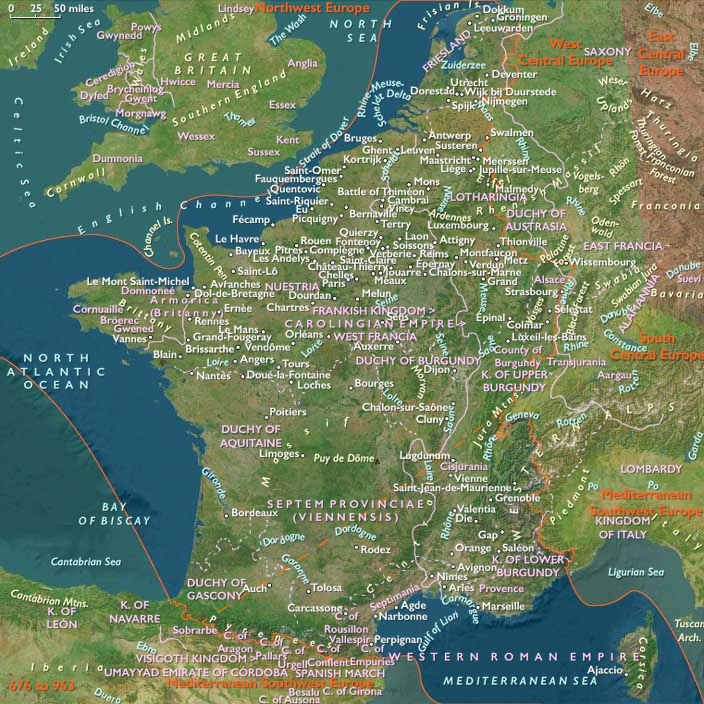
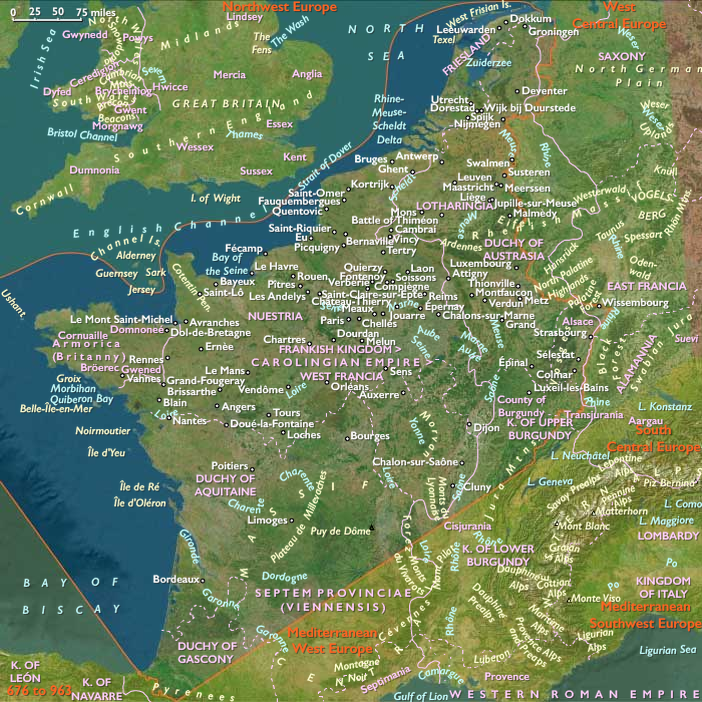
Between 916 and 927, Atlantic West Europe witnessed the continued erosion of Carolingian royal authority, the consolidation and expansion of regional powers, especially Normandy, Flanders, Aquitaine, Anjou, and the Burgundian kingdoms, and the beginnings of political stabilization following the era of Viking raids.
Political and Military Developments
-
West Francia: Enduring Instability
- King Charles the Simple (r. 898–922) struggled against increasingly powerful nobles, ultimately losing his throne after being deposed in 922, leading to civil unrest and further fragmentation of royal power.
- Robert I, count of Paris, briefly became king (922–923) but was killed in battle against Charles’ supporters; Rudolph of Burgundy succeeded him, bringing Burgundy into a more prominent political role in West Francia.
-
Normandy: Consolidation under Rollo
- Duke Rollo (r. 911–927) successfully transformed the Viking-controlled territory into the stable Duchy of Normandy, integrating local populations and establishing Rouen as a major center of power and trade.
-
Flanders and Anjou: Strengthening Territorial Control
- Arnulf I of Flanders (r. 918–965) solidified territorial gains, enhancing Flanders' military and economic capabilities, particularly through fortifications and expanding trade networks.
- In Anjou, Fulk I the Red (r. 898–942) reinforced his authority through strategic marriages and aggressive territorial expansion along the Loire.
-
Aquitaine: Stability and Cultural Patronage
- William II of Aquitaine (r. 918–926) continued his predecessor's efforts, reinforcing regional governance, supporting religious institutions, and providing stability in southern and western France.
-
Upper and Lower Burgundy: Internal Stability
- Rudolph II of Upper Burgundy (r. 912–937) managed internal stability, while Lower Burgundy (Provence) under Louis the Blind (until 928) experienced weakening central control, allowing regional nobles greater independence.
Economic and Social Developments
-
Growth of Regional Economies
- Economic revival was evident, particularly in Normandy, Flanders, and Aquitaine, where stability fostered agricultural improvements, trade expansion, and urban growth.
- Rouen, Bruges, Tours, and Nantes strengthened their roles as commercial hubs and fortifications, benefiting from growing local markets and increased political stability.
-
Integration of Viking Settlers
- In Normandy, the integration of Norse settlers encouraged agricultural and commercial development, leading to improved economic conditions and increased cultural blending with local Frankish populations.
Religious and Cultural Developments
-
Expansion of Cluniac Influence
- The Abbey of Cluny, founded in 910, significantly increased its influence, promoting monastic reform and religious independence, particularly across Burgundy, Aquitaine, and the Loire Valley.
-
Monastic and Scholarly Revival
- Monastic centers continued to preserve classical and religious manuscripts, supporting early signs of intellectual revival and education, especially in prominent monasteries like Saint-Martin of Tours and Cluny Abbey.
Legacy and Significance
By 927, Atlantic West Europe was increasingly characterized by powerful regional principalities rather than centralized royal control:
- The weakening Carolingian monarchy ceded practical authority to regional rulers in Normandy, Flanders, Anjou, Aquitaine, and Burgundy.
- The Duchy of Normandy firmly established itself, foreshadowing its later expansionist role, notably the Norman conquest of England in the following century.
- Regional economic stabilization, particularly through revived trade and fortified towns, paved the way for the urban revival of the High Middle Ages.
- Cluniac monasticism deepened religious reform and cultural vitality, significantly shaping medieval European spirituality.
This era set critical foundations for the political, economic, and cultural contours that defined Atlantic West Europe through the High Middle Ages.
People
- Arnulf I
- Charles the Simple
- Fulk I
- Louis the Blind
- Odo of France
- Robert I of France
- Rollo of Normandy
- Rudolph II of Burgundy
- Rudolph of France
- William II of Aquitaine
Groups
- Christianity, Chalcedonian
- Aquitaine, (Carolingian) Kingdom of
- Frankish, or Carolingian (Roman) Empire
- Norse
- Brittany, Kingdom of
- Francia Occidentalis (West Francia, or France), Kingdom of
- Burgundy, Upper, Kingdom of
- Lotharingia, Kingdom of
- Flanders, County of
- Anjou, County of
- Burgundy, Lower, Kingdom of
- Normandy, Duchy of
Topics
Subjects
Regions
Subregions
Related Events
Showing 3 events out of 3 total
Years: 916 - 927
People
- Arnulf I
- Charles the Simple
- Fulk I
- Louis the Blind
- Odo of France
- Robert I of France
- Rollo of Normandy
- Rudolph II of Burgundy
- Rudolph of France
- William II of Aquitaine
Groups
- Christianity, Chalcedonian
- Aquitaine, (Carolingian) Kingdom of
- Frankish, or Carolingian (Roman) Empire
- Norse
- Brittany, Kingdom of
- Francia Occidentalis (West Francia, or France), Kingdom of
- Burgundy, Upper, Kingdom of
- Lotharingia, Kingdom of
- Flanders, County of
- Anjou, County of
- Burgundy, Lower, Kingdom of
- Normandy, Duchy of
Topics
Subjects
Regions
Subregions