
Atlantic West Europe (856–867): Regional Fragmentation and …
Years: 856 - 867
Atlantic West Europe (856–867): Regional Fragmentation and the Emergence of Key Territories
Between 856 and 867, Atlantic West Europe continued to experience political fragmentation and emerging regional identities following the divisions of the Carolingian Empire. This era marked significant developments in territorial governance and the foundation of lasting political entities.
Political and Military Developments
-
West Francia: Under Charles the Bald (r. 843–877), West Francia faced ongoing challenges from internal revolts and Viking incursions, leading to increased decentralization of royal authority. Charles struggled to maintain control over powerful regional lords who asserted greater autonomy.
-
Emergence of Flanders and Anjou:
-
Flanders began to take shape under Baldwin Iron Arm, who secured territories through marriage to Judith, daughter of Charles the Bald, in 862. Baldwin was granted lands around Ghent and Bruges, laying foundations for the powerful medieval County of Flanders.
-
Anjou saw the rise of Robert the Strong (d. 866), appointed by Charles the Bald as Count of Anjou to combat Viking raids along the Loire Valley, establishing a powerful dynasty that would significantly impact West Francia.
-
-
Middle Francia to Lotharingia: Following Emperor Lothair I’s death in 855, Middle Francia fragmented further. His lands were divided among his sons, creating Lotharingia (the northern part), Italy, and Provence (Lower Burgundy).
-
Formation of Upper Burgundy (Transjurane Burgundy): The lands north of Lake Geneva formed the independent Kingdom of Upper Burgundy under King Conrad II (r. 855–876). Although geographically peripheral to Atlantic West Europe, Upper Burgundy’s emergence significantly influenced future interactions with Burgundy, Franche-Comté, and Alsace.
Economic and Social Developments
-
Ongoing Viking raids disrupted trade and settlement patterns along rivers and coastlines, compelling regions to develop fortified strongholds and defensive measures, thereby reshaping settlement patterns.
-
Agricultural productivity began recovering slightly, but instability continued to hinder significant economic growth.
Religious and Cultural Developments
-
Monastic establishments and churches continued to endure threats and disruptions from raids but remained central to cultural preservation, education, and manuscript production.
-
Carolingian artistic and intellectual traditions persisted within monastic centers despite broader regional instability.
Long-term Impact
This period was pivotal for the formation of enduring regional identities and political structures:
-
The emergence of Flanders and Anjou provided foundations for powerful medieval counties.
-
The fragmentation of Middle Francia created new political realities that shaped the geopolitical dynamics of Atlantic West Europe, notably the formation of Lotharingia and Upper Burgundy.
-
Persistent decentralization and Viking threats further accelerated the fragmentation of Carolingian authority, setting the stage for the feudal landscape of the High Middle Ages.
People
Groups
- Christianity, Chalcedonian
- Francia (Carolingians)
- Aquitaine, (Carolingian) Kingdom of
- Frankish, or Carolingian (Roman) Empire
- Brittany, Kingdom of
- Francia Occidentalis (West Francia, or France), Kingdom of
- Burgundy, Upper, Kingdom of
- Lotharingia, Kingdom of
- Flanders, County of
- Anjou, County of
Topics
Subjects
Regions
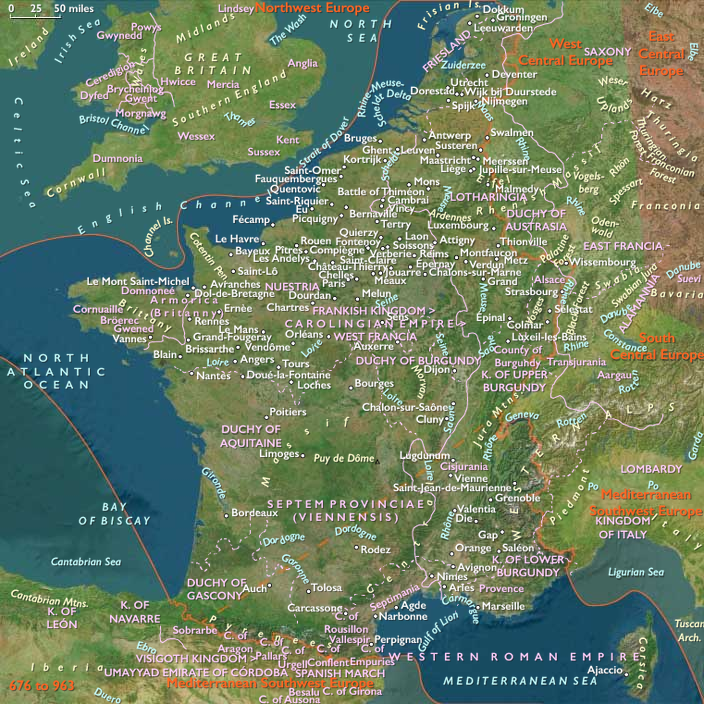
Subregions
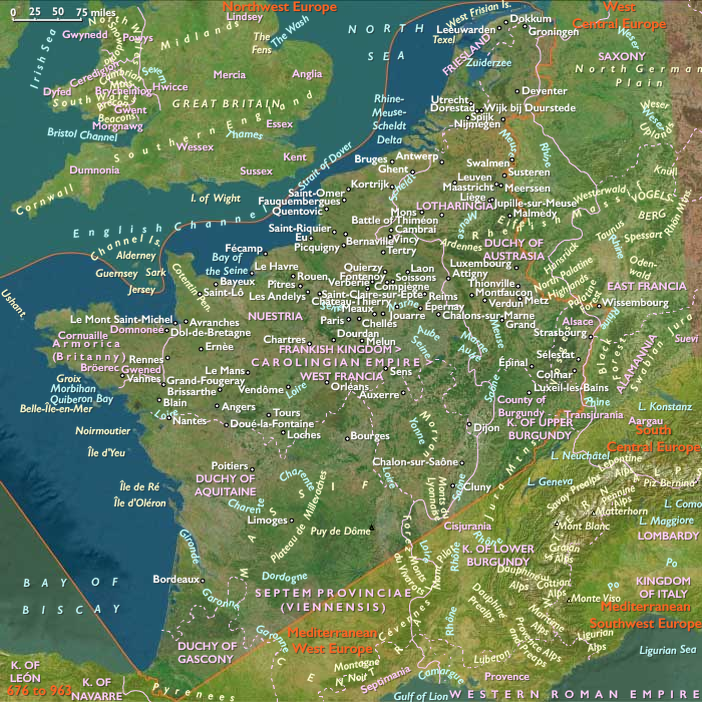
Related Events
Showing 10 events out of 54107 total
Years: 856 - 867
People
Groups
- Christianity, Chalcedonian
- Francia (Carolingians)
- Aquitaine, (Carolingian) Kingdom of
- Frankish, or Carolingian (Roman) Empire
- Brittany, Kingdom of
- Francia Occidentalis (West Francia, or France), Kingdom of
- Burgundy, Upper, Kingdom of
- Lotharingia, Kingdom of
- Flanders, County of
- Anjou, County of
Topics
Subjects
Regions
Subregions