
Atlantic West Europe, 664–675: Intensifying Regional Fragmentation …
Years: 664 - 675
Atlantic West Europe, 664–675: Intensifying Regional Fragmentation and Aristocratic Dominance
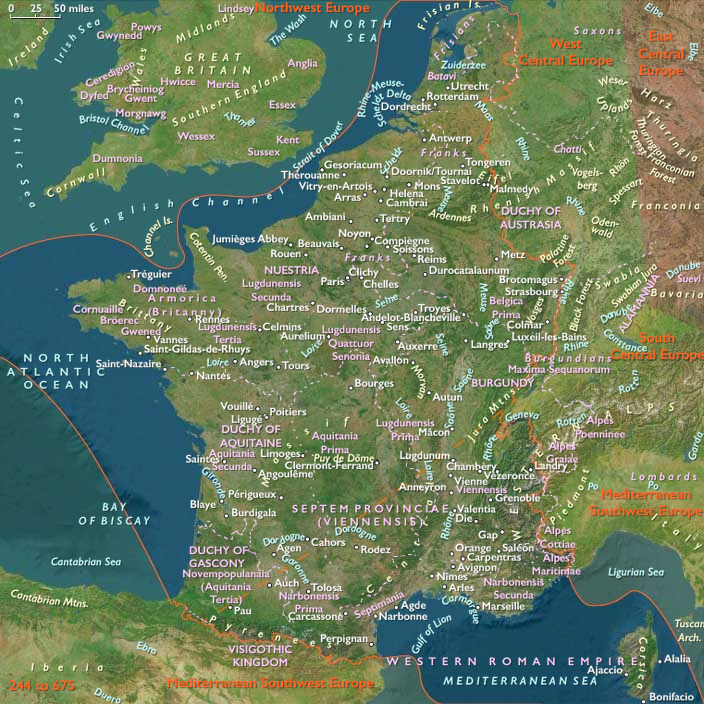
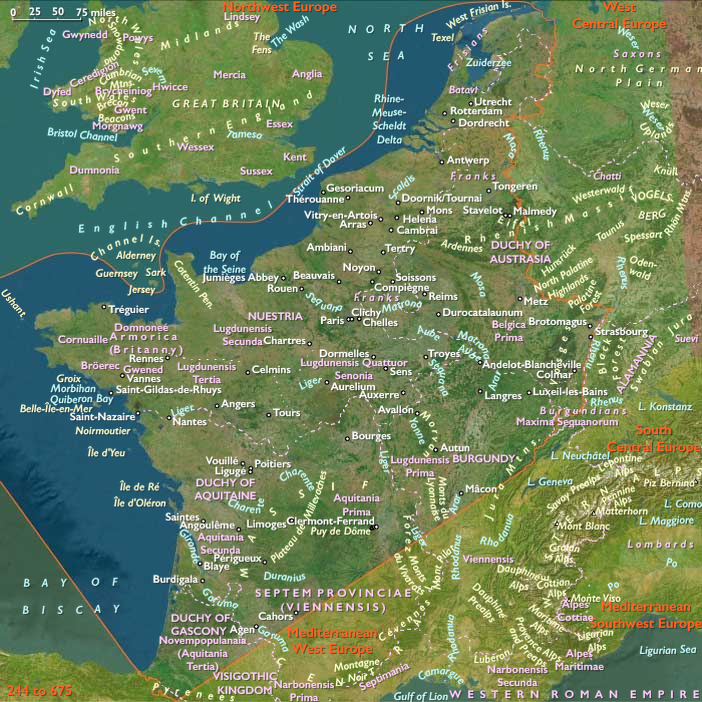
The era 668 to 679 continued to reflect the weakening of Merovingian royal power across Atlantic West Europe. Political decentralization became more pronounced as aristocratic families, powerful dukes, and influential monasteries solidified their control over local territories. This trend established new regional identities and foreshadowed future medieval polities.
Political and Military Developments
-
Merovingian Internal Struggles:
- King Chlothar III (Neustria and Burgundy) died in 673, succeeded by his brother, Theuderic III. Rivalry between the Neustrian and Austrasian kingdoms intensified, causing prolonged internal instability.
- In Austrasia, Childeric II (r. 662–675) briefly ruled the entire Frankish realm after Chlothar’s death but was assassinated, leading to greater internal divisions.
-
Rise of Ebroin:
- Ebroin, Mayor of the Palace in Neustria, emerged as a dominant political figure. He aggressively attempted to restore central royal authority, provoking resistance from Austrasian nobles and powerful local elites in Burgundy and Aquitaine.
-
Aquitaine’s Strengthening Autonomy:
- The ducal leadership in Aquitaine, increasingly under Felix and his successor Lupus I, established a strong regional government largely independent of Merovingian control.
-
Brittany’s Independence:
- Breton lords further consolidated their rule, increasingly isolated politically from the Merovingian kingdom and developing distinct regional identities and leadership.
Economic and Social Developments
-
Further Ruralization and Manorialism:
- Economic activity became ever more localized around rural estates. Aristocratic landlords strengthened their economic and social influence, further eroding centralized economic control.
-
Localized Trading Patterns:
- Maritime trade persisted along the Atlantic coast, though predominantly regional in character, driven by local markets rather than long-distance commercial networks.
Religious and Cultural Developments
-
Expansion of Monastic Influence:
- Monasteries such as Fontenelle (Saint-Wandrille), founded in Normandy in 649, became prominent cultural and religious centers, preserving classical texts and promoting Christian culture amidst political instability.
-
Continued Christianization of Brittany:
- Missionaries continued to extend Christianity deeper into Brittany, although Celtic religious and cultural traditions persisted alongside Christian practices.
Long-Term Significance
This period reinforced regional divisions within Atlantic West Europe, paving the way for political fragmentation that defined the subsequent era. The growth of aristocratic dominance and monastic cultural leadership provided a framework for medieval societal structures, significantly weakening the centralized Merovingian state and laying the groundwork for Carolingian ascendancy.
People
Groups
- Franks
- Breton people
- Christianity, Chalcedonian
- Aquitaine, (Frankish) Duchy of
- Austrasia, Frankish Kingdom of
- Neustria and Burgundy, Frankish Kingdom of
- Burgundy, Frankish Kingdom of
Topics
Subjects
Regions
Subregions
Related Events
Showing 10 events out of 56290 total
Years: 664 - 675
People
Groups
- Franks
- Breton people
- Christianity, Chalcedonian
- Aquitaine, (Frankish) Duchy of
- Austrasia, Frankish Kingdom of
- Neustria and Burgundy, Frankish Kingdom of
- Burgundy, Frankish Kingdom of
Topics
Subjects
Regions
Subregions