
Atlantic West Europe (496–507): The Rise of …
Years: 496 - 507
Atlantic West Europe (496–507): The Rise of the Franks and the Shifting Balance of Power
Between 496 and 507, Atlantic West Europe underwent a significant realignment of political authority. The dramatic rise of the Merovingian Franks under Clovis I reshaped regional power dynamics, culminating in the decisive Battle of Vouillé (507). Meanwhile, the Visigothic and Burgundian kingdoms continued their internal consolidation, adapting to an increasingly Frankish-dominated Gaul.
Political and Military Developments
-
Clovis I’s Expansion and Consolidation of Frankish Power:
-
Clovis I famously converted to Catholic Christianity (traditionally dated around 496), cementing alliances with Gallo-Roman bishops and nobility.
-
The conversion enabled Clovis to unify his Frankish subjects and gain support from the powerful Catholic Church, setting the stage for significant territorial expansions in western Europe.
-
-
Battle of Vouillé (507): Decisive Shift in Power:
-
At the pivotal Battle of Vouillé in 507, Clovis decisively defeated Visigothic King Alaric II, who died during the battle.
-
This victory allowed the Franks to conquer Visigothic territories north of the Pyrenees, including the strategic regions of Aquitaine and Toulouse, drastically shrinking the Visigothic kingdom in Gaul.
-
-
Visigothic Kingdom: Retreat to Hispania:
-
After their defeat at Vouillé, Visigothic authority retreated southward, focusing on their territories in Hispania.
-
Gesalec briefly succeeded Alaric II but struggled to maintain stability, and internal struggles further weakened Visigothic power north of the Pyrenees.
-
-
Burgundian Kingdom under Gundobad: Stability Amid Change:
-
King Gundobad (r. 473–516) navigated the shifting alliances cautiously, preserving Burgundian autonomy by diplomatic engagement with Clovis and limited territorial compromises.
-
Economic and Social Developments
-
Integration under Frankish Rule:
-
Frankish control promoted economic integration between northern Gaul and newly conquered southern territories, facilitating commerce and trade via revived river networks (Loire and Garonne).
-
The Frankish elite integrated Gallo-Roman aristocratic structures, preserving continuity in local governance and administration.
-
-
Strengthening of Rural Aristocratic and Ecclesiastical Power:
-
The Church and local aristocrats solidified control over rural economies, managing extensive agricultural estates. Episcopal authority expanded further, especially with Frankish support for bishops as key intermediaries.
-
Religious and Cultural Developments
-
Clovis's Conversion and the Catholic Church:
-
Clovis’s embrace of Catholic Christianity dramatically enhanced the Church's status, aligning Frankish royal authority with episcopal power and promoting Catholic orthodoxy against Arianism.
-
Bishops like Remigius of Reims and Avitus of Vienne became influential spiritual and political figures under Frankish patronage.
-
-
Decline of Arianism:
-
Visigothic defeats accelerated the decline of Arian Christianity north of the Pyrenees. The Catholic Church’s increasing authority under Frankish protection encouraged widespread conversion to Catholicism.
-
Legacy and Significance
By 507, the balance of power in Atlantic West Europe had profoundly shifted:
-
The Frankish kingdom under Clovis emerged dominant, significantly reshaping the political landscape of Gaul and integrating Roman and Germanic traditions under a Catholic identity.
-
Visigothic power withdrew to Iberia, profoundly altering their territorial and cultural focus.
-
Burgundy retained autonomy but recognized Frankish supremacy, adapting to the new political order.
This era marked a critical turning point, laying foundations for the medieval Frankish kingdoms that would dominate Western Europe in subsequent centuries.
People
Groups
- Polytheism (“paganism”)
- Franks
- Gallo-Roman culture
- Armorica
- Gallia Lugdunensis (Roman province)
- Gallia Belgica (Roman province)
- Gallia Aquitania (Roman province)
- Saxons
- Burgundians (East Germanic tribe)
- Christianity, Arian
- Gaul, Praetorian prefecture of
- Visigoths, Realm of the
- Roman Empire, Western (Ravenna)
- Britain, Sub-Roman
- Visigothic Kingdom of Toulouse
- Burgundians, (second) Kingdom of the
- Christianity, Chalcedonian
Topics
- Roman Age Optimum
- Late Antiquity
- Migration Period
- Saxon Raids of 407-550
- Visigothic Raids on the Roman Empire, Later
- Vouillé, Battle of
Commodoties
Subjects
Regions
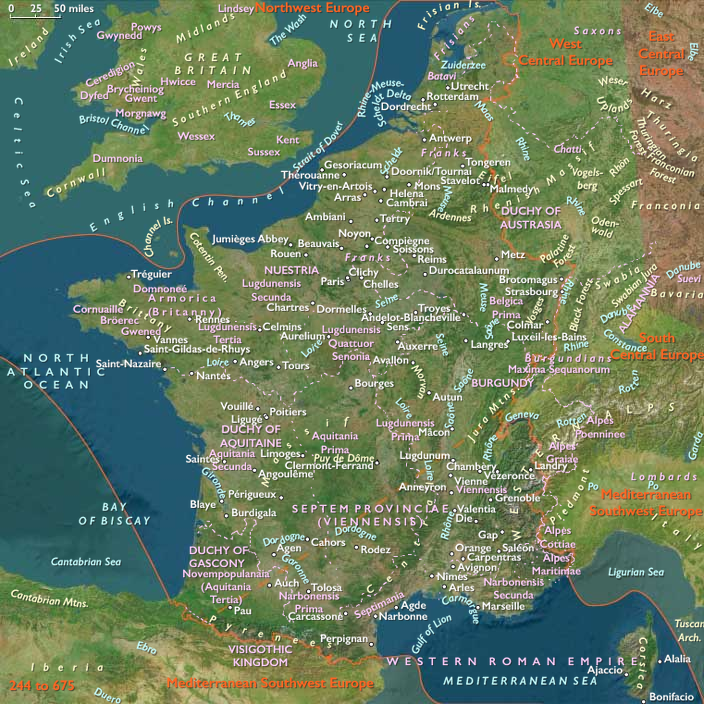
Subregions
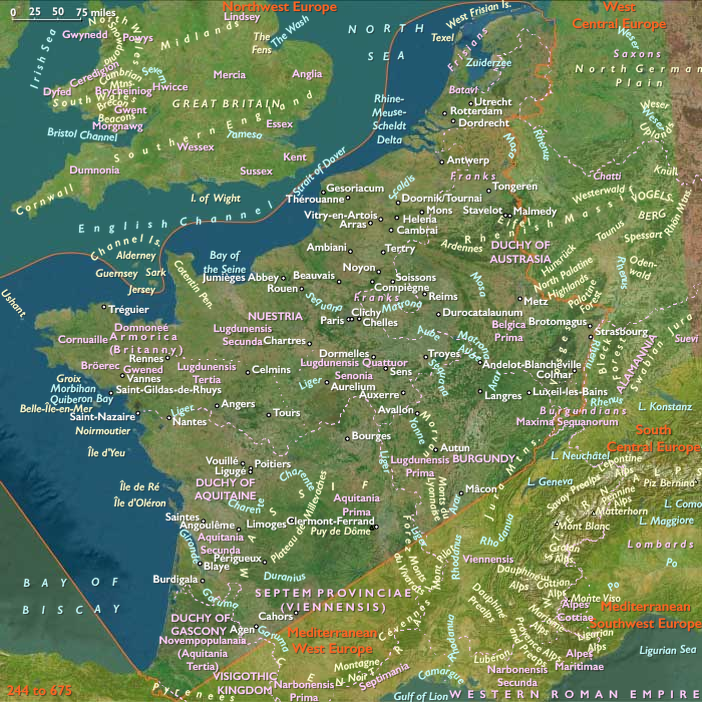
Years: 496 - 507
People
Groups
- Polytheism (“paganism”)
- Franks
- Gallo-Roman culture
- Armorica
- Gallia Lugdunensis (Roman province)
- Gallia Belgica (Roman province)
- Gallia Aquitania (Roman province)
- Saxons
- Burgundians (East Germanic tribe)
- Christianity, Arian
- Gaul, Praetorian prefecture of
- Visigoths, Realm of the
- Roman Empire, Western (Ravenna)
- Britain, Sub-Roman
- Visigothic Kingdom of Toulouse
- Burgundians, (second) Kingdom of the
- Christianity, Chalcedonian
Topics
- Roman Age Optimum
- Late Antiquity
- Migration Period
- Saxon Raids of 407-550
- Visigothic Raids on the Roman Empire, Later
- Vouillé, Battle of
Commodoties
Subjects
Regions
Subregions