
Atlantic West Europe, 412–423: The Fragmentation of …
Years: 412 - 423
Atlantic West Europe, 412–423: The Fragmentation of Roman Gaul and the Rise of Barbarian Kingdoms
Political and Military Developments
-
Collapse of Roman Authority in Gaul
Following the 410 Sack of Rome, Roman authority in Gaul fragmented sharply. In 413, Emperor Honorius recognized the Visigothic king, Ataulf, as a federate ally, ceding to him authority over parts of Aquitania. -
Visigothic Expansion
Under Ataulf (r. 410–415), and later Wallia (r. 415–418), the Visigoths solidified their control over southern Gaul, notably establishing the Kingdom of Toulouse (418). This became a stable and increasingly independent polity within the former Roman borders. -
Rise of the Burgundians
In 413, the Burgundians, led by King Gundahar, gained official Roman recognition as federates. They established their kingdom around Worms, later expanding toward the Rhône valley, laying the foundations of a powerful Burgundian kingdom. -
Armorican Autonomy
Armorica (modern Brittany) increasingly asserted its independence amid Roman disintegration, resisting central Roman attempts to restore control. Local leaders maintained autonomy by organizing regional defenses against Saxon coastal raids. -
Frankish Consolidation in Northern Gaul
The Franks, already settled in northeastern Gaul, expanded their influence, particularly in Belgica. Under their chieftains, including the early Merovingians, they consolidated control, laying groundwork for their dominance of northern Gaul.
Economic and Social Developments
-
Economic Decline and Ruralization
The widespread decline of Roman trade and urban life intensified, accelerating ruralization. Villas were abandoned or converted to fortified settlements, reflecting insecurity and economic decentralization. -
Local Self-Sufficiency
Regional economies became more localized, increasingly dependent on agriculture and internal trade networks as the Roman monetary system further collapsed.
Religious and Cultural Developments
-
Christianity and Local Authority
Bishops increasingly filled the void left by imperial authority, taking on secular roles as civic leaders. Saint Germanus of Auxerre (appointed bishop in 418) exemplified the growing role of bishops in both secular and spiritual governance. -
Monasticism and Spiritual Reform
Monastic communities emerged as important centers of learning, refuge, and religious devotion, particularly in southern Gaul and the Rhône Valley, signaling a shift toward medieval religious structures.
This period (412–423) marked the definitive breakdown of Roman Gaul, ushering in the emergence of distinct barbarian kingdoms (Visigoths, Burgundians, Franks) that would profoundly shape the political and cultural landscape of Atlantic West Europe for centuries.
People
Groups
- Polytheism (“paganism”)
- Franks
- Gallo-Roman culture
- Armorica
- Gallia Lugdunensis (Roman province)
- Gallia Belgica (Roman province)
- Gallia Aquitania (Roman province)
- Saxons
- Burgundians (East Germanic tribe)
- Christianity, Nicene
- Gaul, Praetorian prefecture of
- Visigoths, Realm of the
- Roman Empire, Western (Ravenna)
- Burgundians, (first) Kingdom of the
- Visigothic Kingdom of Toulouse
Topics
Commodoties
Subjects
Regions
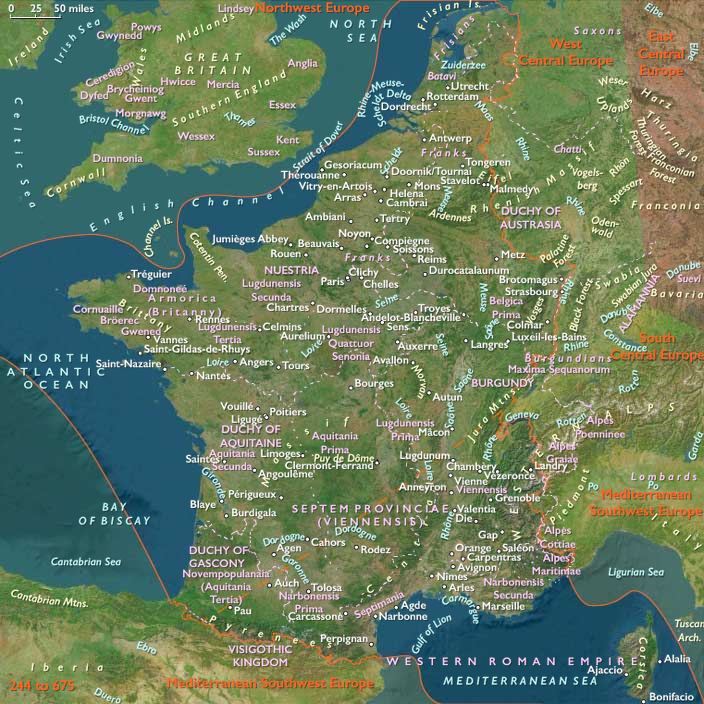
Subregions
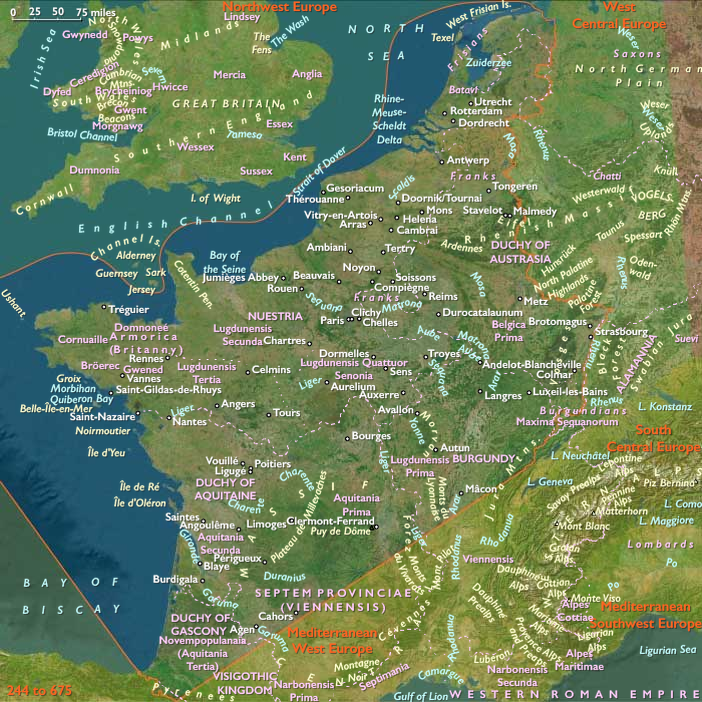
Related Events
Showing 10 events out of 59129 total
Years: 412 - 423
People
Groups
- Polytheism (“paganism”)
- Franks
- Gallo-Roman culture
- Armorica
- Gallia Lugdunensis (Roman province)
- Gallia Belgica (Roman province)
- Gallia Aquitania (Roman province)
- Saxons
- Burgundians (East Germanic tribe)
- Christianity, Nicene
- Gaul, Praetorian prefecture of
- Visigoths, Realm of the
- Roman Empire, Western (Ravenna)
- Burgundians, (first) Kingdom of the
- Visigothic Kingdom of Toulouse
Topics
Commodoties
Subjects
Regions
Subregions