
Atlantic West Europe, 352–363: Imperial Struggles and …
Years: 352 - 363
Atlantic West Europe, 352–363: Imperial Struggles and Religious Transformation
Political and Military Developments
-
Rise and Fall of Emperor Constantius II
-
After defeating the usurper Magnentius in 353, Constantius II reunited the Western Roman Empire, including Gaul, under his sole authority.
-
Constantius II faced persistent challenges along the Rhine frontier, engaging in campaigns against Germanic tribes, particularly the Alemanni, who intensified raids into Alsace and central Gaul.
-
-
Julian's Military and Administrative Reforms
-
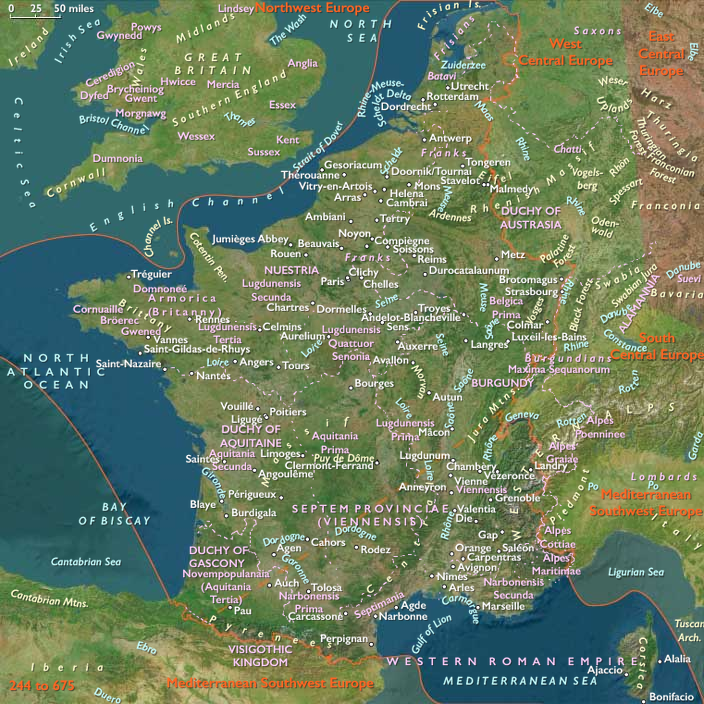
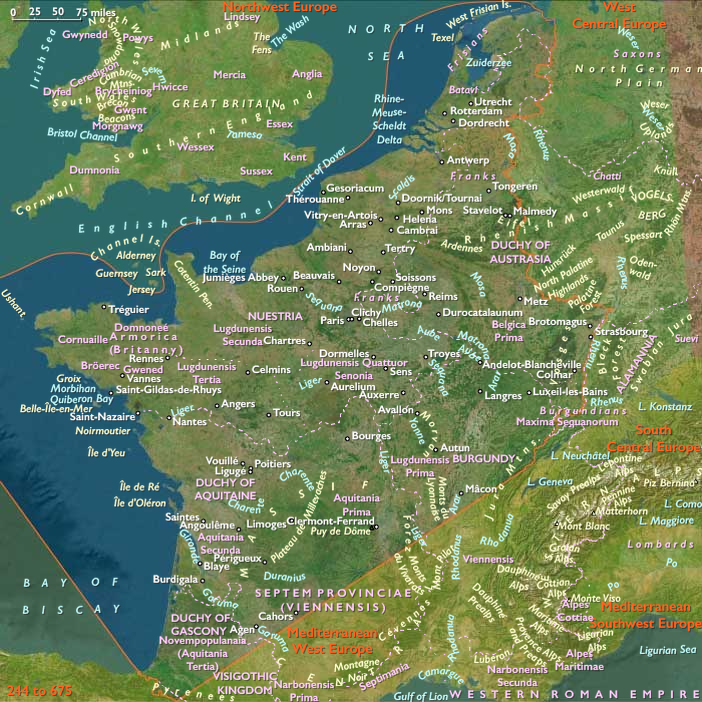
In 355, Constantius appointed his cousin Julian (the Apostate) as Caesar in Gaul, with authority centered in Paris.
-
Julian undertook effective military and administrative reforms, successfully defending the Rhine frontier and achieving notable victories, including the Battle of Strasbourg (Argentoratum) in 357, significantly strengthening the Roman presence in Alsace.
-
Economic and Social Developments
-
Recovery and Stability
-
Julian’s successful military campaigns brought stability, allowing urban centers like Bordeaux, Paris, and Trier to prosper economically.
-
Agricultural productivity and trade networks stabilized, bolstered by Julian’s reduction of taxes and administrative reforms aimed at improving provincial governance.
-
-
Social Reforms under Julian
-
Julian promoted traditional Roman civic values and attempted to reverse social and religious changes brought about by Christianity, resulting in a brief resurgence of pagan cultural traditions among elites.
-
Cultural and Religious Developments
-
Julian’s Pagan Revival
-
Julian actively sought to revive traditional Roman religious practices, reducing the privileges Christianity had enjoyed under previous emperors. His reforms briefly challenged the Christianization trend across Atlantic West Europe.
-
Despite Julian's policies, Christianity had already become deeply entrenched in urban and rural communities, limiting the long-term impact of his revival efforts.
-
-
Christian Resilience and Bishops’ Influence
-
Christian bishops maintained significant influence and moral authority in cities such as Poitiers (under Bishop Hilary) and Tours (soon to be the site of Martin of Tours' influential episcopate).
-
Christianity continued to expand at the grassroots level, demonstrating resilience in the face of Julian’s policies.
-
Significance
Between 352 and 363, Atlantic West Europe experienced significant military stabilization and temporary cultural upheaval due to Julian’s pagan revival. Julian’s death in 363 would set the stage for Christianity’s definitive establishment as the region’s dominant religion in subsequent decades.
People
Groups
- Polytheism (“paganism”)
- Franks
- Gallo-Roman culture
- Gallia Lugdunensis (Roman province)
- Gallia Aquitania (Roman province)
- Gallia Belgica (Roman province)
- Alamanni (Germanic tribal alliance)
- Christianity, Arian
- Christianity, Nicene
- Roman Empire: Constantinian dynasty (Constantinople)
Topics
Commodoties
Subjects
Regions
Subregions
Years: 352 - 363
People
Groups
- Polytheism (“paganism”)
- Franks
- Gallo-Roman culture
- Gallia Lugdunensis (Roman province)
- Gallia Aquitania (Roman province)
- Gallia Belgica (Roman province)
- Alamanni (Germanic tribal alliance)
- Christianity, Arian
- Christianity, Nicene
- Roman Empire: Constantinian dynasty (Constantinople)
Topics
Commodoties
Subjects
Regions
Subregions