
Atlantic West Europe, 328–339: Strengthening Imperial and …
Years: 328 - 339
Atlantic West Europe, 328–339: Strengthening Imperial and Religious Structures
Political and Military Developments
-
Constantine’s Final Reforms (328–337)
-
Emperor Constantine I further centralized administrative power, solidifying imperial control across Atlantic West Europe from his residence in Trier.
-
Constantine strengthened frontier fortifications along the Rhine, significantly reducing incursions by Germanic tribes and ensuring regional security.
-
-
Succession and Division (337–339)
-
Constantine’s death in 337 led to a temporary power vacuum and subsequent division of the empire among his sons (Constantine II, Constantius II, and Constans).
-
Constantine II initially ruled over Gaul, Britain, and Hispania, with Trier continuing as a major political and military center.
-
Economic and Social Developments
-
Continued Urban and Economic Growth
-
Urban centers, notably Trier, Bordeaux, Poitiers, and Lyon, flourished economically, benefiting from stability, imperial patronage, and trade networks.
-
The wine industry, especially around Bordeaux, continued its expansion, becoming increasingly vital to the region’s economic integration into Mediterranean trade routes.
-
-
Rural Prosperity and Agricultural Productivity
-
Large rural estates (villae) prospered under stable imperial rule, generating agricultural surpluses, which further encouraged economic stability and population growth in the region.
-
Cultural and Religious Developments
-
Christianity as Imperial Religion
-
Constantine’s patronage resulted in Christianity's rapid institutionalization throughout Atlantic West Europe, with increased construction of churches, basilicas, and Christian schools in cities like Trier, Poitiers, and Lyon.
-
The prominent roles of bishops grew stronger, combining civic authority and spiritual influence, notably evident with figures like Hilary of Poitiers (though he would rise to prominence slightly later).
-
-
Persisting Pagan Traditions
-
While Christianity advanced dramatically in urban areas, traditional Roman religious practices remained significant in rural communities, revealing a cultural continuity and coexistence during this transitional period.
-
Significance
The era 328–339 saw the continuation and deepening of Constantine’s reforms, dramatically shaping Atlantic West Europe. The imperial division after 337 introduced new political complexities, but the fundamental economic prosperity and Christian cultural shift remained securely established.
People
Groups
- Polytheism (“paganism”)
- Franks
- Gallo-Roman culture
- Gallia Lugdunensis (Roman province)
- Gallia Aquitania (Roman province)
- Gallia Belgica (Roman province)
- Alamanni (Germanic tribal alliance)
- Roman Empire: Constantinian dynasty (Nicomedia)
- Christianity, Nicene
- Roman Empire: Constantinian dynasty (Constantinople)
Topics
Commodoties
Subjects
Regions
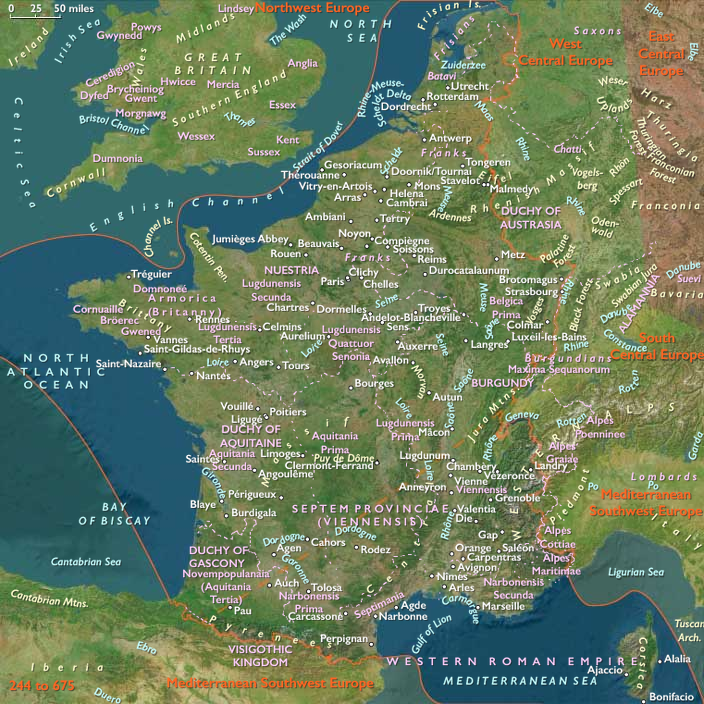
Subregions
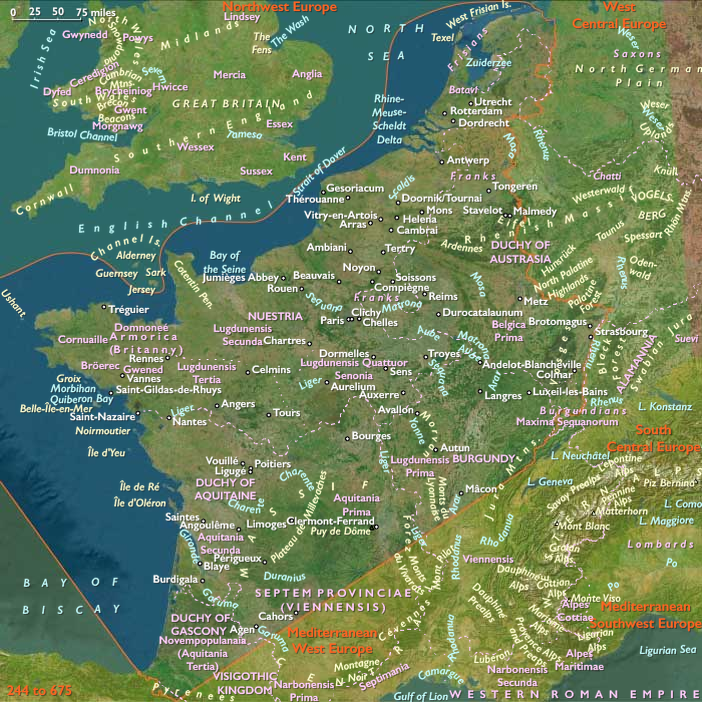
Years: 328 - 339
People
Groups
- Polytheism (“paganism”)
- Franks
- Gallo-Roman culture
- Gallia Lugdunensis (Roman province)
- Gallia Aquitania (Roman province)
- Gallia Belgica (Roman province)
- Alamanni (Germanic tribal alliance)
- Roman Empire: Constantinian dynasty (Nicomedia)
- Christianity, Nicene
- Roman Empire: Constantinian dynasty (Constantinople)
Topics
Commodoties
Subjects
Regions
Subregions