
Atlantic West Europe, 304–315: Imperial Reorganization, Persecution, …
Years: 304 - 315
Atlantic West Europe, 304–315: Imperial Reorganization, Persecution, and Early Constantine Era
Political and Military Developments
-
Great Persecution and Its Impact
-
Diocletian’s Great Persecution (303–311) severely affected Christian communities in Atlantic West Europe. Significant persecutions occurred notably in cities such as Trier, Lyon, and Poitiers, testing but ultimately strengthening the region’s Christian infrastructure.
-
-
Rise of Constantine the Great
-
In 306, Constantine the Great was proclaimed emperor by his troops in York (Eboracum), Britain, quickly establishing his authority over Atlantic West Europe.
-
Following his victory at the Battle of the Milvian Bridge (312), Constantine began integrating Gaul more firmly into his expanding western empire, initiating significant administrative reforms from Trier.
-
-
Administrative and Military Reforms
-
Constantine expanded and reorganized provincial administrations to improve efficiency and taxation.
-
Strengthened military infrastructure along the Rhine frontier limited Germanic incursions, securing regional stability.
-
Economic and Social Developments
-
Recovery and Prosperity Under Constantine
-
Constantine’s reforms, including monetary stabilization with the introduction of the gold solidus, revitalized trade networks across Gaul.
-
Urban centers like Bordeaux, Trier, Tours, and Poitiers experienced renewed prosperity through improved economic management and imperial patronage.
-
-
Consolidation of Rural Wealth
-
Landholding elites continued to consolidate rural estates, increasing agricultural productivity and economic stability in rural Gaul.
-
Cultural and Religious Developments
-
End of Persecutions and Christian Consolidation
-
Constantine’s Edict of Milan (313) legalized Christianity, facilitating a rapid expansion and institutional consolidation of the faith across Atlantic West Europe.
-
Cities such as Trier and Tours became early episcopal seats, establishing lasting religious infrastructures.
-
-
Rise of Ecclesiastical Influence
-
Bishops gained considerable social influence, becoming key mediators between the imperial administration and local communities.
-
Significance
The era of 304–315 marked a transformative shift in Atlantic West Europe, characterized by Constantine’s rise and the end of religious persecution. Administrative reforms, economic revitalization, and Christianity’s newfound legitimacy significantly reshaped the region, laying lasting foundations for subsequent centuries.
People
Groups
- Franks
- Gallo-Roman culture
- Gallia Lugdunensis (Roman province)
- Gallia Aquitania (Roman province)
- Gallia Belgica (Roman province)
- Christians, Early
- Alamanni (Germanic tribal alliance)
- Roman Empire: Tetrarchy
Topics
- Roman Age Optimum
- Crisis of the Third Century (Roman Civil “War” of 235-84)
- Diocletianic Persecution
- Civil wars of the Tetrarchy
- Milvian Bridge, Battle of the
Commodoties
Subjects
Regions

Subregions
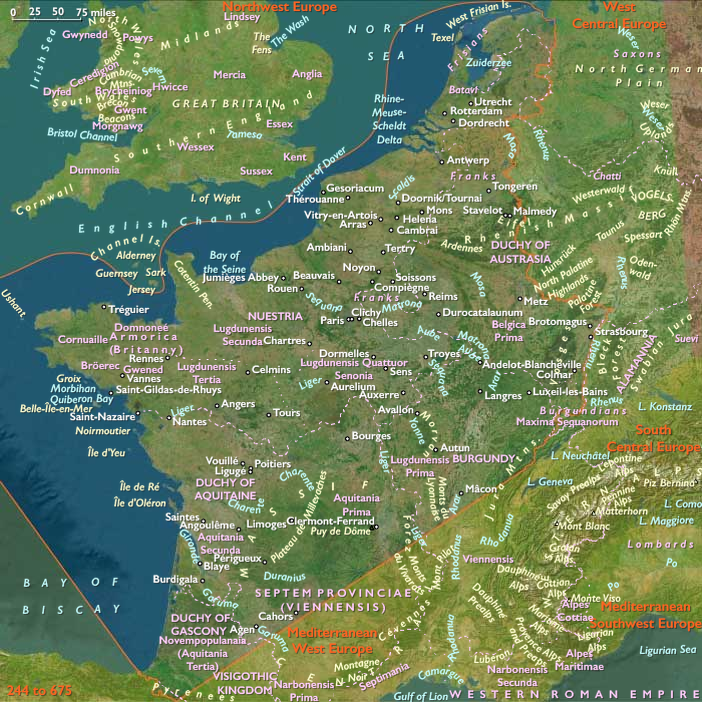
Years: 304 - 315
People
Groups
- Franks
- Gallo-Roman culture
- Gallia Lugdunensis (Roman province)
- Gallia Aquitania (Roman province)
- Gallia Belgica (Roman province)
- Christians, Early
- Alamanni (Germanic tribal alliance)
- Roman Empire: Tetrarchy
Topics
- Roman Age Optimum
- Crisis of the Third Century (Roman Civil “War” of 235-84)
- Diocletianic Persecution
- Civil wars of the Tetrarchy
- Milvian Bridge, Battle of the
Commodoties
Subjects
Regions
Subregions