
Atlantic West Europe (9 BCE–CE 3): Stability, …
Years: 9BCE - 3
Atlantic West Europe (9 BCE–CE 3): Stability, Urban Expansion, and Consolidation of Roman Influence
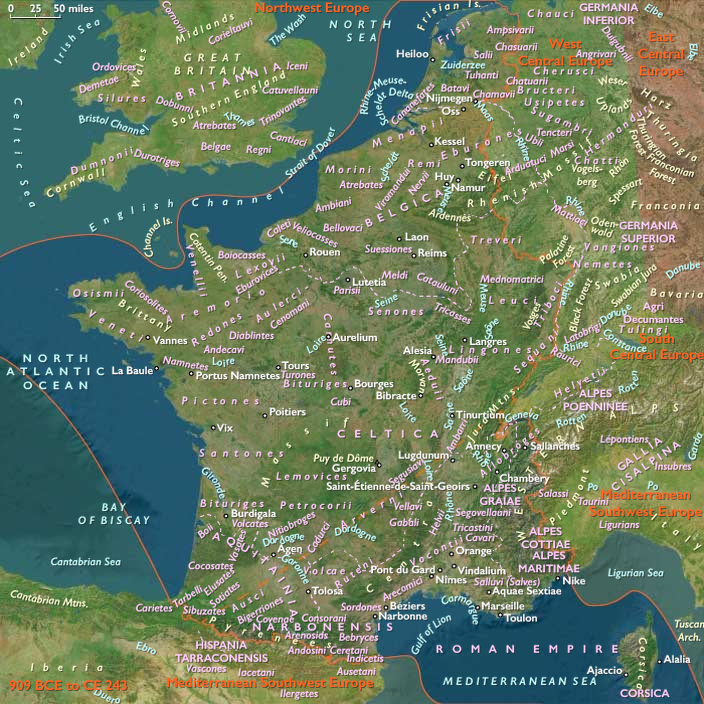
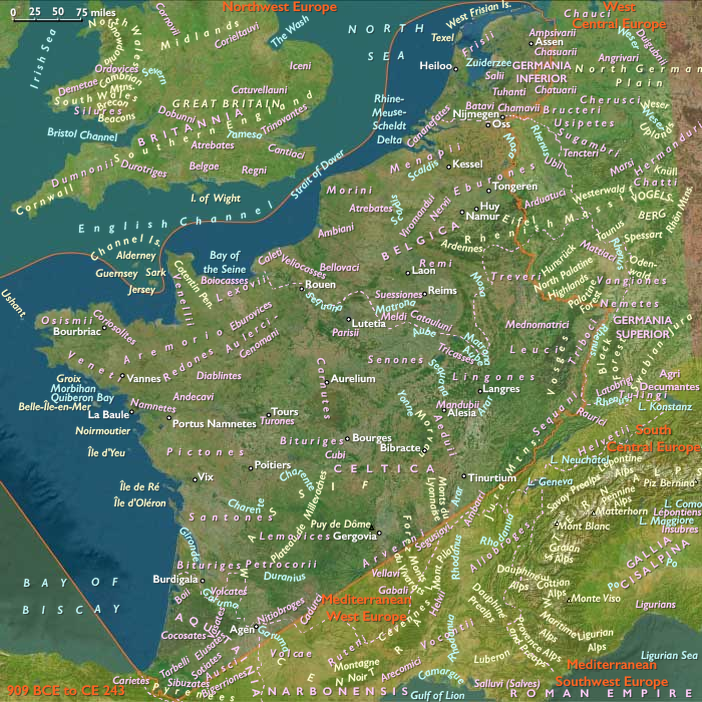
Between 9 BCE and CE 3, Atlantic West Europe—including Aquitaine, the Atlantic coast, northern and central France, Alsace, and the Low Countries—experienced sustained stability and prosperity under Augustus's rule, benefiting greatly from the Pax Romana. This era witnessed extensive economic growth, urban development, and cultural integration into the Roman imperial framework.
Political and Military Developments
Pax Romana and Regional Stability
-
Augustus maintained peace, focusing Roman military activities on internal security rather than expansion.
-
Local elites cooperated increasingly with Roman administration, leading to a smooth integration of indigenous leadership into imperial governance.
Administrative Strengthening
-
Augustus’s provincial reforms standardized taxation and streamlined local governance, bringing uniformity to administration across the region.
-
Key urban centers such as Burdigala (Bordeaux), Durocortorum (Reims), and Lutetia (Paris) expanded significantly, becoming focal points of Roman administration and civic life.
Economic and Social Developments
Expansion of Trade and Industry
-
Aquitaine, especially around Burdigala, saw its wine production flourish, becoming a cornerstone of the regional economy and an important commodity across the empire.
-
Northern Gaul and the Low Countries expanded their economic base through increased production and exportation of textiles, ceramics, metal goods, and agricultural surplus, reinforcing their regional economic prominence.
Urbanization and Romanization
-
Major towns such as Gesoriacum (Boulogne-sur-Mer) and Lutetia saw significant population increases and civic development, adopting Roman-style urban planning with forums, public baths, amphitheaters, and temples.
-
Roman roads facilitated communication, military movement, and commerce, further integrating the region into the imperial economic system.
Cultural and Religious Developments
Integration of Roman and Local Traditions
-
The Roman Imperial Cult continued to grow in prominence, reinforcing provincial loyalty to Augustus and imperial ideals.
-
Local religious customs blended with Roman practices, resulting in a distinct, hybridized Gallo-Roman culture that characterized the region's identity.
Education and Linguistic Development
-
The spread of Latin education among the provincial elite fostered deeper Romanization, creating an educated, Latin-speaking class influential in regional governance and culture.
-
This linguistic integration established a strong foundation for later medieval and early modern European languages.
Key Figures and Events
-
Augustus Caesar: His rule significantly shaped Atlantic West Europe’s political stability, economic prosperity, and cultural integration within the Roman Empire.
-
Local Gallic Elites: Played a critical role in smoothly bridging Roman authority and local customs, facilitating effective provincial governance.
Long-Term Significance
By CE 3, Atlantic West Europe had firmly established itself as a stable and prosperous region deeply integrated into the Roman Empire:
-
The Pax Romana fostered urban growth, economic prosperity, and enhanced trade networks.
-
Cultural and linguistic Romanization formed the basis of enduring Gallo-Roman identity.
-
The region’s stability and wealth positioned it as a core part of the empire’s northwestern territories, laying foundations for its influential historical role in the centuries to come.
People
Groups
- Polytheism (“paganism”)
- Gallo-Roman culture
- Roman Principate (Rome)
- Gallia Lugdunensis (Roman province)
- Gallia Aquitania (Roman province)
- Gallia Belgica (Roman province)
Topics
Commodoties
Subjects
Regions
Subregions
Related Events
Showing 10 events out of 62125 total
Years: 9BCE - 3
People
Groups
- Polytheism (“paganism”)
- Gallo-Roman culture
- Roman Principate (Rome)
- Gallia Lugdunensis (Roman province)
- Gallia Aquitania (Roman province)
- Gallia Belgica (Roman province)
Topics
Commodoties
Subjects
Regions
Subregions