
Atlantic West Europe (1936–1947): From Crisis and …
Years: 1936 - 1947
Atlantic West Europe (1936–1947): From Crisis and Occupation to Liberation and Renewal
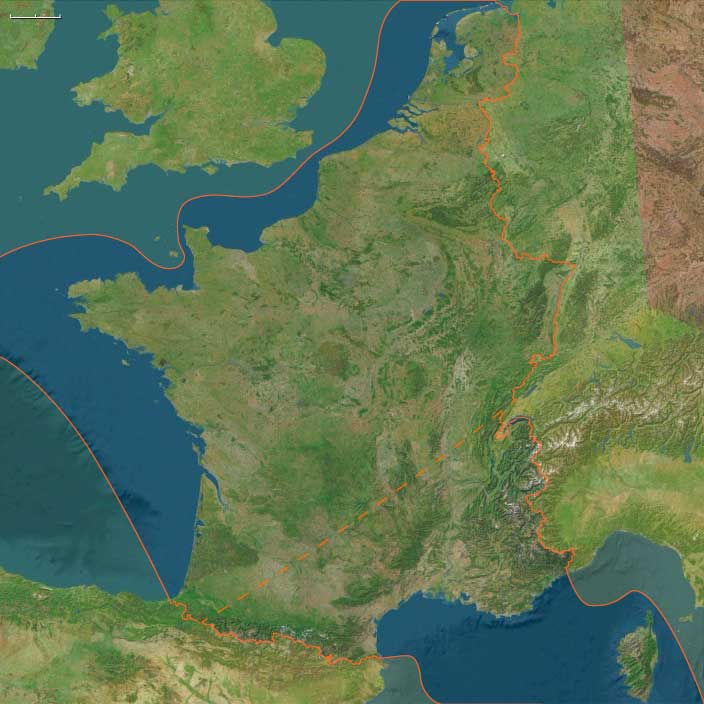
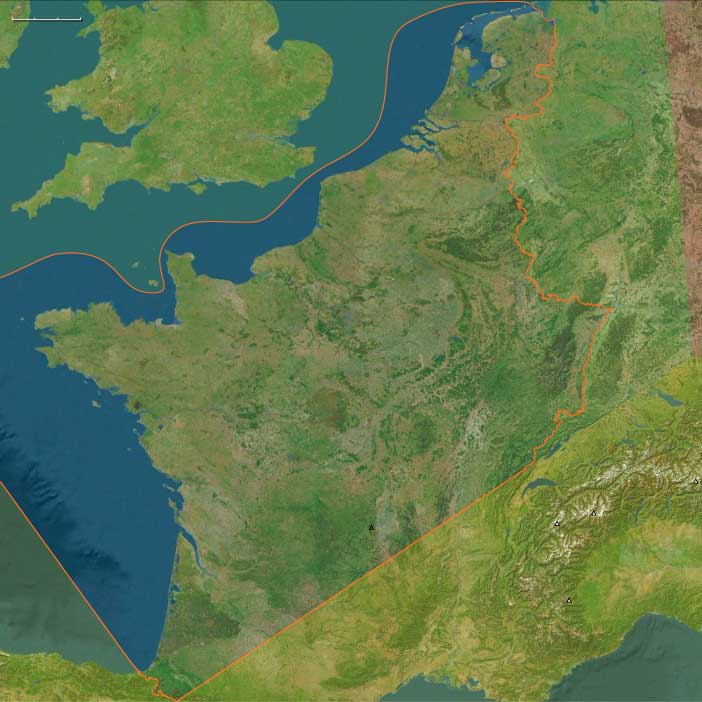
Between 1936 and 1947, Atlantic West Europe—encompassing northern France, Belgium, the Netherlands, Luxembourg, and the Atlantic and Channel coasts—underwent a profound and traumatic transformation. This period was dominated by political upheaval, devastating war, occupation, resistance, and ultimately liberation. By 1947, the region began a challenging reconstruction and renewal, significantly reshaping its political, social, and cultural landscapes.
Political and Military Developments
Rise of Authoritarianism and Prelude to War (1936–1939)
-
Political polarization intensified dramatically across Atlantic West Europe, notably in France, where the Popular Front government (1936–1938) briefly united leftist forces against rising fascism but struggled with internal divisions.
-
Belgium maintained neutrality, yet faced internal tensions from Flemish nationalist movements sympathetic to fascist ideologies. The Netherlands and Luxembourg adhered to strict neutrality, anxiously monitoring Germany’s expanding aggression.
World War II: Occupation and Resistance (1940–1944)
-
In May 1940, Germany launched a rapid invasion through Belgium, Luxembourg, and the Netherlands, swiftly defeating Allied forces and occupying northern France.
-
The occupation subjected populations to severe hardships, including forced labor, economic exploitation, persecution of minorities (particularly Jews and Roma), and suppression of civil liberties.
-
Northern France, Belgium, and the Netherlands experienced active, multifaceted resistance movements that sabotaged German operations, provided intelligence to the Allies, and sustained national morale. Notable groups included the French Resistance (Résistance), the Belgian Secret Army (Armée Secrète), and the Dutch Resistance (Verzet).
Liberation and Postwar Political Realignments (1944–1947)
-
Liberation began with the Normandy landings (D-Day, June 6, 1944), as Allied forces gradually freed northern France, Belgium, Luxembourg, and the Netherlands, reaching full liberation by mid-1945.
-
Postwar politics shifted dramatically. France’s Fourth Republic emerged in 1946, defined by political fragmentation and coalition governments. Belgium’s monarchy faced a crisis due to King Leopold III’s wartime conduct, leading to temporary regency and eventual abdication.
-
The Netherlands and Luxembourg restored democratic governance, strongly influenced by the wartime experience, prompting greater integration within emerging European frameworks.
Economic and Social Developments
Wartime Devastation and Economic Dislocation
-
The war severely damaged industrial and urban infrastructure, particularly in cities such as Rotterdam, Antwerp, Lille, and Caen. Extensive bombing, combat, and German scorched-earth policies caused severe economic disruption.
-
Agriculture suffered greatly under occupation, with widespread food shortages, rationing, and starvation, most notably during the Dutch famine (Hunger Winter, 1944–1945).
Postwar Economic Reconstruction (1945–1947)
-
Postwar recovery began with massive international aid, notably through the American Marshall Plan (announced in 1947). Northern France, Belgium, and the Netherlands actively initiated industrial and agricultural reconstruction, laying the foundations for significant economic recovery and growth in subsequent decades.
-
Industrial recovery focused on coal mining, steel production, and manufacturing, particularly in the Ruhr-connected economies of northern France and Belgium, establishing the groundwork for future European economic integration.
Emergence of Welfare States
-
Postwar governments, particularly in France, Belgium, and the Netherlands, expanded welfare systems extensively, influenced by wartime social solidarity and demands for social justice. Universal healthcare, unemployment benefits, housing support, and education reforms reshaped social policies profoundly.
Cultural and Intellectual Developments
Wartime Cultural Resilience and Resistance
-
Despite severe oppression, cultural resistance thrived clandestinely. Literature, underground newspapers, music, and art served as critical outlets for defiance and national solidarity.
-
Writers and intellectuals, including Albert Camus, Jean-Paul Sartre, and Dutch authors like Anne Frank (whose diary documented wartime experiences), profoundly shaped postwar cultural narratives of resistance, resilience, and existential reflection.
Postwar Cultural Revival and Existentialism
-
After liberation, existentialist philosophy emerged powerfully, especially in France, addressing wartime traumas and human freedom, significantly influencing European intellectual and cultural life.
-
Artistic and cultural revival expressed itself in cinema, literature, and philosophy, marking the region as a central stage for European cultural renewal in the postwar era.
Social Transformations and Humanitarian Crises
Persecution and Holocaust
-
German occupation brought immense human suffering, particularly the systematic persecution and deportation of Jews. Significant Jewish communities in Amsterdam, Antwerp, and northern France were decimated, deeply scarring regional histories and communities.
-
Postwar societies faced complex issues of collaboration and resistance, grappling deeply with accountability, memorialization, and reconciliation.
Population Movements and Reconstruction Efforts
-
The immediate postwar years involved major population shifts, including the return of forced laborers, prisoners of war, and concentration camp survivors. Extensive humanitarian efforts addressed immediate housing, medical, and nutritional needs.
-
Urban reconstruction reshaped cities profoundly, with large-scale rebuilding projects modernizing infrastructure and reshaping social dynamics.
Religious and Ideological Changes
Decline of Institutional Religious Influence
-
Postwar societies increasingly secularized, especially in urban areas, although Catholic and Protestant institutions retained significant social roles, particularly through education, charitable activities, and postwar humanitarian efforts.
Ideological Reorientation Toward Democracy and European Integration
-
The wartime experience intensified commitments to democracy, human rights, and international cooperation, profoundly influencing regional politics and ideological landscapes.
-
The foundation of European integration initiatives (such as the Benelux Customs Union, formed in 1944, and early steps toward the European Coal and Steel Community in subsequent years) reflected ideological shifts toward cooperation and shared governance.
Legacy and Long-Term Consequences
The period from 1936 to 1947 fundamentally transformed Atlantic West Europe:
-
Politically, wartime devastation reshaped governance structures and encouraged democratic reconstruction, despite ongoing challenges from political fragmentation.
-
Economically, the region confronted immense destruction yet quickly initiated rebuilding efforts, laying the groundwork for unprecedented prosperity in subsequent decades through international cooperation and integration.
-
Socially, profound traumas led to expanded welfare policies, increased social solidarity, and strengthened demands for equality and human rights.
-
Culturally, the wartime experience deeply influenced intellectual life, fostering existentialist philosophies, powerful narratives of resistance and resilience, and cultural renewal that resonated deeply throughout postwar Europe.
By 1947, Atlantic West Europe stood poised on the brink of remarkable renewal and profound transformation, driven by wartime experiences and emerging visions of unity, peace, and prosperity.
Groups
- Jews
- Christians, Roman Catholic
- Protestantism
- Britain (United Kingdom of Great Britain and Ireland)
- Belgium, Kingdom of
- Netherlands, Kingdom of The
- France (French republic); the Third Republic
- Germany, Weimar Republic of
- Germany, Third Reich
- France, Free
- France (French republic); the Fourth Republic
Topics
- Western Art: Second World War Era
- World War, Second (World War II)
- Normandy, Invasion of
- Second World War on the Western Front
Commodoties
Subjects
- Writing
- Watercraft
- Painting and Drawing
- Performing Arts
- Public health
- Labor and Service
- Conflict
- Faith
- Scholarship
- Custom and Law
- art movements
- political movement
- workers' movement
- social movements
Regions
Subregions
Related Events
Showing 10 events out of 6145 total
Years: 1936 - 1947
Groups
- Jews
- Christians, Roman Catholic
- Protestantism
- Britain (United Kingdom of Great Britain and Ireland)
- Belgium, Kingdom of
- Netherlands, Kingdom of The
- France (French republic); the Third Republic
- Germany, Weimar Republic of
- Germany, Third Reich
- France, Free
- France (French republic); the Fourth Republic
Topics
- Western Art: Second World War Era
- World War, Second (World War II)
- Normandy, Invasion of
- Second World War on the Western Front
Commodoties
Subjects
- Writing
- Watercraft
- Painting and Drawing
- Performing Arts
- Public health
- Labor and Service
- Conflict
- Faith
- Scholarship
- Custom and Law
- art movements
- political movement
- workers' movement
- social movements
Regions
Subregions