
Atlantic West Europe (165–154 BCE): Expansion of …
Years: 165BCE - 154BCE
Atlantic West Europe (165–154 BCE): Expansion of Tribal Power and Economic Integration
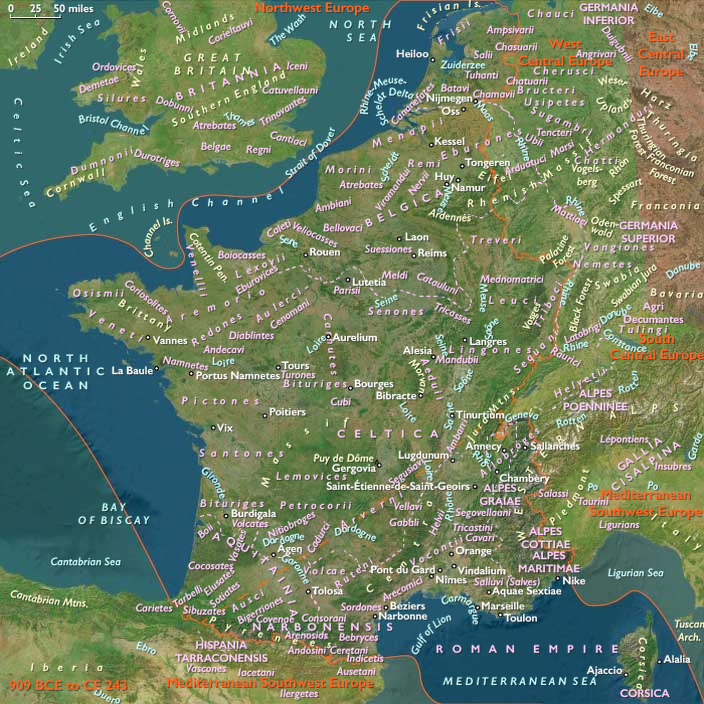
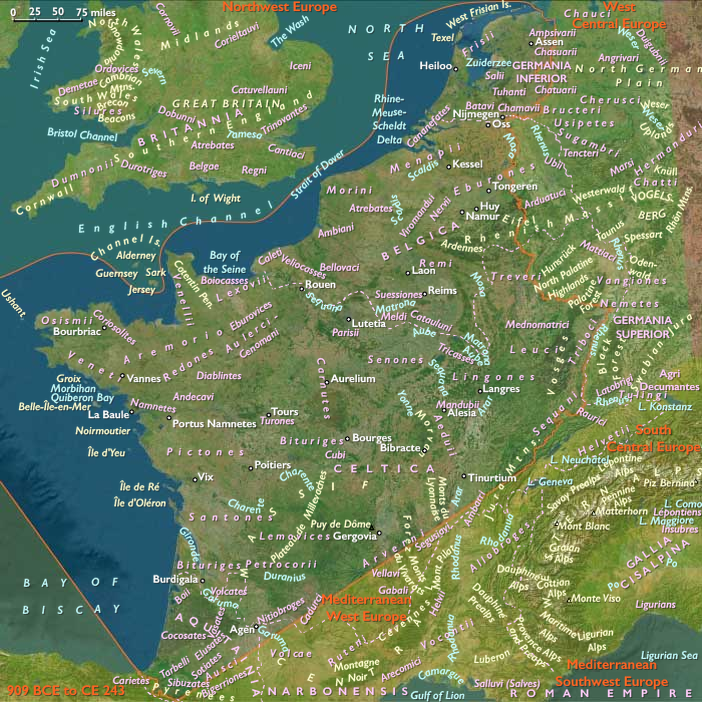
Between 165 and 154 BCE, Atlantic West Europe—including Aquitaine, the Atlantic coast, northern and central Gaul (modern France), Alsace, and the Low Countries—continued to experience steady political consolidation, increased economic integration, and expanding trade with Mediterranean societies. This era saw strengthened indigenous power structures, intensified maritime commerce, and significant cultural interactions that linked the region more closely to the broader European world.
Political and Military Developments
Consolidation and Rivalries among Celtic Tribes
-
Arverni and Aedui: Continued consolidation of power and influence in central Gaul, though competition intensified between these two major tribal confederations over control of trade routes and territory.
-
Belgae Tribes (Nervii, Bellovaci): Strengthened alliances in northern Gaul and the Low Countries, reinforcing regional defense against external and internal threats, including tribes like the Remi and Suessiones, and eastern pressures from the Treveri and Mediomatrici.
-
Armorican Tribes (Veneti): Enhanced maritime strength, exerting control over Atlantic trade routes and coastal territories of Brittany, despite growing challenges from neighboring coastal tribes such as the Namnetes, Coriosolites, and southern maritime competitors like the Pictones and Santones.
Limited Roman Presence, Growing Influence
-
Though Roman direct political control remained distant, Roman merchants and diplomats expanded their informal influence through intensified economic exchanges, especially via Massalia (Marseille).
-
Gaulish elites increasingly engaged in diplomatic interactions with Roman and Greek traders, enhancing their own prestige and authority.
Economic and Social Developments
Expansion of Maritime Trade Networks
-
The period witnessed increased traffic between Atlantic West Europe and the Mediterranean, importing luxury goods such as ceramics, wines, olive oil, and jewelry.
-
Coastal tribes, particularly the Veneti, profited significantly from controlling maritime trade routes and exporting regional products, such as metals (tin, silver, gold), salt, grain, wool, textiles, and slaves.
-
Slave trade continued as an economically vital practice, bolstering the wealth and social influence of tribal elites.
Growth of Proto-urban Centers (Oppida)
-
Continued development of large fortified settlements (oppida), serving as administrative, economic, and cultural hubs, stimulated trade and craft specialization.
-
Notable oppida emerged as centers of trade and craftsmanship, such as those at Bibracte (Aedui territory) and Gergovia (Arverni territory).
Cultural and Religious Developments
Artistic Flourishing (La Tène Culture)
-
Artistic traditions under La Tène influence thrived, characterized by intricate metalwork, jewelry, decorative weaponry, and elaborate pottery.
-
Rich burials reflecting wealth and status underscored increased social stratification and the importance of displaying power and prestige, often including imported Mediterranean luxury items.
Druidic Religion and Cultural Cohesion
-
Druids maintained significant authority as religious leaders, legal judges, and intellectual figures, promoting cultural unity through shared spiritual practices and traditions.
-
Expansion of ritual sites and sacred groves reinforced communal bonds and identity.
Notable Tribal Powers and Settlements
-
Arverni (Central Gaul): Dominant political and military power, controlling vital trade routes linking the Atlantic to central Europe.
-
Aedui: Continued economic ascendancy due to strategic location along major trade routes, facilitating extensive Mediterranean trade.
-
Veneti (Armorican Coast): Strengthened maritime and economic dominance over Atlantic trade routes.
-
Belgae Confederations (Northern Gaul): Reinforced alliances, territorial defense, and economic resilience in the Low Countries region.
Long-Term Significance and Legacy
Between 165 and 154 BCE, Atlantic West Europe:
-
Experienced strengthened indigenous political structures, laying groundwork for effective regional responses to future Roman expansion.
-
Deepened economic integration into Mediterranean trade networks, increasing regional wealth and sophistication.
-
Reinforced cultural identity through the continued flourishing of La Tène artistic traditions, the central role of Druids, and growing societal complexity marked by oppida settlements.
This era represented continued growth and integration, preparing Atlantic West Europe for subsequent challenges and opportunities associated with increasing Roman interest and expansion into Gaul.
Groups
- Veneti (Gaul)
- Arverni (Gaulish tribe)
- Gauls
- Roman Republic
- Aedui (Gaulish tribe)
- Santones (Gaulish tribe)
- Pictones
- Nervii (Belgic tribe)
- Namnetes (Gaulish tribe)
- Belgae (Gaul)
- Bellovaci (Belgic tribe)
- Mediomatrici (Gaulish tribe)
- Coriosolites (Gaulish tribe)
- Suessiones (Gaulish tribe)
- Remi (Gaulish tribe)
- Treveri (Gaulish tribe)
Topics
Commodoties
- Grains and produce
- Ceramics
- Strategic metals
- Salt
- Slaves
- Beer, wine, and spirits
- Lumber
- Manufactured goods
Subjects
Regions
Subregions
Related Events
Showing 10 events out of 63228 total
Years: 165BCE - 154BCE
Groups
- Veneti (Gaul)
- Arverni (Gaulish tribe)
- Gauls
- Roman Republic
- Aedui (Gaulish tribe)
- Santones (Gaulish tribe)
- Pictones
- Nervii (Belgic tribe)
- Namnetes (Gaulish tribe)
- Belgae (Gaul)
- Bellovaci (Belgic tribe)
- Mediomatrici (Gaulish tribe)
- Coriosolites (Gaulish tribe)
- Suessiones (Gaulish tribe)
- Remi (Gaulish tribe)
- Treveri (Gaulish tribe)
Topics
Commodoties
- Grains and produce
- Ceramics
- Strategic metals
- Salt
- Slaves
- Beer, wine, and spirits
- Lumber
- Manufactured goods
Subjects
Regions
Subregions