
Atlantic West Europe (1780–1791): Revolutionary Tensions, Economic …
Years: 1780 - 1791
Atlantic West Europe (1780–1791): Revolutionary Tensions, Economic Strains, and the Prelude to Upheaval
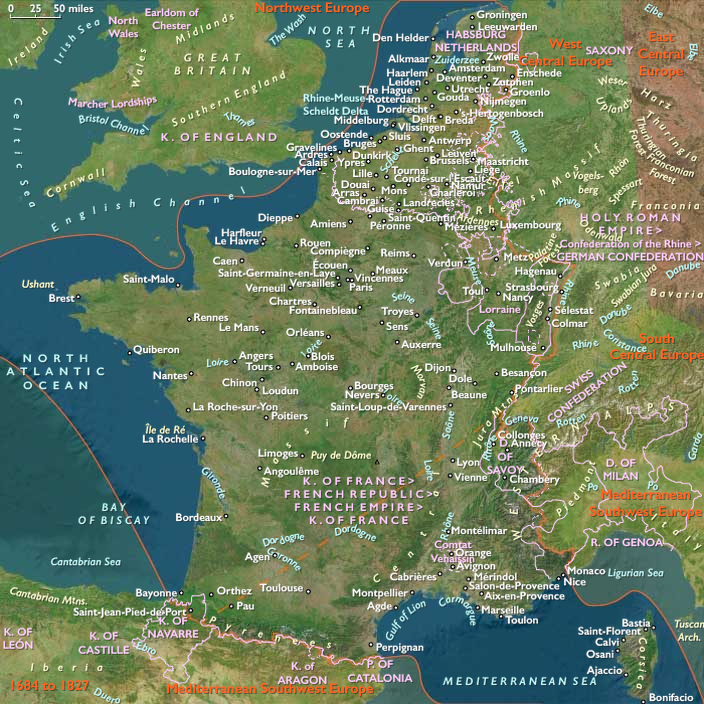
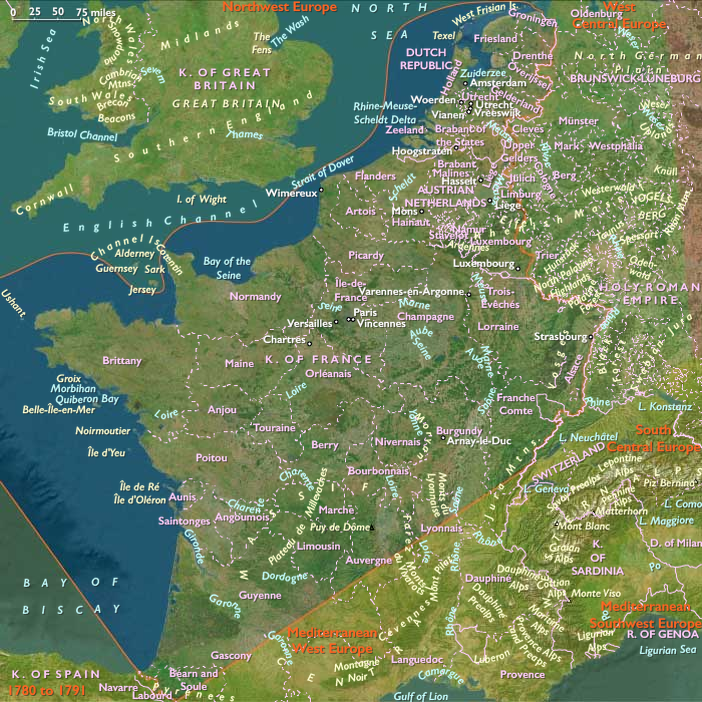
Between 1780 and 1791, Atlantic West Europe—comprising northern France, the Low Countries (modern Belgium, Netherlands, Luxembourg), and the Atlantic-facing and English Channel coastal regions—stood at a historic turning point. Marked by intensified revolutionary fervor, deepening economic pressures, Enlightenment-inspired critiques of established authority, and escalating social tensions, this era directly precipitated monumental political transformations, most notably the French Revolution of 1789.
Political and Administrative Developments
Rising Tensions and Prelude to Revolution in France
-
Under Louis XVI (r.1774–1792), France grappled with mounting fiscal crises, notably due to debts accumulated from aiding the American Revolution (1775–1783). Ministers, including Jacques Necker and Charles Alexandre de Calonne, attempted fiscal reforms but faced vehement resistance from aristocratic and clerical elites.
-
The convening of the Estates-General (1789)—France’s legislative body, dormant since 1614—was a response to the fiscal impasse but quickly evolved into a political catalyst, igniting revolutionary demands for constitutional governance, equal representation, and the dismantling of feudal privileges.
Revolt and Reform in the Austrian Netherlands
-
Under Emperor Joseph II (r.1780–1790), extensive Enlightenment-inspired reforms sought centralization, religious tolerance, and reduced ecclesiastical influence, sparking widespread unrest in the Austrian Netherlands (Belgium).
-
The Brabant Revolution (1789–1790) emerged as a regional revolt against Austrian centralization, establishing a short-lived United States of Belgium (1790), which briefly asserted local autonomy before Habsburg control was re-established under Leopold II (r.1790–1792).
Dutch Republic: Patriotic Movement and Foreign Intervention
-
In the Dutch Republic, the Patriotic Revolution (1780–1787)—driven by progressive political societies demanding republican reforms and reduced monarchical influence—challenged traditional Orangist dominance.
-
The revolution ended with Prussian military intervention (1787), reinstating Orangist authority, yet profoundly altering Dutch political culture and laying foundations for future republican reforms.
Economic Developments: Prosperity, Crisis, and Transition
Maritime Trade Prosperity and Vulnerability
-
Atlantic trade remained prosperous, notably benefiting ports such as Bordeaux, Nantes, and Amsterdam through vibrant commerce in wine, textiles, sugar, and colonial commodities. However, increasing competition from Britain, financial volatility, and trade disruptions from ongoing conflicts gradually eroded economic stability.
-
Dutch maritime trade and finance faced growing pressure from British naval power, while Antwerp and Brussels, despite regional unrest, experienced continued economic resilience through sustained commercial activities.
Agricultural Crisis and Food Scarcity
-
Severe agricultural disruptions, particularly the devastating harvest failures of 1787–1789, led to widespread food scarcity, rising bread prices, and intensified rural hardship across northern France and Belgium. These conditions inflamed social unrest, fueling popular grievances against feudal structures and aristocratic privileges.
-
Economic desperation among rural populations accelerated rural-urban migration, exacerbating urban poverty and intensifying political radicalization in Paris, Brussels, Lille, and other cities.
Intellectual and Cultural Developments
Enlightenment Radicalism and Revolutionary Ideals
-
Enlightenment thought reached its revolutionary peak. Radical ideas about equality, liberty, secular governance, and human rights—advanced by figures like Voltaire, Rousseau, Condorcet, and radical journalist Camille Desmoulins—inspired widespread calls for political and social reform.
-
Revolutionary ideals proliferated rapidly through pamphlets, journals, and political clubs in urban centers, deeply influencing popular consciousness and intensifying demands for change.
Scientific and Educational Advancements
-
Significant advances continued in science and education, exemplified by the vibrant intellectual life at institutions such as the University of Leiden and Paris’s scientific academies, contributing to Enlightenment rationalism and empirical inquiry.
-
New public education initiatives, promoted by revolutionary ideals, fostered expanded literacy and political awareness among urban middle classes, artisans, and broader populations.
Religious and Social Developments
Secularization and the Decline of Ecclesiastical Authority
-
Enlightenment critiques continued undermining traditional religious authority, promoting secularism and anticlerical attitudes, particularly among urban populations in Paris, Amsterdam, and Brussels.
-
Joseph II’s reforms in Belgium further attempted to curtail clerical privileges, inciting strong resistance but also advancing the principle of state sovereignty over church authority.
Social Crisis and Revolutionary Mobilization
-
Deepening economic disparities and increasing taxation inflamed social tensions among peasants, urban artisans, and middle-class intellectuals across northern France and the Low Countries, fueling revolutionary mobilization.
-
Revolutionary clubs, salons, and public assemblies proliferated, especially in Paris, Brussels, and Amsterdam, creating potent environments for political radicalization and activism.
Cultural and Artistic Flourishing
Neoclassical Dominance and Revolutionary Art
-
Neoclassicism thrived, reflecting Enlightenment ideals of rationality, republican virtue, and civic morality. Artists such as Jacques-Louis David, whose politically charged works (Oath of the Horatii, 1784) symbolized revolutionary ideals, profoundly influenced public sentiment.
-
Architectural and urban planning developments, exemplified in Paris and Brussels, emphasized rational planning, classical aesthetics, and civic utility, reflecting broader Enlightenment ideals.
Literary Innovation and Revolutionary Expression
-
Literary output surged, characterized by revolutionary fervor. Writings of political thinkers and journalists proliferated, significantly shaping revolutionary discourse and spreading revolutionary consciousness among literate and semi-literate populations.
-
In theater, plays critical of aristocratic privilege and advocating republican values captivated urban audiences, reinforcing revolutionary ideology.
Urban and Social Transformations
Urban Expansion and Revolutionary Epicenters
-
Urban centers like Paris, Brussels, and Amsterdam became crucibles of revolutionary ideas and actions. Rising urban poverty and dissatisfaction over social inequalities intensified revolutionary activism, public demonstrations, and political organization.
-
Paris notably emerged as the epicenter of revolutionary mobilization, culminating in major political events such as the storming of the Bastille (July 14, 1789), which symbolically ended feudal absolutism and initiated revolutionary governance.
Social Mobility and Revolutionary Agitation
-
Increasingly influential urban middle classes, merchants, and intellectuals, combined with disenfranchised artisans and urban poor, constituted crucial revolutionary constituencies. Their mobilization significantly undermined traditional social hierarchies, fostering new social dynamics and revolutionary ideals of meritocracy, equality, and political representation.
Legacy and Historical Significance
The period 1780–1791 decisively shaped the historical trajectory of Atlantic West Europe:
-
Politically, the era witnessed revolutionary tensions erupting into open revolt, profoundly altering traditional governance structures and heralding republican ideals.
-
Economically, crises, vulnerabilities, and agricultural disruptions intensified social tensions, directly fueling revolutionary fervor.
-
Intellectually, revolutionary Enlightenment ideas reached their zenith, fundamentally reshaping political ideologies, social attitudes, and cultural expressions.
-
Socially and culturally, the mobilization of urban populations, strengthened by Enlightenment ideals and revolutionary rhetoric, established potent models of civic activism, political organization, and public participation.
Ultimately, these decisive years set the stage for transformative revolutionary upheavals, dramatically reshaping Atlantic West Europe’s political, social, and cultural landscapes, and profoundly influencing subsequent European history.
People
- Camille Desmoulins
- Charles Alexandre de Calonne
- Jacques Necker
- Jacques-Louis David
- Jean-Jacques Rousseau
- Joseph II, Holy Roman Emperor
- Leopold II, Holy Roman Emperor
- Louis XVI of France
- Nicolas de Condorcet, Marquis de Condorcet
- Voltaire
Groups
- Jews
- Flanders, County of
- Normandy, Duchy of
- Liège, Prince-Bishopric of
- Namur, County of
- Christians, Roman Catholic
- Limburg, Duchy of
- Austria, Archduchy of
- Luxemburg, Duchy of
- Holy Roman Empire
- Lutheranism
- Protestantism
- Huguenots (the “Reformed”)
- Spain, Habsburg Kingdom of
- Netherlands, Southern (Spanish)
- Netherlands, United Provinces of the (Dutch Republic)
- France, (Bourbon) Kingdom of
- Dutch East India Company (Vereenigde Oostindische Compagnie or VOC in Dutch, literally "United East Indies Company")
- Dutch West India Company
- Prussia, Kingdom of
- Britain, Kingdom of Great
Topics
Commodoties
Subjects
- Writing
- Watercraft
- Painting and Drawing
- Labor and Service
- Conflict
- Scholarship
- Custom and Law
- Finance
- Human Migration
- religious movement
Regions
Subregions
Years: 1780 - 1791
People
- Camille Desmoulins
- Charles Alexandre de Calonne
- Jacques Necker
- Jacques-Louis David
- Jean-Jacques Rousseau
- Joseph II, Holy Roman Emperor
- Leopold II, Holy Roman Emperor
- Louis XVI of France
- Nicolas de Condorcet, Marquis de Condorcet
- Voltaire
Groups
- Jews
- Flanders, County of
- Normandy, Duchy of
- Liège, Prince-Bishopric of
- Namur, County of
- Christians, Roman Catholic
- Limburg, Duchy of
- Austria, Archduchy of
- Luxemburg, Duchy of
- Holy Roman Empire
- Lutheranism
- Protestantism
- Huguenots (the “Reformed”)
- Spain, Habsburg Kingdom of
- Netherlands, Southern (Spanish)
- Netherlands, United Provinces of the (Dutch Republic)
- France, (Bourbon) Kingdom of
- Dutch East India Company (Vereenigde Oostindische Compagnie or VOC in Dutch, literally "United East Indies Company")
- Dutch West India Company
- Prussia, Kingdom of
- Britain, Kingdom of Great
Topics
Commodoties
Subjects
- Writing
- Watercraft
- Painting and Drawing
- Labor and Service
- Conflict
- Scholarship
- Custom and Law
- Finance
- Human Migration
- religious movement
Regions
Subregions