
Atlantic West Europe (1696–1707): Dynastic Warfare, Economic …
Years: 1697 - 1707
Atlantic West Europe (1696–1707): Dynastic Warfare, Economic Strain, and Cultural Continuity
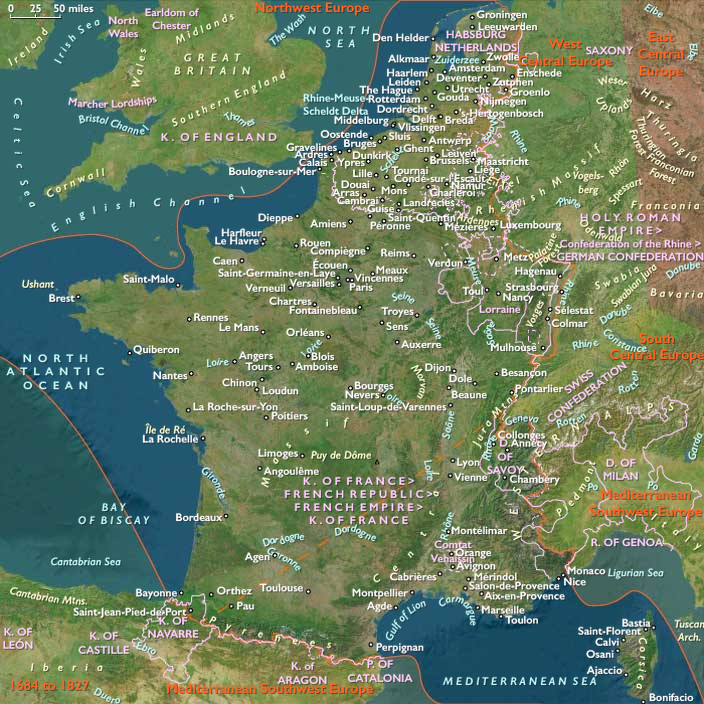
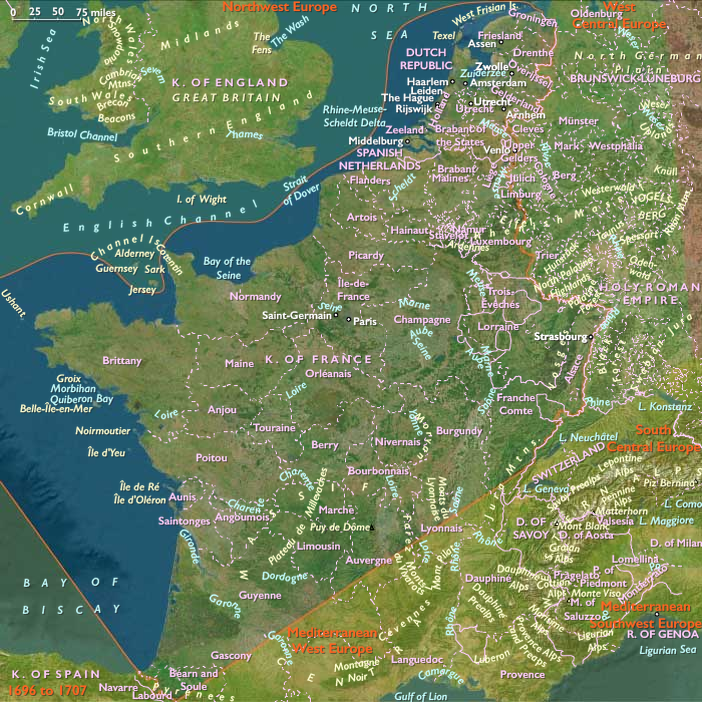
From 1696 to 1707, Atlantic West Europe—including northern France, the Low Countries (Belgium, Netherlands, Luxembourg), and coastal regions along the Atlantic and English Channel—faced escalating dynastic conflict, economic pressures, and persistent religious and intellectual tensions. This era was dominated by the climax and aftermath of the Nine Years' War and the onset of the critical War of the Spanish Succession, significantly influencing the political landscape, reshaping economic networks, and reinforcing regional identities amid broader European power struggles.
Political and Military Developments
The End of the Nine Years' War (1688–1697)
-
The protracted conflict ended with the Treaty of Ryswick (1697), temporarily halting Louis XIV’s territorial ambitions. Under its terms, Louis returned territorial gains in the Low Countries and ceased claims in the Rhineland, reaffirming balance-of-power principles in Europe.
-
This treaty, while restoring temporary stability, left underlying dynastic tensions unresolved, laying the foundation for future conflicts.
The War of the Spanish Succession Begins (1701–1714)
-
The death of the childless Spanish king, Charles II, in 1700 triggered a continent-wide crisis. Louis XIV sought to place his grandson, Philip of Anjou, on the Spanish throne, creating fears of Franco-Spanish domination.
-
In response, England, the Dutch Republic, Austria, and several German states formed the Grand Alliance (1701), initiating a new, extensive conflict aimed at preventing Bourbon dominance over Europe.
Early Battles and Military Struggles
-
The Low Countries became a primary theater for fierce military engagements. Battles such as Ramillies (1706) witnessed decisive victories by allied forces under the command of English general John Churchill, Duke of Marlborough, significantly reducing French control in the Spanish Netherlands (modern Belgium).
-
Warfare placed immense pressure on northern French and Flemish towns, which experienced repeated sieges, requisitions, and economic disruptions, notably around cities like Lille and Brussels.
Economic Developments and Maritime Challenges
Economic Strain from Continuous Warfare
-
Constant military conflicts strained regional economies, causing increased taxation, inflation, and interruptions in trade and agricultural production. Northern France’s economy was particularly burdened by wartime expenses and demographic losses due to conscription.
-
The Dutch Republic, while maintaining substantial maritime trade networks, faced severe fiscal pressures supporting the alliance against France, gradually losing ground in economic competitiveness to England.
Shifts in Maritime Trade
-
The English and Dutch maritime empires continued to dominate Atlantic commerce, securing critical trade routes. Ports like Amsterdam, Antwerp, and increasingly Rotterdam benefited from stable, albeit strained, maritime trade networks.
-
French Atlantic ports—particularly Nantes, La Rochelle, and Bordeaux—endured significant hardship from naval blockades and restricted Atlantic commerce, profoundly affecting regional prosperity, especially the wine and textile industries.
Religious and Intellectual Developments
Persistent Religious Tensions and Huguenot Legacy
-
Louis XIV’s revocation of the Edict of Nantes (1685) continued to affect regional religious dynamics, reinforcing strict Catholic orthodoxy but perpetuating economic and intellectual consequences from the Huguenot exodus.
-
Protestant refugees significantly contributed to cultural and intellectual life in host nations, notably the Dutch Republic, England, and Prussia, fostering thriving expatriate communities renowned for craftsmanship, publishing, and commerce.
Early Enlightenment Thought and Critical Scholarship
-
Intellectual centers like Amsterdam, Rotterdam, and Leiden continued to serve as crucial nodes for early Enlightenment thought. Scholars such as Pierre Bayle (d. 1706) promoted ideas of religious tolerance, rational skepticism, and critical inquiry, deeply influencing European intellectual developments.
-
In France, despite stringent censorship, intellectual salons and clandestine publications proliferated, subtly challenging traditional authority and paving the way for future Enlightenment thinkers.
Cultural and Artistic Continuities
Baroque and Rococo Transitions
-
Cultural patronage in France and the Spanish Netherlands persisted, showcasing ornate Baroque styles symbolizing royal and ecclesiastical power. At Versailles and in Paris, Baroque aesthetics reached new sophistication, anticipating early signs of Rococo refinement in interiors and decorative arts.
-
Flemish cities, notably Brussels and Antwerp, continued producing significant works of art, though cultural patronage increasingly reflected commercial rather than purely aristocratic tastes.
Flourishing of Music and Theater
-
Music flourished, notably through composers such as Marc-Antoine Charpentier (France), François Couperin, and Flemish-born composers active throughout the region. Their works enriched religious, courtly, and civic musical life.
-
Theater remained a vibrant cultural force, with playwrights like Jean-Baptiste Racine and Jean-François Regnard continuing to shape French drama, influencing European theatrical traditions.
Social and Urban Developments
Urban Strain and Demographic Challenges
-
Continuous warfare, heavy taxation, and economic disruption intensified urban poverty, particularly pronounced in northern French and Flemish cities. Towns endured demographic challenges, including population decline due to military recruitment and wartime hardships.
-
Despite difficulties, urban centers such as Amsterdam, Antwerp, Brussels, Lille, and Rouen persisted as critical commercial and administrative hubs, supporting vibrant merchant classes amid economic adversity.
Reinforcement of Local and Regional Identities
-
Despite broader centralizing trends, distinctive regional identities persisted strongly, particularly in the Low Countries and northern France. Flemish, Dutch, and Breton cultural traditions remained resilient, asserting local pride and cultural distinctiveness amid centralized French and Spanish governance.
Legacy and Long-Term Significance
The period from 1696 to 1707 deeply influenced Atlantic West Europe:
-
Politically, this era marked intensified warfare and dynastic struggles, setting the stage for future geopolitical alignments, notably through the unresolved Spanish Succession conflict.
-
Economically, ongoing warfare and maritime competition strained regional economies, reshaping trade patterns and reinforcing Dutch and English dominance in global commerce.
-
Intellectually, early Enlightenment thought gained strength, disseminating critical scholarship and ideas of tolerance, rational inquiry, and skepticism that profoundly shaped European intellectual landscapes.
-
Culturally, the continued prominence of Baroque aesthetics, music, and drama reinforced artistic traditions while signaling subtle shifts toward more refined Rococo styles.
Overall, the period significantly shaped subsequent political stability, economic vitality, and cultural dynamism, laying critical foundations for Atlantic West Europe’s future development through the eighteenth century and beyond.
People
- Charles II of Spain
- François Couperin
- Jean Racine
- Jean-François Regnard
- John Churchill, 1st Duke of Marlborough
- Louis XIV of France
- Marc-Antoine Charpentier
- Pierre Bayle
Groups
- Jews
- Flanders, County of
- Normandy, Duchy of
- Liège, Prince-Bishopric of
- Namur, County of
- Christians, Roman Catholic
- Limburg, Duchy of
- Austria, Archduchy of
- Moravian Margravate
- Lorraine, (second) Duchy of
- Luxemburg, Duchy of
- Holy Roman Empire
- Lutheranism
- Protestantism
- Huguenots (the “Reformed”)
- Calvinists
- Mennonites
- Spain, Habsburg Kingdom of
- Netherlands, Southern (Spanish)
- Netherlands, United Provinces of the (Dutch Republic)
- France, (Bourbon) Kingdom of
- Dutch East India Company (Vereenigde Oostindische Compagnie or VOC in Dutch, literally "United East Indies Company")
- Dutch West India Company
- England, (Stewart, Restored) Kingdom of
- Grand Alliance
- England, (Orange and Stewart) Kingdom of
- Prussia, Kingdom of
Topics
- Colonization of the Americas, French
- Western music
- Nine Years' War
- Spanish Succession, War of the
- Ramillies, Battle of
Commodoties
Subjects
- Writing
- Watercraft
- Painting and Drawing
- Labor and Service
- Conflict
- Scholarship
- Custom and Law
- Finance
- Human Migration
- religious movement
Regions
Subregions
Years: 1697 - 1707
People
- Charles II of Spain
- François Couperin
- Jean Racine
- Jean-François Regnard
- John Churchill, 1st Duke of Marlborough
- Louis XIV of France
- Marc-Antoine Charpentier
- Pierre Bayle
Groups
- Jews
- Flanders, County of
- Normandy, Duchy of
- Liège, Prince-Bishopric of
- Namur, County of
- Christians, Roman Catholic
- Limburg, Duchy of
- Austria, Archduchy of
- Moravian Margravate
- Lorraine, (second) Duchy of
- Luxemburg, Duchy of
- Holy Roman Empire
- Lutheranism
- Protestantism
- Huguenots (the “Reformed”)
- Calvinists
- Mennonites
- Spain, Habsburg Kingdom of
- Netherlands, Southern (Spanish)
- Netherlands, United Provinces of the (Dutch Republic)
- France, (Bourbon) Kingdom of
- Dutch East India Company (Vereenigde Oostindische Compagnie or VOC in Dutch, literally "United East Indies Company")
- Dutch West India Company
- England, (Stewart, Restored) Kingdom of
- Grand Alliance
- England, (Orange and Stewart) Kingdom of
- Prussia, Kingdom of
Topics
- Colonization of the Americas, French
- Western music
- Nine Years' War
- Spanish Succession, War of the
- Ramillies, Battle of
Commodoties
Subjects
- Writing
- Watercraft
- Painting and Drawing
- Labor and Service
- Conflict
- Scholarship
- Custom and Law
- Finance
- Human Migration
- religious movement
Regions
Subregions