
Atlantic West Europe (28–39 CE): Continued Stability, …
Years: 28 - 39
Atlantic West Europe (28–39 CE): Continued Stability, Urban Expansion, and Provincial Integration under the Julio-Claudian Dynasty
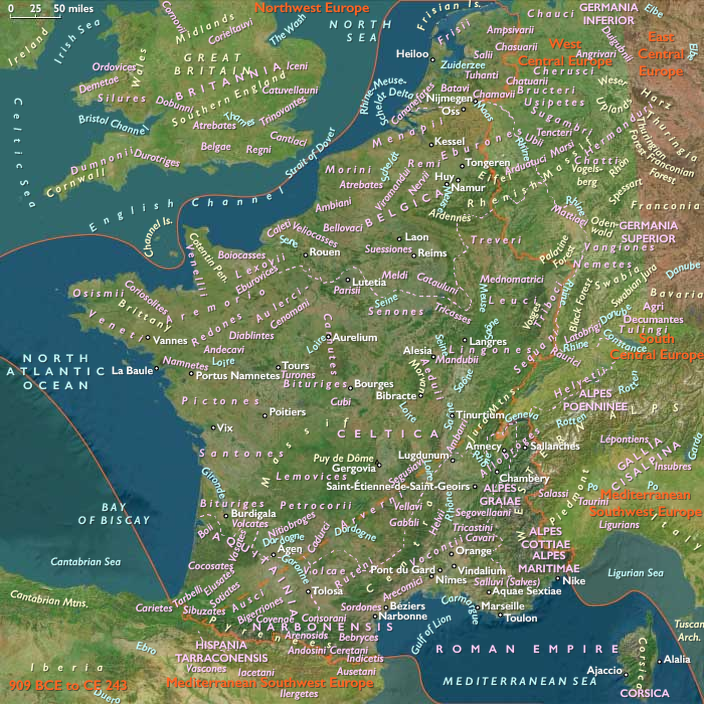
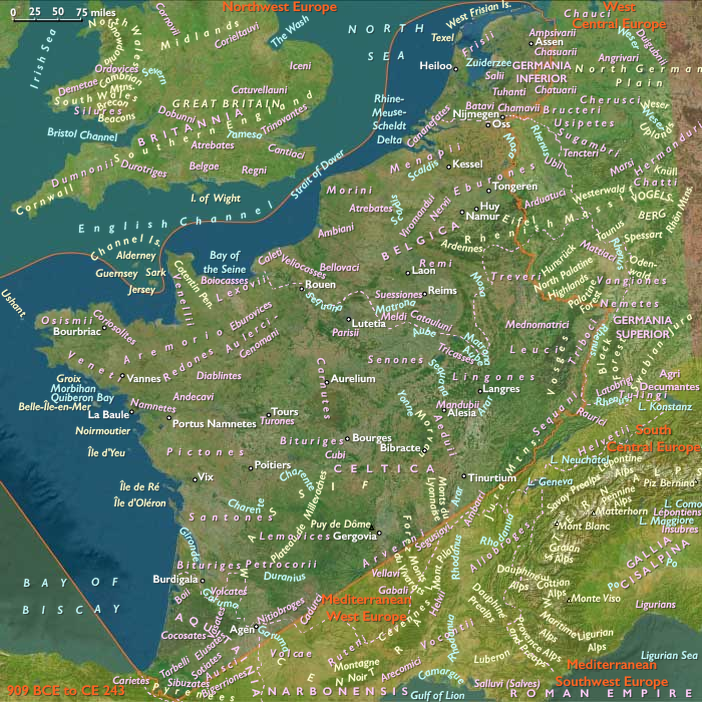
From 28 to 39 CE, Atlantic West Europe—including Aquitaine, the Atlantic coast, northern and central France, Alsace, and the Low Countries—continued to thrive within the broader Roman Empire. Under the later reign of Tiberius and the beginning of Caligula’s rule, the region maintained political stability, economic prosperity, and deepened cultural assimilation.
Political and Military Developments
End of Tiberius’s Stable Reign (28–37 CE)
-
Emperor Tiberius continued stable provincial governance, preserving peace and allowing trade and urban centers to flourish across Atlantic West Europe.
-
The Rhine frontier remained secure, with strong garrisons ensuring protection against external threats from Germanic tribes.
Transition to Caligula’s Rule (37–39 CE)
-
Caligula (r. 37–41 CE) succeeded Tiberius in 37 CE, initially continuing stable imperial policies. Early in his reign, provincial administration remained largely unchanged, securing ongoing regional prosperity.
Economic and Social Developments
Trade and Economic Growth
-
Atlantic ports, particularly Burdigala (Bordeaux) and coastal cities along the English Channel and North Sea (Gesoriacum/Boulogne, Portus Itius), expanded their commercial activities, exporting regional products like wine, grain, and ceramics to Britain, Hispania, and the broader Mediterranean markets.
-
Internal trade strengthened, facilitated by the continuous improvement of Roman roads, especially between cities such as Lugdunum (Lyon, Mediterranean West Europe), Durocortorum (Reims), Lutetia (Paris), and Argentoratum (Strasbourg).
Urbanization and Infrastructure Expansion
-
Urban centers benefited from ongoing imperial investment in infrastructure: new public baths, aqueducts, amphitheaters, and administrative buildings were constructed or enlarged, significantly improving urban life.
-
Lutetia (Paris), Augustodunum (Autun), and Divodurum (Metz) continued to grow in population and influence, increasingly drawing people from rural areas into these Romanized urban centers.
Cultural and Religious Developments
Deepening Gallo-Roman Identity
-
Roman culture continued its profound integration into local customs, with Gallo-Roman elites increasingly embracing Roman lifestyles, language, and governance practices.
-
Latin spread further as the administrative language, reinforcing cultural unity across diverse local communities.
Religious Practices and Imperial Cult
-
Worship of the imperial cult remained widespread, strengthening political loyalty and cultural cohesion among the provincial populations.
-
Religious syncretism remained common, blending Roman and indigenous deities, leading to distinct local religious traditions.
Key Figures and Events
-
Tiberius (d. 37 CE): His stable and prudent governance concluded with his death, ending a lengthy period of sustained prosperity and integration for the region.
-
Caligula (from 37 CE): Initially sustained imperial stability, ensuring continued economic and cultural prosperity in Atlantic West Europe.
Long-Term Significance
By 39 CE, Atlantic West Europe maintained its trajectory of stable governance, economic growth, and increasing Roman cultural assimilation:
-
Early stability under Caligula preserved and furthered the achievements of Tiberius’s reign.
-
Urban growth and infrastructure development continued, strengthening economic and administrative integration within the Roman Empire.
-
The established Gallo-Roman elite emerged as central players in the provincial governance and cultural unity of Atlantic West Europe, setting the stage for continued regional development.
People
Groups
- Polytheism (“paganism”)
- Gallo-Roman culture
- Gallia Lugdunensis (Roman province)
- Gallia Aquitania (Roman province)
- Gallia Belgica (Roman province)
- Roman Empire (Rome): Julio-Claudian dynasty
Topics
Commodoties
Subjects
Regions
Subregions
Related Events
Showing 10 events out of 61909 total
Years: 28 - 39
People
Groups
- Polytheism (“paganism”)
- Gallo-Roman culture
- Gallia Lugdunensis (Roman province)
- Gallia Aquitania (Roman province)
- Gallia Belgica (Roman province)
- Roman Empire (Rome): Julio-Claudian dynasty
Topics
Commodoties
Subjects
Regions
Subregions