
Atlantic West Europe (1588–1599): Imperial Ambitions, Religious …
Years: 1588 - 1599
Atlantic West Europe (1588–1599): Imperial Ambitions, Religious Strife, and Emerging Stability
Between 1588 and 1599, Atlantic West Europe—covering northern France, the Low Countries (modern Belgium, Netherlands, Luxembourg), and the Atlantic and Channel coastal regions—experienced pivotal events that reshaped political alliances, religious landscapes, economic trajectories, and cultural identities. This era was defined by the defeat of the Spanish Armada, the continued struggle for Dutch independence, persistent French religious wars culminating in the Edict of Nantes, and Amsterdam's consolidation as a European economic powerhouse.
Political and Military Developments
Defeat of the Spanish Armada (1588)
-
The catastrophic failure of Philip II’s Spanish Armada (1588) profoundly impacted the region. English and Dutch naval successes decisively weakened Spanish maritime dominance, securing the survival and independence aspirations of the Dutch Republic and reshaping the balance of power in Atlantic Europe.
-
This defeat marked a critical turning point, enabling northern European maritime nations—particularly the Dutch Republic and England—to assert greater dominance in Atlantic trade and colonial ventures.
Dutch Republic: Consolidation and Military Resilience
-
Under the leadership of Maurice of Nassau, the Dutch Republic solidified military reforms, employing disciplined infantry formations, improved fortifications, and siege tactics. Key victories at Turnhout (1597) and the recapture of strategic cities solidified its territorial security and political legitimacy.
-
Despite ongoing hostilities, the Republic’s political structure strengthened through effective governance by the States General and provincial autonomy, notably in Holland, Zeeland, and Utrecht.
France: Wars of Religion and the Rise of Henry IV
-
France remained embroiled in bitter religious conflict. After the assassination of Henry III in 1589, Protestant leader Henry of Navarre (Henry IV) ascended the throne, confronting fierce opposition from the Catholic League, backed by Spain.
-
The turning point came with Henry’s conversion to Catholicism (1593), famously stating "Paris is well worth a Mass," leading to his acceptance by the French capital and gradual pacification of internal conflicts.
Economic Developments: Maritime Expansion and Urban Growth
Amsterdam’s Economic Ascendancy
-
With Antwerp’s continued decline, Amsterdam flourished as Europe’s premier financial and commercial center. Its thriving stock exchange, banking institutions, shipbuilding, and overseas trading companies drove robust economic growth.
-
The influx of skilled Flemish and Brabantine merchants fleeing Spanish-controlled territories contributed significantly to Amsterdam's economic innovation, establishing its foundations as the future economic powerhouse of Europe.
Trade Networks and Colonial Ambitions
-
Dutch merchants significantly expanded trade routes, venturing into the Baltic, Mediterranean, and increasingly toward Asia, setting the stage for the later establishment of the Dutch East India Company (VOC, 1602).
-
Northern French Atlantic ports, including Bordeaux and La Rochelle, maintained active commercial links with England and the Netherlands, sustaining the regional economy despite internal instability.
Religious and Intellectual Developments
Edict of Nantes and Religious Tolerance (1598)
-
King Henry IV issued the Edict of Nantes (1598), granting substantial religious tolerance to Huguenots (French Protestants). This decree ended decades of religious warfare, establishing limited religious freedoms, secure cities, and legal protections for Protestants, setting a precedent for religious coexistence.
-
However, tensions remained, with Catholic factions continuing to challenge Protestant presence, underscoring the Edict's fragile peace.
Religious Polarization in the Low Countries
-
Religious divisions became institutionalized. The Dutch Republic solidified its Calvinist identity, while southern provinces under Spanish control deepened their Catholic allegiance, reinforcing a lasting north-south religious split that shaped future political and cultural identities.
Intellectual Flourishing Amidst Conflict
-
The period saw continued intellectual advancement in humanist thought, philosophy, and theology. Figures like Justus Lipsius and early writings by Hugo Grotius in Leiden laid crucial foundations for later European political philosophy and legal thought.
Cultural and Artistic Developments
Northern Renaissance and Mannerism
-
Artistic production continued robustly, notably through Flemish masters such as Peter Paul Rubens, whose early career (begun around 1598–1599) signaled a new artistic era emphasizing dynamism and emotional intensity characteristic of Baroque art.
-
French artistic endeavors, particularly under Henry IV, saw increased patronage of arts and architecture, notably initiating grand urban projects like the Place Royale (today Place des Vosges) in Paris (begun 1605, conceptualized earlier), indicating growing royal emphasis on artistic expression as political symbolism.
Social Developments: Urban Prosperity and Rural Strain
Urban Growth and Prosperity
-
Urban centers—particularly Amsterdam, Rotterdam, Leiden, and The Hague—experienced substantial growth and prosperity, driven by commerce, industry, and migration. Expanding merchant classes accumulated wealth and political influence, reshaping urban governance and culture.
-
Conversely, southern cities like Antwerp and Ghent suffered economic decline, disrupted trade, and depopulation due to continued warfare and religious strife.
Rural Hardship and Migration
-
Rural areas, particularly in war-affected northern France and Flanders, faced ongoing economic strain, disrupted agriculture, and demographic losses. These hardships intensified migration toward safer urban centers and encouraged overseas colonization, particularly to the Americas.
Legacy and Significance
The years 1588–1599 solidified critical transformations across Atlantic West Europe:
-
Politically, the defeat of the Spanish Armada and Dutch military consolidation cemented the independence of the Dutch Republic, altering the balance of European power significantly.
-
Economically, Amsterdam’s emergence as Europe’s leading commercial center reshaped trade dynamics, initiating the region’s global economic influence that characterized subsequent centuries.
-
Religiously, the Edict of Nantes marked a turning point, introducing the concept of state-managed religious pluralism, influencing European religious politics profoundly.
-
Culturally, artistic and intellectual advances amidst conflict underscored the resilience and creativity of Atlantic West Europe's societies, establishing cultural foundations for the subsequent Baroque period and intellectual developments.
By 1599, Atlantic West Europe stood decisively reshaped—politically stabilized yet fragmented, economically robust, and culturally vibrant—marking a pivotal step toward the modern European state system and global influence.
People
- Henry III of France
- Henry IV of France
- Hugo Grotius
- Justus Lipsius
- Maurice of Nassau
- Peter Paul Rubens
- Philip II of Spain
Groups
- Flanders, County of
- Normandy, Duchy of
- Brittanny, Duchy of
- Liège, Prince-Bishopric of
- Namur, County of
- Christians, Roman Catholic
- Limburg, Duchy of
- Hainaut, County of
- Holland, County of
- Austria, Archduchy of
- Moravian Margravate
- Brabant, Duchy of
- Lorraine, (second) Duchy of
- Bohemia, Kingdom of
- Artois, County of
- France, (Valois) Kingdom of
- Luxemburg, Duchy of
- Holy Roman Empire
- Netherlands, Habsburg
- Lutheranism
- Protestantism
- Anabaptists
- Huguenots (the “Reformed”)
- Calvinists
- Seventeen Provinces
- Franche-Comté (province of the Spanish Empire)
- Netherlands, United Provinces of the (Dutch Republic)
Topics
- Humanism, Renaissance
- Renaissance Architecture
- Renaissance in the Low Countries
- Renaissance, French
- Protestant Reformation
- Colonization of the Americas, French
- Western Architecture: 1540 to 1684
- Eighty Years War (Netherlands, or Dutch, War of Independence)
- Religion, Eighth War of (War of the Three Henrys)
- Spanish Armada, Defeat of the
- Western Art: 1588 to 1600
Commodoties
Subjects
- Writing
- Watercraft
- Painting and Drawing
- Conflict
- Scholarship
- Custom and Law
- Finance
- religious movement
Regions
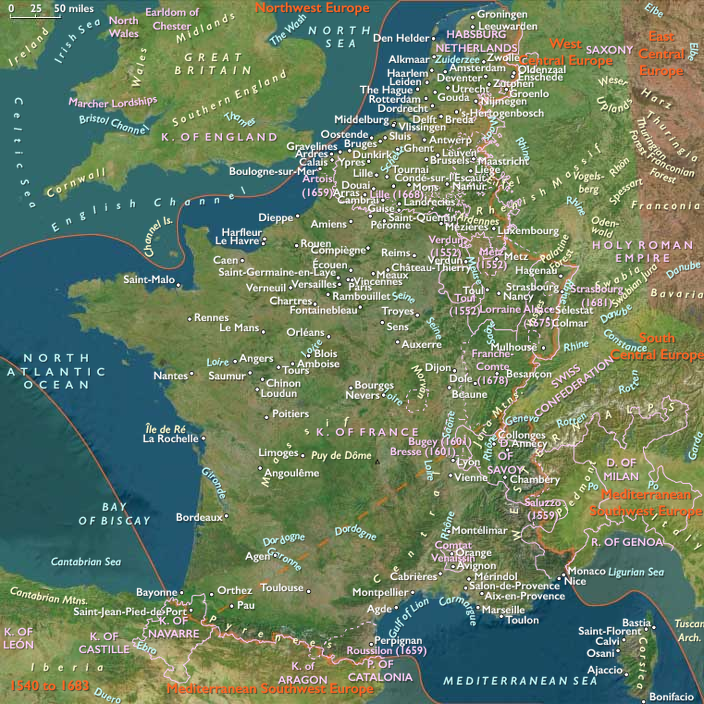
Subregions
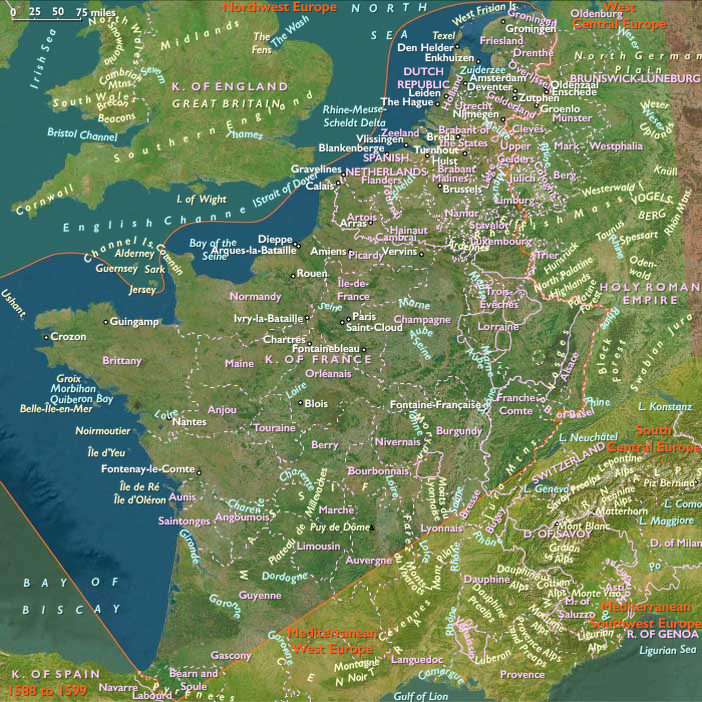
Years: 1588 - 1599
People
- Henry III of France
- Henry IV of France
- Hugo Grotius
- Justus Lipsius
- Maurice of Nassau
- Peter Paul Rubens
- Philip II of Spain
Groups
- Flanders, County of
- Normandy, Duchy of
- Brittanny, Duchy of
- Liège, Prince-Bishopric of
- Namur, County of
- Christians, Roman Catholic
- Limburg, Duchy of
- Hainaut, County of
- Holland, County of
- Austria, Archduchy of
- Moravian Margravate
- Brabant, Duchy of
- Lorraine, (second) Duchy of
- Bohemia, Kingdom of
- Artois, County of
- France, (Valois) Kingdom of
- Luxemburg, Duchy of
- Holy Roman Empire
- Netherlands, Habsburg
- Lutheranism
- Protestantism
- Anabaptists
- Huguenots (the “Reformed”)
- Calvinists
- Seventeen Provinces
- Franche-Comté (province of the Spanish Empire)
- Netherlands, United Provinces of the (Dutch Republic)
Topics
- Humanism, Renaissance
- Renaissance Architecture
- Renaissance in the Low Countries
- Renaissance, French
- Protestant Reformation
- Colonization of the Americas, French
- Western Architecture: 1540 to 1684
- Eighty Years War (Netherlands, or Dutch, War of Independence)
- Religion, Eighth War of (War of the Three Henrys)
- Spanish Armada, Defeat of the
- Western Art: 1588 to 1600
Commodoties
Subjects
- Writing
- Watercraft
- Painting and Drawing
- Conflict
- Scholarship
- Custom and Law
- Finance
- religious movement
Regions
Subregions