
Atlantic West Europe (1324–1335): War, Crisis, and …
Years: 1324 - 1335
Atlantic West Europe (1324–1335): War, Crisis, and Social Transformation
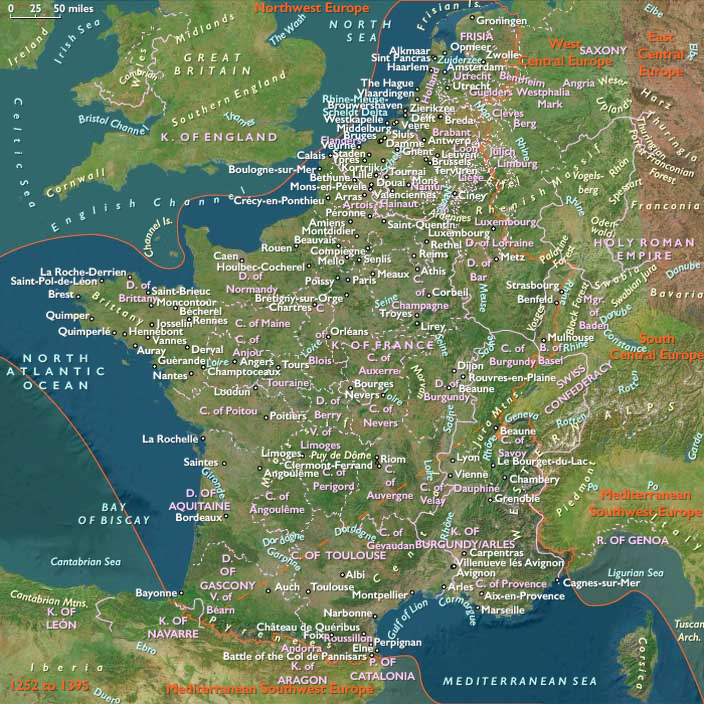
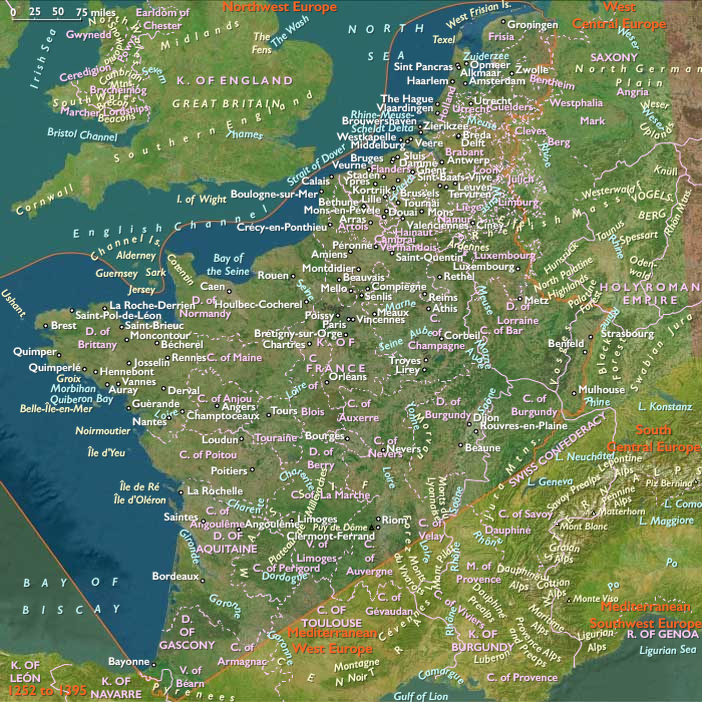
Between 1324 and 1335, Atlantic West Europe—including the Low Countries, Brittany, Normandy, Burgundy, Aquitaine, central France, Alsace, and Franche-Comté—faced significant military confrontations, internal crises, economic challenges, and social transformations. This era marked intensified struggles over territorial sovereignty, devastating famines, and shifting political alliances that reshaped regional dynamics.
Political and Military Developments
-
France: Intensified Royal Control and Conflict
-
King Charles IV (the Fair, r. 1322–1328) continued centralizing royal power, but his death without a male heir in 1328 triggered the Capetian dynasty's end and initiated the Valois succession.
-
The accession of Philip VI (House of Valois, r. 1328–1350) intensified dynastic tensions with England, sparking the early conflicts that would lead to the Hundred Years’ War.
-
-
Aquitaine and Gascony: Anglo-French Tensions
-
Increasing disputes over English-held Aquitaine and Gascony escalated, contributing to the outbreak of war in 1337, driven by competing claims from Edward III of England and Philip VI of France.
-
-
Low Countries: Urban Autonomy and Resistance
-
Flemish cities, particularly Ghent and Bruges, continued to assert their economic and political independence, leading to sporadic conflicts with French royal and local noble authority.
-
-
Burgundy, Alsace, and Franche-Comté: Navigating Sovereignty
-
The Duchy of Burgundy, under Eudes IV (r. 1315–1350), maneuvered diplomatically between French royal interests and regional autonomy, consolidating power internally.
-
Alsace and Franche-Comté remained contested between imperial and French influence, strengthening local governance to maintain relative independence.
-
-
Brittany and Normandy: Struggles and Alliances
-
Brittany experienced internal power struggles among competing noble factions, impacting its relationship with France and England.
-
Normandy continued integration efforts into royal administration, balancing loyalty to the French crown with local autonomy.
-
Economic and Social Developments
-
Great Famine and Economic Decline
-
The Great Famine (1315–1322) severely impacted agriculture, resulting in widespread food shortages, rising mortality rates, and economic hardship persisting into this period.
-
Urban economies, particularly in Flemish cities, faced significant disruption, although recovery began slowly toward the end of the era.
-
-
Trade and Maritime Activities
-
Maritime trade remained vital despite disruptions, especially wine trade from Bordeaux and wool trade through Flemish ports like Bruges.
-
Trade networks experienced temporary instability due to ongoing conflicts and climatic challenges.
-
Cultural and Intellectual Developments
-
Continued Gothic Influence and Artistic Innovation
-
Gothic architecture flourished despite regional hardships, evident in continued construction and embellishments of cathedrals, including those at Amiens and Strasbourg.
-
-
University of Paris and Scholarly Output
-
The University of Paris maintained its intellectual prominence, advancing theological and philosophical scholarship despite broader societal instability.
-
Religious Developments
-
Growing Influence of Mendicant Orders
-
The Franciscans and Dominicans expanded their influence in urban areas, addressing social and spiritual needs exacerbated by famine and hardship.
-
-
Jewish Communities and Social Tensions
-
Jewish populations in the region faced heightened persecution, blamed for economic hardships and facing expulsions and violence in several locales.
-
Legacy and Significance
The era 1324–1335 significantly reshaped Atlantic West Europe, setting the stage for prolonged conflict in the Hundred Years’ War, revealing vulnerabilities in social and economic structures, and prompting shifts in governance and alliances. The challenges of famine and economic distress, combined with increasing political tensions, catalyzed profound transformations that would shape the region's trajectory in subsequent decades.
People
- Charles IV of France
- Edward III of England
- Guillaume de Machaut
- John III, Duke of Brittany
- Odo IV
- Philip VI of France
Groups
- Jews
- Flanders, County of
- Normandy, Duchy of
- Brittanny, Duchy of
- France, (Capetian) Kingdom of
- Burgundy, Duchy of
- Christians, Roman Catholic
- Franciscans, or Order of St. Francis
- Dominicans, or Order of St. Dominic
- France, (Valois) Kingdom of
Topics
Commodoties
Subjects
Regions
Subregions
Years: 1324 - 1335
People
- Charles IV of France
- Edward III of England
- Guillaume de Machaut
- John III, Duke of Brittany
- Odo IV
- Philip VI of France
Groups
- Jews
- Flanders, County of
- Normandy, Duchy of
- Brittanny, Duchy of
- France, (Capetian) Kingdom of
- Burgundy, Duchy of
- Christians, Roman Catholic
- Franciscans, or Order of St. Francis
- Dominicans, or Order of St. Dominic
- France, (Valois) Kingdom of
Topics
Commodoties
Subjects
Regions
Subregions