
Atlantic West Europe (1312–1323): Royal Authority, Famine, …
Years: 1312 - 1323
Atlantic West Europe (1312–1323): Royal Authority, Famine, and Regional Challenges
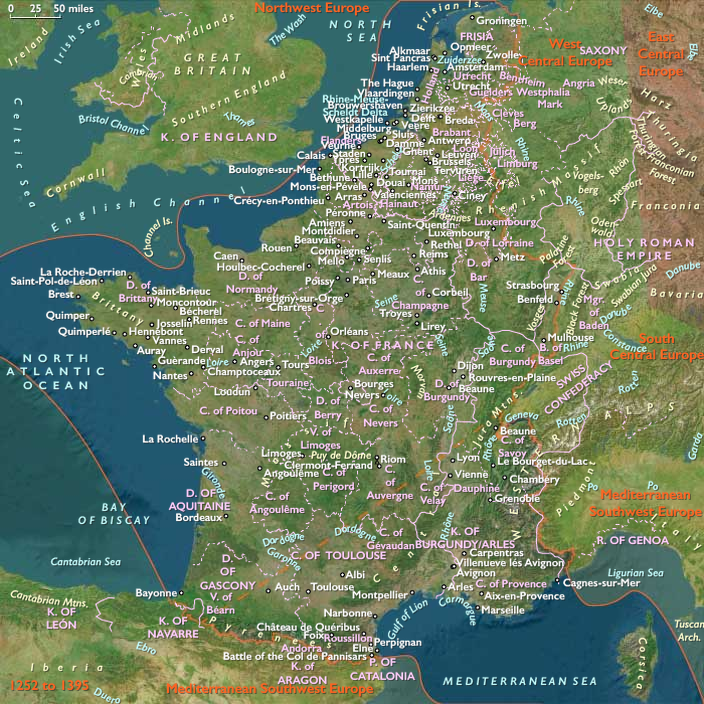
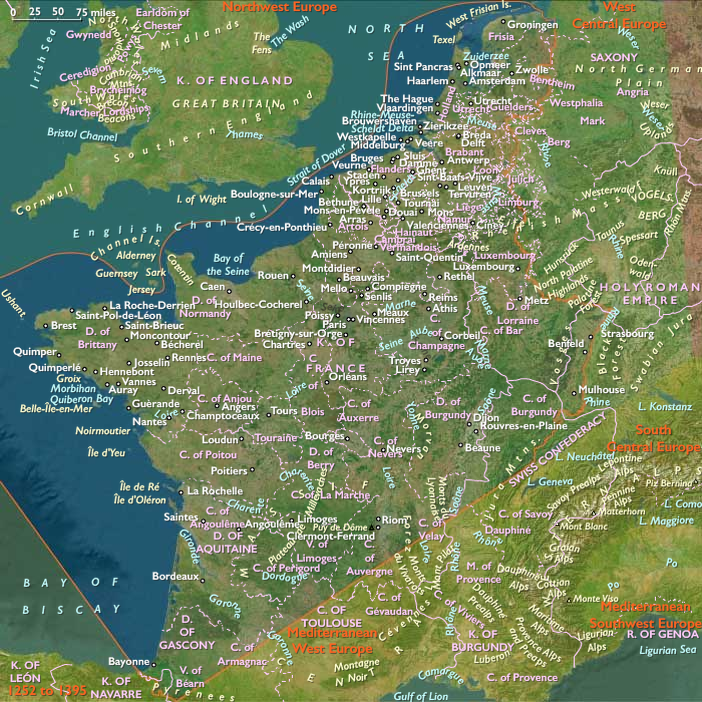
From 1312 to 1323, Atlantic West Europe, encompassing the Low Countries, Brittany, Normandy, Burgundy, Aquitaine, central France, Alsace, and Franche-Comté, grappled with severe agricultural crises, growing royal ambitions, and heightened regional tensions. The devastating Great Famine (1315–1317) deeply impacted society, economy, and political stability throughout the region.
Political and Military Developments
-
France: Capetian Centralization and Regional Resistance
- King Louis X (r. 1314–1316) and subsequently his successors, Philip V (r. 1316–1322) and Charles IV (r. 1322–1328), attempted to strengthen central royal authority despite succession uncertainties.
- Resistance to royal taxation and increasing centralization emerged from nobility and urban centers, complicating governance and highlighting regional autonomy.
-
Flanders and Brabant: Continued Urban Autonomy
- Flemish cities such as Ghent, Bruges, and Ypres asserted economic independence amid ongoing conflicts with local nobility and French royal authority.
- In 1323, Count Louis of Nevers succeeded in Flanders, reinforcing alliances with France and thus intensifying internal Flemish tensions.
-
Aquitaine and Gascony: Persistent Anglo-French Rivalry
- The English control of Aquitaine, especially in Bordeaux, remained a major source of Anglo-French friction, prompting continued political maneuvering and small-scale military confrontations.
-
Burgundy, Alsace, and Franche-Comté: Shifting Allegiances
- The Duchy of Burgundy managed to maintain substantial autonomy under the Capetian dynasty through careful diplomatic balancing.
- Alsace and Franche-Comté were contested territories, influenced by competing interests from French and imperial authorities.
-
Brittany and Normandy: Maintaining Autonomy
- Brittany, under Duke John III (r. 1312–1341), preserved its autonomy by navigating skillfully between English support and French influence.
- Normandy remained mostly stable under French control, though internal tensions persisted due to economic pressures from the Great Famine.
Economic and Social Developments
-
Great Famine (1315–1317): Social and Economic Devastation
- Severe weather led to crop failures, resulting in widespread starvation, population decline, and economic hardship across Atlantic West Europe.
- Rural and urban communities faced severe food shortages, leading to increased mortality, social unrest, and peasant revolts.
-
Economic Strain and Market Instability
- Trade and commerce suffered significantly due to declining productivity and disrupted trade networks, especially affecting Flemish cloth production and regional fairs in Champagne and Burgundy.
Cultural and Intellectual Developments
-
Universities and Scholasticism
- Despite crises, universities, notably Paris, continued their scholastic traditions, sustaining intellectual debate and theological discourse through scholars like William of Ockham.
-
Artistic and Architectural Continuity
- Gothic architectural projects continued, albeit at reduced scale and pace due to economic constraints. Notable progress occurred in Strasbourg and other urban centers.
Religious Developments
- Church Response to Crisis
- Monasteries and religious institutions provided essential aid during the famine, though their resources were strained.
- Mendicant orders, especially the Franciscans and Dominicans, expanded charitable activities in affected urban areas, strengthening their influence among the populace.
Legacy and Significance
The era of 1312–1323 profoundly impacted Atlantic West Europe through the devastation of the Great Famine and heightened regional tensions. Royal efforts to centralize authority faced strong opposition, shaping political dynamics in subsequent decades, while economic disruptions left lasting effects on trade and agriculture. These crises laid foundations for later socio-economic transformations and set the stage for more intense conflicts, including the impending Hundred Years’ War.
People
- Charles IV of France
- Guillaume de Machaut
- John III, Duke of Brittany
- Louis I
- Louis X of France
- Philip V of France
- Pope Boniface VIII
- William of Ockham
Groups
- Flanders, County of
- Gascony, Duchy of
- Normandy, Duchy of
- Brittanny, Duchy of
- Aquitaine, (Angevin) Duchy of
- France, (Capetian) Kingdom of
- Burgundy, Duchy of
- Templar, Knights (Poor Knights of Christ and of the Temple of Solomon)
- Franciscans, or Order of St. Francis
- Dominicans, or Order of St. Dominic
- Holy Roman Empire
Topics
Commodoties
Subjects
Regions
Subregions
Related Events
Showing 10 events out of 44843 total
Years: 1312 - 1323
People
- Charles IV of France
- Guillaume de Machaut
- John III, Duke of Brittany
- Louis I
- Louis X of France
- Philip V of France
- Pope Boniface VIII
- William of Ockham
Groups
- Flanders, County of
- Gascony, Duchy of
- Normandy, Duchy of
- Brittanny, Duchy of
- Aquitaine, (Angevin) Duchy of
- France, (Capetian) Kingdom of
- Burgundy, Duchy of
- Templar, Knights (Poor Knights of Christ and of the Temple of Solomon)
- Franciscans, or Order of St. Francis
- Dominicans, or Order of St. Dominic
- Holy Roman Empire
Topics
Commodoties
Subjects
Regions
Subregions