
Atlantic West Europe (1276–1287): Tensions, Diplomacy, and …
Years: 1276 - 1287
Atlantic West Europe (1276–1287): Tensions, Diplomacy, and Cultural Flourishing
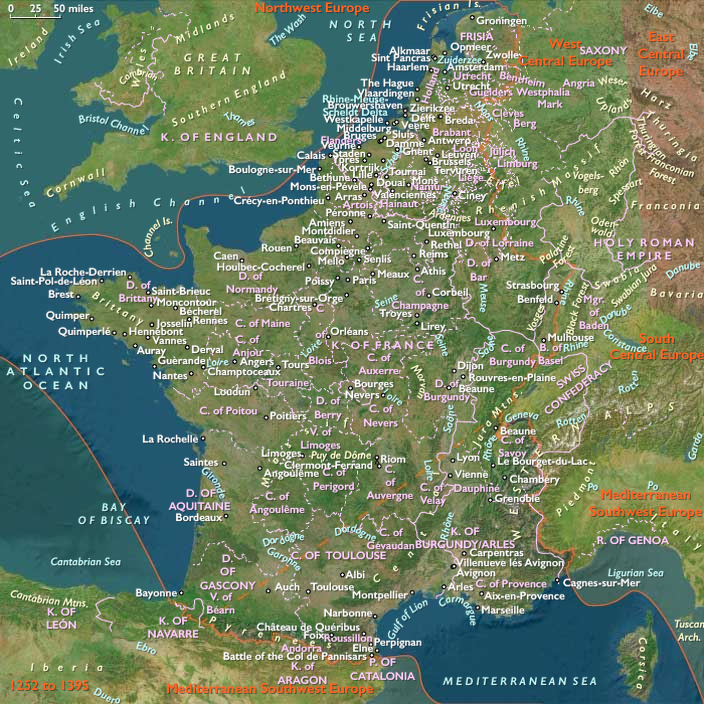
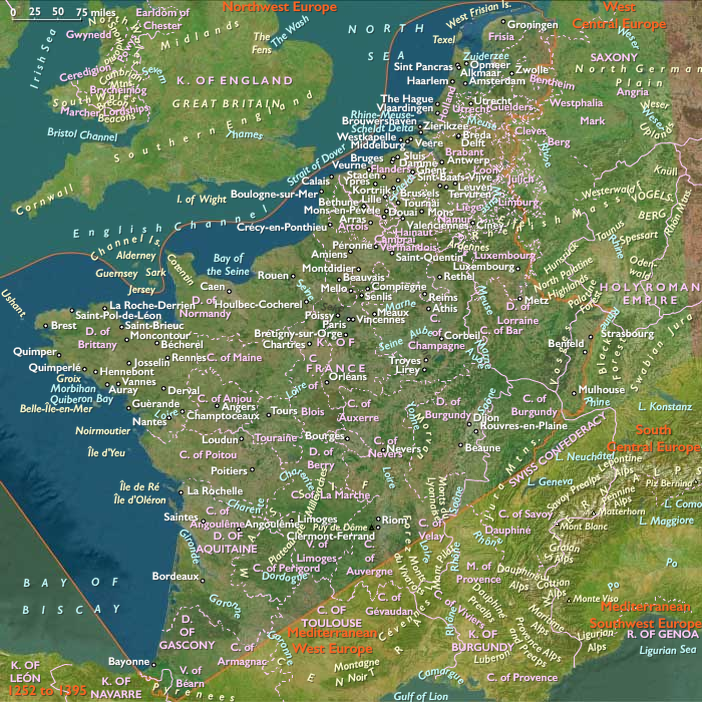
Between 1276 and 1287, Atlantic West Europe, spanning the Low Countries, Brittany, Normandy, Burgundy, Aquitaine, central France, Alsace, and Franche-Comté, experienced intensified regional tensions, pivotal diplomatic maneuvers, and continued cultural and economic advancement. This era witnessed ongoing struggles between royal authority and regional autonomy, evolving trade relationships, and significant artistic and intellectual achievements.
Political and Military Developments
-
France: Consolidation Amidst Tensions
-
Philip III (the Bold, r. 1270–1285) sought further consolidation of royal authority, encountering resistance from powerful regional lords, notably in Aquitaine and Burgundy.
-
Diplomatic and dynastic alliances were pursued to stabilize the kingdom, including marriage alliances strengthening the Capetian lineage.
-
-
Aquitaine and Gascony: Anglo-French Rivalries
-
Continuing Anglo-French territorial disputes marked the period, exacerbating tensions and leading to intermittent skirmishes along contested borders in Aquitaine and Gascony.
-
-
Low Countries: Urban Independence and Conflict
-
Cities in Flanders and Brabant continued their pursuit of autonomy, clashing periodically with local nobility but generally maintaining their privileges and economic influence.
-
Growing economic independence of Flemish cities increasingly positioned them as influential political actors.
-
-
Burgundy, Alsace, and Franche-Comté: Balancing Powers
-
The Duchy of Burgundy maintained its semi-autonomous status through strategic marriage alliances and diplomacy, balancing Capetian royal interests and local independence.
-
Alsace and Franche-Comté remained critical areas of contention between French and imperial influences, strengthening their local political institutions.
-
-
Brittany and Normandy: Negotiating Authority
-
Brittany continued to navigate between French royal influence and English support, reinforcing regional autonomy under Duke John II (r. 1286–1305).
-
Normandy experienced greater integration into French administration, though local resistance persisted at a lower intensity.
-
Economic and Social Developments
-
Urbanization and Economic Expansion
-
Flanders' cities like Bruges, Ghent, and Ypres maintained prominence in international wool and cloth trade, reinforcing economic prosperity despite periodic political unrest.
-
Atlantic ports, particularly Bordeaux, La Rochelle, and Nantes, saw sustained growth through extensive maritime trade, especially in wine exports.
-
-
Agricultural Stability and Market Networks
-
Improved agricultural techniques contributed to increased productivity, reinforcing local economies and supporting regional fairs, particularly in Champagne and Burgundy.
-
Cultural and Intellectual Developments
-
Gothic Architecture and Urban Culture
-
Architectural innovations continued, with significant advances in Gothic design reflected in cathedrals such as Bourges, Strasbourg, and Beauvais.
-
-
Educational and Intellectual Expansion
-
The University of Paris remained a leading intellectual center, fostering significant developments in theology and philosophy, notably through figures such as Thomas Aquinas and Albertus Magnus.
-
Religious Developments
-
Monastic Influence and Reform Movements
-
Monastic orders, particularly the Cistercians, maintained strong influence in regional governance and economic affairs, contributing to intellectual and spiritual life.
-
Growing emphasis on mendicant orders (Franciscans and Dominicans) shaped religious practice and outreach to urban populations.
-
Legacy and Significance
The era 1276–1287 saw Atlantic West Europe navigating complex political dynamics, maintaining economic vibrancy, and achieving cultural milestones. These developments solidified foundations for subsequent eras, balancing royal centralization with regional autonomy, fortifying economic prosperity, and fostering significant cultural and intellectual growth.
People
Groups
- Flanders, County of
- Normandy, Duchy of
- Brittanny, Duchy of
- France, (Capetian) Kingdom of
- Burgundy, Duchy of
- Christians, Roman Catholic
- Cistercians, Order of the (White Friars)
- England, (Plantagenet, Angevin) Kingdom of
- Brabant, Duchy of
- Franciscans, or Order of St. Francis
- Dominicans, or Order of St. Dominic
- Holy Roman Empire
Topics
Commodoties
Subjects
Regions
Subregions
Related Events
Showing 10 events out of 45657 total
Years: 1276 - 1287
People
Groups
- Flanders, County of
- Normandy, Duchy of
- Brittanny, Duchy of
- France, (Capetian) Kingdom of
- Burgundy, Duchy of
- Christians, Roman Catholic
- Cistercians, Order of the (White Friars)
- England, (Plantagenet, Angevin) Kingdom of
- Brabant, Duchy of
- Franciscans, or Order of St. Francis
- Dominicans, or Order of St. Dominic
- Holy Roman Empire
Topics
Commodoties
Subjects
Regions
Subregions