
Atlantic West Europe (1264–1275): Expansion, Conflict, and …
Years: 1264 - 1275
Atlantic West Europe (1264–1275): Expansion, Conflict, and Cultural Flourishing
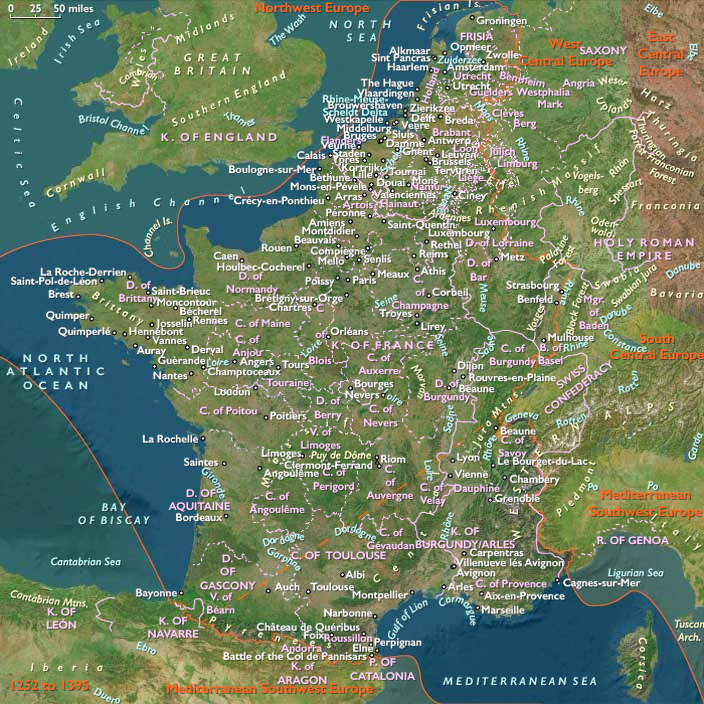
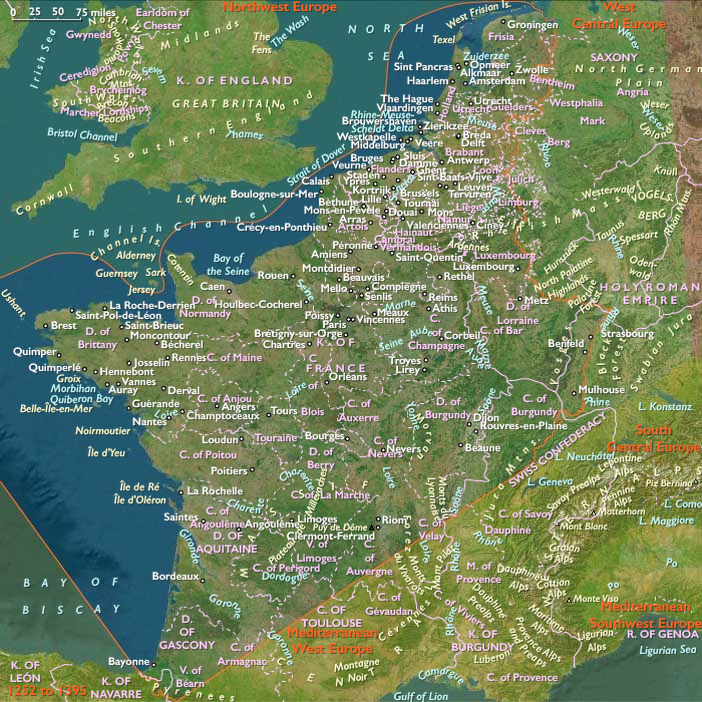
Between 1264 and 1275, Atlantic West Europe—encompassing the Low Countries and all of France north of an imaginary line from Mount Orhy in the Pyrenees to Bois-d'Amont near the Swiss border, including Aquitaine, Brittany, Normandy, Burgundy, central France, Alsace, and Franche-Comté—experienced significant territorial expansion, political conflicts, and cultural achievements. The period saw continuing consolidation of royal power, heightened tensions between rival feudal entities, robust economic growth, and notable developments in intellectual and cultural life.
Political and Military Developments
-
France: Strengthening of Royal Authority
-
Louis IX (Saint Louis, r. 1226–1270) continued his policy of strengthening royal administration through judicial reforms and increased oversight of regional nobility.
-
Louis IX's second crusade (Eighth Crusade, 1270), though unsuccessful, reinforced France’s international prestige but resulted in the king's death in Tunis, leading to the succession of Philip III (the Bold, r. 1270–1285).
-
-
Low Countries: Economic Power and Dynastic Stability
-
Cities in Flanders, especially Bruges, solidified their commercial and political power through trade privileges, becoming central to European economic networks.
-
Brabant, under John I (r. 1267–1294), stabilized its territory through internal administrative reforms and diplomatic marriages.
-
-
Burgundy, Alsace, and Franche-Comté: Regional Autonomy and Diplomacy
-
The Duchy of Burgundy balanced loyalty to the French crown and its independent regional interests, maintaining strong internal governance under Hugh IV (r. 1218–1272) and Robert II (r. 1272–1306).
-
Alsace and Franche-Comté continued navigating their complex positions between French and Imperial authority, ensuring considerable regional autonomy.
-
-
Brittany and Normandy: Preserving Regional Influence
-
Brittany, under Duke John I, retained considerable independence, negotiating strategic alliances while preserving Breton culture and legal autonomy.
-
Normandy, tightly integrated into France, enjoyed political stability and increased economic prosperity under centralized French administration.
-
Economic and Social Developments
-
Trade Expansion and Urban Prosperity
-
Flemish textile trade reached new heights, especially in Bruges and Ghent, driving substantial urban growth and wealth accumulation.
-
Bordeaux and La Rochelle prospered from expanded maritime trade, especially in wine exports from Aquitaine to England and northern Europe.
-
-
Agricultural Innovation and Rural Prosperity
-
Improvements in agricultural methods and productivity contributed to regional economic stability, supporting vibrant local markets and annual fairs, particularly in Champagne.
-
Cultural and Intellectual Developments
-
Gothic Architecture and Artistic Flourishing
-
Continued construction of monumental Gothic cathedrals, including ongoing work at Amiens, Chartres, and Strasbourg, reflected growing urban wealth and spiritual aspirations.
-
Patronage by wealthy merchants and nobility supported a flowering of visual arts, illuminated manuscripts, and sculpture.
-
-
Educational and Scholarly Advancements
-
The University of Paris maintained its status as Europe's premier academic center, attracting leading scholars such as Thomas Aquinas, whose works profoundly influenced theology and philosophy.
-
Religious Developments
-
Monastic Influence and Ecclesiastical Reforms
-
Religious orders, notably Dominicans and Franciscans, continued their educational and missionary roles, influencing urban communities through preaching and social outreach.
-
Ecclesiastical reforms promoted stricter adherence to clerical discipline, enhancing the church’s moral and social authority.
-
Legacy and Significance
The era 1264–1275 was characterized by continued territorial consolidation, economic prosperity, cultural and intellectual vitality, and the stabilization of regional powers. Despite the failure of Louis IX’s final crusade, France maintained its trajectory toward greater centralization and international prominence. The flourishing urban economies, particularly in Flanders and Aquitaine, combined with vibrant cultural and intellectual life, laid essential foundations for further developments in Atlantic West Europe.
People
Groups
- Flanders, County of
- Brittanny, Duchy of
- France, (Capetian) Kingdom of
- Burgundy, Duchy of
- Christians, Roman Catholic
- Brabant, Duchy of
- Franciscans, or Order of St. Francis
- Dominicans, or Order of St. Dominic
- Holy Roman Empire
Topics
Commodoties
Subjects
Regions
Subregions
Related Events
Showing 10 events out of 45902 total
Years: 1264 - 1275
People
Groups
- Flanders, County of
- Brittanny, Duchy of
- France, (Capetian) Kingdom of
- Burgundy, Duchy of
- Christians, Roman Catholic
- Brabant, Duchy of
- Franciscans, or Order of St. Francis
- Dominicans, or Order of St. Dominic
- Holy Roman Empire
Topics
Commodoties
Subjects
Regions
Subregions