
Atlantic West Europe (1240–1251): Capetian Consolidation, Rising …
Years: 1240 - 1251
Atlantic West Europe (1240–1251): Capetian Consolidation, Rising Urban Economies, and Intellectual Dynamism
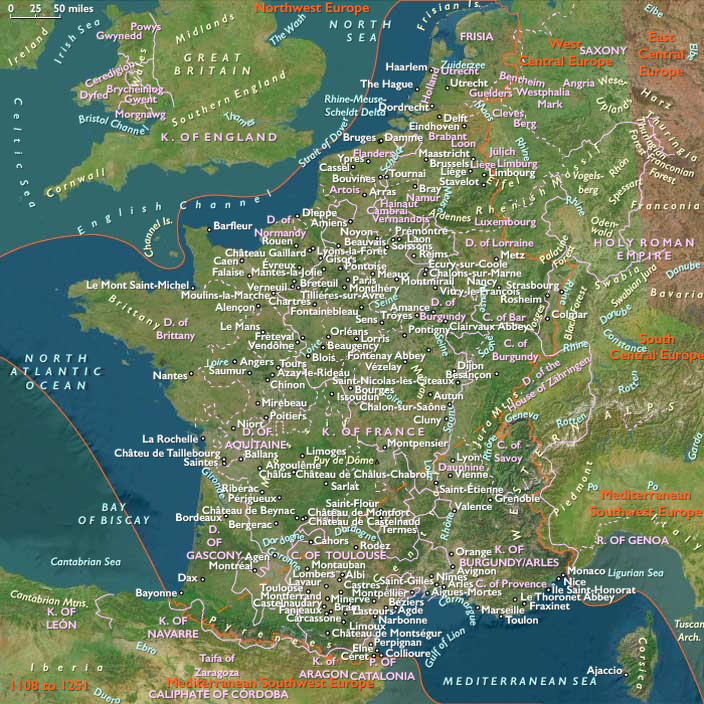
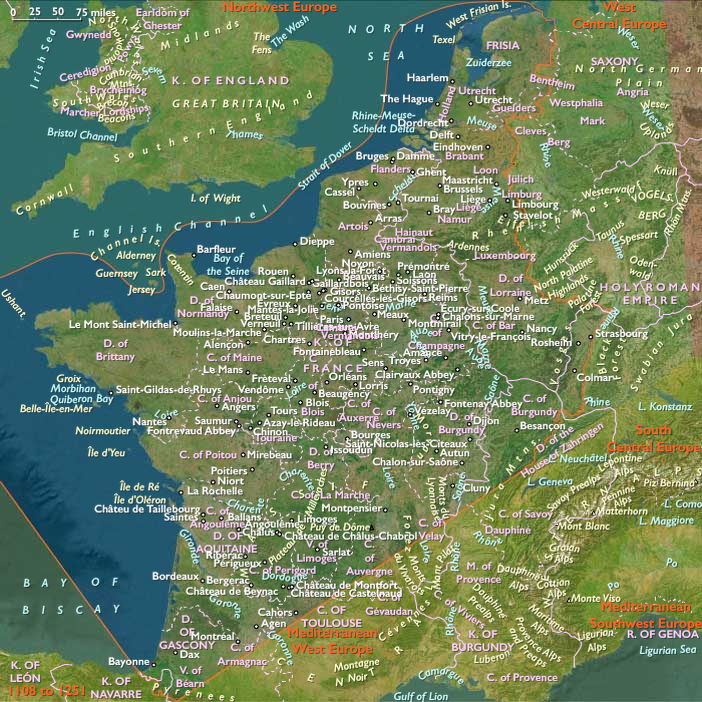
From 1240 to 1251, Atlantic West Europe—including the Low Countries, Brittany, Normandy, Aquitaine, Burgundy, central France, Alsace, and Franche-Comté—experienced further consolidation of royal authority, continued economic vitality, deepening urban growth, and influential intellectual and cultural developments, laying the foundations for the transition from the High Middle Ages into the Late Medieval period.
Political and Military Developments
-
France: Strengthening Capetian Centralization
- Louis IX (Saint Louis, r. 1226–1270) continued consolidating royal authority, establishing a more effective justice system, enforcing peace among nobles, and initiating far-reaching administrative reforms.
- Louis IX participated in the Seventh Crusade (1248–1254), temporarily shifting royal attention overseas, though domestic administration remained stable due to robust governance systems established during his reign.
-
Brittany and Normandy: Stable Autonomy and Integration
- Brittany, under Duke John I (r. 1237–1286), maintained relative autonomy while strengthening its diplomatic ties with the French crown, reinforcing regional stability.
- Normandy continued its integration into royal France, enhancing economic prosperity and benefiting from centralized administration.
-
Aquitaine: Shifts in Angevin Influence
- Continued rivalry between the Capetian kings and English Plantagenet authority intensified regional instability. However, French influence steadily increased, laying groundwork for future conflicts.
-
Burgundy and the Low Countries: Political Stability and Economic Expansion
- Under Hugh IV of Burgundy (r. 1218–1272), the duchy experienced continued stability, managing complex relationships with France and the Empire.
- In Flanders, Countess Joan of Constantinople (r. 1205–1244) and subsequently her successors sustained economic prosperity through textiles, trade, and diplomacy.
Economic and Social Developments
-
Expansion of Trade and Commerce
- Cities such as Bruges, Ghent, Rouen, and Paris continued rapid economic expansion driven by textile manufacturing, luxury trades, and long-distance commerce, maintaining strong connections with Mediterranean and North Sea trade networks.
- The Champagne fairs remained significant, solidifying Atlantic West Europe's central role in international trade.
-
Urbanization and Guild Development
- Urban populations expanded considerably, leading to increased prominence of guilds that regulated production, trade practices, and worker welfare, shaping urban governance and social structures.
Cultural and Intellectual Developments
-
Advancement of Gothic Architecture
- Gothic architecture continued its vibrant evolution, with significant progress in monumental cathedrals such as Amiens and Chartres, showcasing innovative techniques in vaulting, sculpture, and stained glass.
-
Scholasticism and Intellectual Growth
- The University of Paris remained a foremost intellectual center, nurturing figures such as Thomas Aquinas, who studied and taught in Paris from 1245, significantly influencing medieval philosophy and theology.
-
Literary and Cultural Flourishing
- Continued patronage of courtly literature, poetry, and troubadour traditions enriched the region's cultural life, reflecting courtly ideals, religious devotion, and chivalric values.
Religious Developments
-
Influence of Crusading Ideals
- Louis IX's Seventh Crusade (1248–1254), despite limited military success, reinforced crusading ideals, shaping popular religious sentiment and royal legitimacy.
-
Expansion of Mendicant Orders
- Franciscans and Dominicans expanded significantly, playing crucial roles in education, preaching, and combating heresy, enhancing their social and spiritual influence.
Legacy and Significance
The years 1240–1251 marked a period of increased political consolidation under Capetian leadership, vibrant economic growth, dynamic urbanization, and significant intellectual and cultural advancement. This era solidified Atlantic West Europe’s position as a critical hub in medieval Europe, preparing the region for the transitions and challenges of the Late Middle Ages.
People
- Chrétien de Troyes
- Henry III of England
- Hugh IV
- Joan
- John I, Duke of Brittany
- John of England
- Louis IX of France
- Robert Grosseteste
- William of Auvergne
Groups
- Flanders, County of
- Anjou, County of
- Normandy, Duchy of
- Brittanny, Duchy of
- Aquitaine, (Angevin) Duchy of
- France, (Capetian) Kingdom of
- Burgundy, Duchy of
- Christians, Roman Catholic
- Cistercians, Order of the (White Friars)
- Catharism (Albigenses)
- England, (Plantagenet, Angevin) Kingdom of
- Franciscans, or Order of St. Francis
- Dominicans, or Order of St. Dominic
Topics
- Western Architecture: 1108 to 1252
- Literature: 1108 to 1252
- Renaissance of the Twelfth Century
- Crusade, Seventh
Commodoties
Subjects
- Commerce
- Architecture
- Faith
- Government
- Scholarship
- Custom and Law
- Theology
- Philosophy and logic
- religious movement
Regions
Subregions
Related Events
Showing 10 events out of 46884 total
Years: 1240 - 1251
People
- Chrétien de Troyes
- Henry III of England
- Hugh IV
- Joan
- John I, Duke of Brittany
- John of England
- Louis IX of France
- Robert Grosseteste
- William of Auvergne
Groups
- Flanders, County of
- Anjou, County of
- Normandy, Duchy of
- Brittanny, Duchy of
- Aquitaine, (Angevin) Duchy of
- France, (Capetian) Kingdom of
- Burgundy, Duchy of
- Christians, Roman Catholic
- Cistercians, Order of the (White Friars)
- Catharism (Albigenses)
- England, (Plantagenet, Angevin) Kingdom of
- Franciscans, or Order of St. Francis
- Dominicans, or Order of St. Dominic
Topics
- Western Architecture: 1108 to 1252
- Literature: 1108 to 1252
- Renaissance of the Twelfth Century
- Crusade, Seventh
Commodoties
Subjects
- Commerce
- Architecture
- Faith
- Government
- Scholarship
- Custom and Law
- Theology
- Philosophy and logic
- religious movement
Regions
Subregions