
Atlantic West Europe (1228–1239): Consolidation of Capetian …
Years: 1228 - 1239
Atlantic West Europe (1228–1239): Consolidation of Capetian Authority, Urban Expansion, and Cultural Flourishing
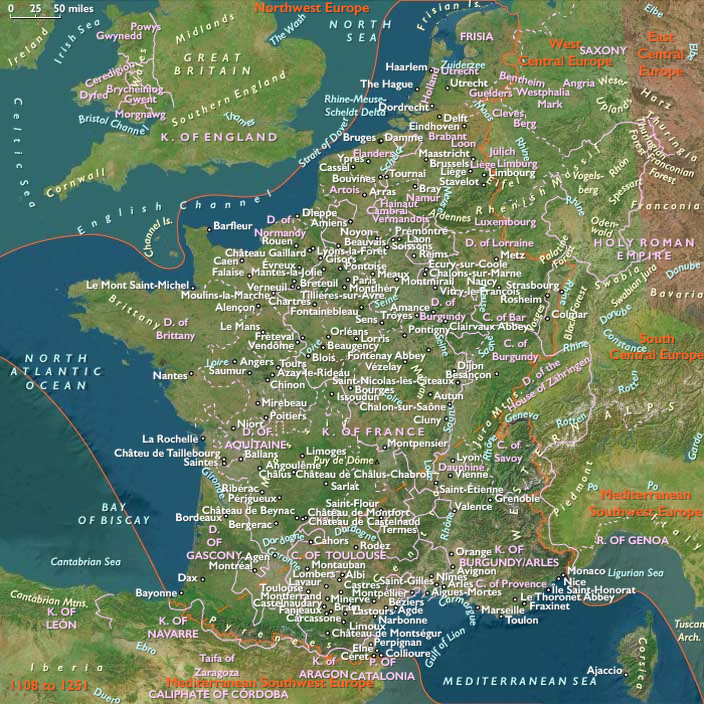
Between 1228 and 1239, Atlantic West Europe—including the Low Countries, Brittany, Normandy, Aquitaine, Burgundy, central France, Alsace, and Franche-Comté—experienced continued political stabilization, robust economic activity, expanding urbanization, and notable intellectual and cultural growth, amid ongoing religious transformation.
Political and Military Developments
-
France: Strengthening Royal Power
- Louis IX (Saint Louis, r. 1226–1270), though initially ruling under the regency of Blanche of Castile until 1234, significantly strengthened the centralized authority of the Capetian monarchy, suppressing noble revolts and furthering administrative reforms.
- The 1229 Treaty of Paris ended the Albigensian Crusade, effectively incorporating Languedoc into Capetian France, thus securing southern boundaries and enhancing royal prestige.
-
Brittany and Normandy: Integration and Autonomy
- Brittany retained nominal autonomy under Duke Peter Mauclerc (r. 1213–1237) but increasingly aligned with Capetian interests through marital and political alliances.
- Normandy, now firmly under French control, prospered economically while adjusting to centralizing royal governance.
-
Aquitaine: Continued Fragmentation
- Aquitaine remained a region of competing interests, with localized conflicts persisting as English Plantagenet authority weakened, enhancing French leverage.
-
Burgundy and the Low Countries: Stability and Economic Growth
- Burgundy under Hugh IV (r. 1218–1272) consolidated internal stability, skillfully balancing imperial and royal influences.
- In Flanders, Countess Joan (r. 1205–1244) sustained regional prosperity, balancing relations with France, England, and the Holy Roman Empire.
Economic and Social Developments
-
Urbanization and Trade Expansion
- Urban centers such as Paris, Bruges, Ghent, and Rouen continued rapid growth, supported by flourishing commerce in textiles, luxury goods, and agricultural produce.
- The Champagne fairs remained central, integrating trade networks across Europe, and fostering economic prosperity throughout the region.
-
Agricultural Innovation and Population Growth
- Continued agricultural advancements supported ongoing demographic growth, driving urban expansion and commercial activity, resulting in the region’s sustained prosperity.
Cultural and Intellectual Developments
-
Flourishing Gothic Architecture
- Gothic architecture reached new heights, exemplified by significant progress in constructing iconic cathedrals such as Amiens, Reims, and Beauvais, reflecting both civic pride and religious devotion.
-
Rise of Scholastic Philosophy
- The University of Paris solidified its reputation as Europe's preeminent intellectual center, hosting influential scholars such as Robert Grosseteste and William of Auvergne, fostering advancements in theology, philosophy, and science.
-
Courtly Literature and Cultural Patronage
- Courtly literature, particularly Arthurian romances and troubadour poetry, thrived, enriching cultural life in noble courts from Aquitaine to Champagne.
Religious Developments
-
Aftermath of the Albigensian Crusade
- The suppression of Catharism through the Albigensian Crusade solidified Catholic dominance, increasing the authority of the Church and supporting royal claims to legitimacy.
-
Monastic Influence and Expansion
- The Cistercian order and mendicant orders, especially the Franciscans and Dominicans, expanded significantly, enhancing religious education, preaching, and social influence across urban and rural communities.
Legacy and Significance
The period 1228–1239 marked an era of deepening Capetian consolidation, dynamic urban growth, and vibrant cultural expression. The integration of southern territories, flourishing economic networks, and continued intellectual leadership positioned Atlantic West Europe as a leading center of medieval European power, culture, and prosperity
People
- Chrétien de Troyes
- Henry III of England
- Hugh IV
- Joan
- John of England
- Louis IX of France
- Peter I
- Robert Grosseteste
- William of Auvergne
Groups
- Flanders, County of
- Anjou, County of
- Normandy, Duchy of
- Brittanny, Duchy of
- Aquitaine, (Angevin) Duchy of
- France, (Capetian) Kingdom of
- Burgundy, Duchy of
- Christians, Roman Catholic
- Cistercians, Order of the (White Friars)
- Catharism (Albigenses)
- England, (Plantagenet, Angevin) Kingdom of
- Franciscans, or Order of St. Francis
- Dominicans, or Order of St. Dominic
Topics
- Western Architecture: 1108 to 1252
- Literature: 1108 to 1252
- Renaissance of the Twelfth Century
- Albigensian Crusade
Commodoties
Subjects
- Commerce
- Architecture
- Faith
- Government
- Scholarship
- Custom and Law
- Theology
- Philosophy and logic
- religious movement
Regions
Subregions

Related Events
Showing 10 events out of 47082 total
Years: 1228 - 1239
People
- Chrétien de Troyes
- Henry III of England
- Hugh IV
- Joan
- John of England
- Louis IX of France
- Peter I
- Robert Grosseteste
- William of Auvergne
Groups
- Flanders, County of
- Anjou, County of
- Normandy, Duchy of
- Brittanny, Duchy of
- Aquitaine, (Angevin) Duchy of
- France, (Capetian) Kingdom of
- Burgundy, Duchy of
- Christians, Roman Catholic
- Cistercians, Order of the (White Friars)
- Catharism (Albigenses)
- England, (Plantagenet, Angevin) Kingdom of
- Franciscans, or Order of St. Francis
- Dominicans, or Order of St. Dominic
Topics
- Western Architecture: 1108 to 1252
- Literature: 1108 to 1252
- Renaissance of the Twelfth Century
- Albigensian Crusade
Commodoties
Subjects
- Commerce
- Architecture
- Faith
- Government
- Scholarship
- Custom and Law
- Theology
- Philosophy and logic
- religious movement
Regions
Subregions