
Atlantic West Europe (1216–1227): Consolidating Royal Power, …
Years: 1216 - 1227
Atlantic West Europe (1216–1227): Consolidating Royal Power, Economic Vitality, and Intellectual Progress
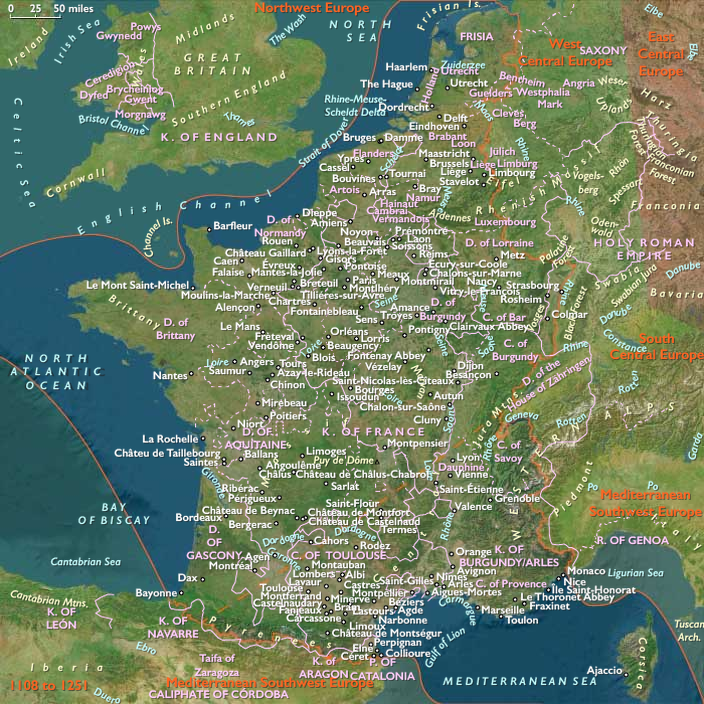
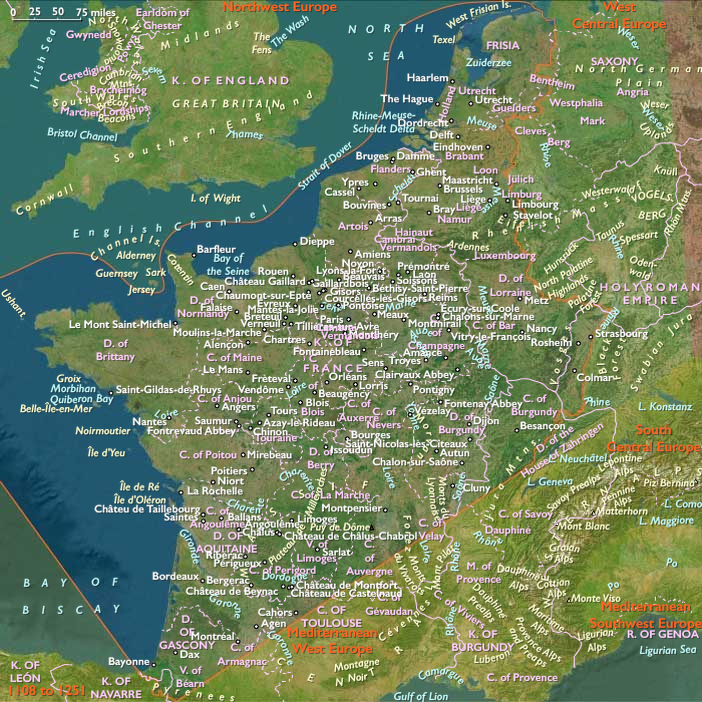
Between 1216 and 1227, Atlantic West Europe—including the Low Countries, Brittany, Normandy, Aquitaine, Burgundy, central France, Alsace, and Franche-Comté—experienced a period of political stabilization following significant territorial realignments, alongside sustained economic growth, dynamic urban expansion, and substantial cultural and intellectual advancements.
Political and Military Developments
-
France: Strengthening Capetian Authority
- Under Philip II Augustus (r. 1180–1223) and subsequently Louis VIII (r. 1223–1226), the French crown consolidated power in territories newly acquired from the Angevin Empire, notably Normandy and Anjou.
- Louis VIII reinforced royal control through decisive campaigns in Poitou and further weakened Angevin influence in southwestern France.
-
England and Aquitaine: Shifting Loyalties
- With the decline of Angevin power after King John's death in 1216, Aquitaine became increasingly isolated, facing internal dissent and external pressure from the Capetian monarchy.
- Henry III's accession as a child (1216–1272) left English possessions on the continent vulnerable, weakening Angevin claims.
-
Brittany: Regional Autonomy under French Influence
- The Breton duchy remained nominally independent but increasingly fell under Capetian influence due to dynastic connections and strategic pressures from neighboring French territories.
-
Burgundy and the Low Countries: Political Stability
- Burgundy, under Duke Odo III (r. 1192–1218) and his successor Hugh IV (r. 1218–1272), maintained autonomy, adeptly navigating the complex political landscape dominated by the Capetian kings and Holy Roman Empire.
- In Flanders, Countess Joan (1205–1244) maintained economic prosperity while carefully balancing French and imperial interests.
Economic and Social Developments
-
Urbanization and Commercial Expansion
- Major urban centers, including Bruges, Ghent, Rouen, and Paris, continued to flourish as economic hubs, benefiting from robust trade networks and the continued importance of the Champagne fairs.
- Increased specialization in textiles, wool, and luxury goods supported urban economic vitality, boosting regional prosperity.
-
Agricultural Innovation and Population Growth
- Ongoing agricultural advancements, including crop rotation improvements and enhanced farming techniques, drove rural productivity and sustained population increases, further supporting urban development.
Cultural and Intellectual Developments
-
Gothic Architecture’s Ascendancy
- Gothic architectural styles became widespread, notably with continued construction at cathedrals like Chartres and Reims. These structures embodied both religious devotion and urban prestige.
-
Expansion of Scholasticism
- The University of Paris gained international prominence, attracting notable scholars like William of Auvergne and Robert Grosseteste, who contributed significantly to theology and early scientific inquiry.
-
Courtly Literature and Romance
- The popularity of Arthurian legends and chivalric literature continued to rise, particularly with the works of poets like Chrétien de Troyes, enhancing cultural connections between regions.
Religious Developments
-
Albigensian Crusade (1209–1229)
- The continuation of the Albigensian Crusade in southern France intensified religious fervor throughout the region, impacting political allegiances and reinforcing the authority of the Catholic Church in combating perceived heresy.
-
Monastic Growth and Reform
- Cistercian and other monastic orders continued to expand their spiritual and economic influence, founding monasteries that enhanced both regional productivity and cultural life.
Legacy and Significance
The period 1216–1227 was characterized by a marked consolidation of Capetian power, reshaping Atlantic West Europe's political landscape after the Angevin Empire’s decline. The sustained economic growth, coupled with dynamic cultural and intellectual developments, reinforced the region’s significance and set enduring foundations for its influence throughout the High Middle Ages.
People
- Chrétien de Troyes
- Henry III of England
- Hugh IV
- Joan
- John of England
- Louis VIII of France
- Odo III
- Philip II of France
- Robert Grosseteste
- William of Auvergne
Groups
- Flanders, County of
- Anjou, County of
- Normandy, Duchy of
- Brittanny, Duchy of
- Aquitaine, (Angevin) Duchy of
- France, (Capetian) Kingdom of
- Burgundy, Duchy of
- Christians, Roman Catholic
- Cistercians, Order of the (White Friars)
- England, (Plantagenet, Angevin) Kingdom of
Topics
- Western Architecture: 1108 to 1252
- Literature: 1108 to 1252
- Renaissance of the Twelfth Century
- Albigensian Crusade
Commodoties
Subjects
- Commerce
- Architecture
- Faith
- Government
- Scholarship
- Custom and Law
- Theology
- Philosophy and logic
- religious movement
Regions
Subregions
Related Events
Showing 10 events out of 47296 total
Years: 1216 - 1227
People
- Chrétien de Troyes
- Henry III of England
- Hugh IV
- Joan
- John of England
- Louis VIII of France
- Odo III
- Philip II of France
- Robert Grosseteste
- William of Auvergne
Groups
- Flanders, County of
- Anjou, County of
- Normandy, Duchy of
- Brittanny, Duchy of
- Aquitaine, (Angevin) Duchy of
- France, (Capetian) Kingdom of
- Burgundy, Duchy of
- Christians, Roman Catholic
- Cistercians, Order of the (White Friars)
- England, (Plantagenet, Angevin) Kingdom of
Topics
- Western Architecture: 1108 to 1252
- Literature: 1108 to 1252
- Renaissance of the Twelfth Century
- Albigensian Crusade
Commodoties
Subjects
- Commerce
- Architecture
- Faith
- Government
- Scholarship
- Custom and Law
- Theology
- Philosophy and logic
- religious movement
Regions
Subregions