
Atlantic West Europe (1192–1203): Shifting Alliances, Angevin …
Years: 1204 - 1215
Atlantic West Europe (1192–1203): Shifting Alliances, Angevin Decline, and Cultural Flourishing
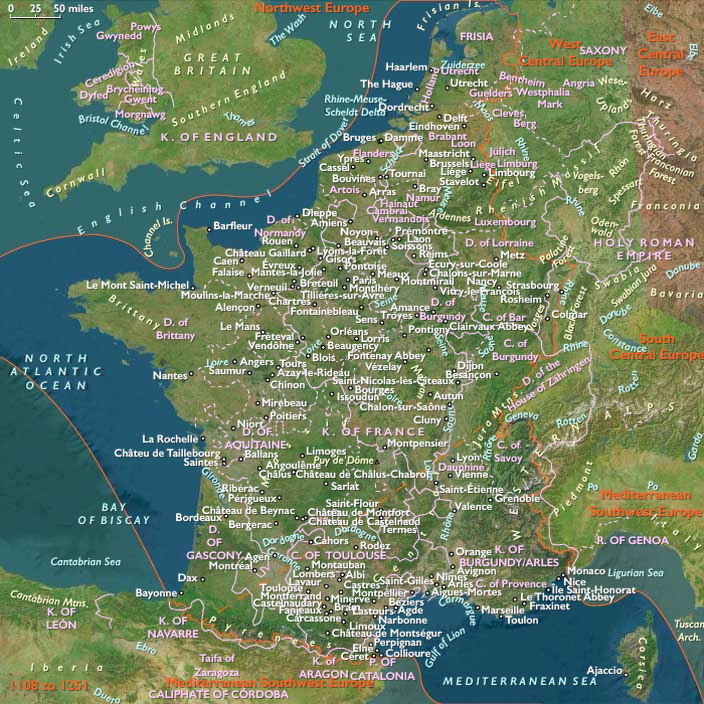
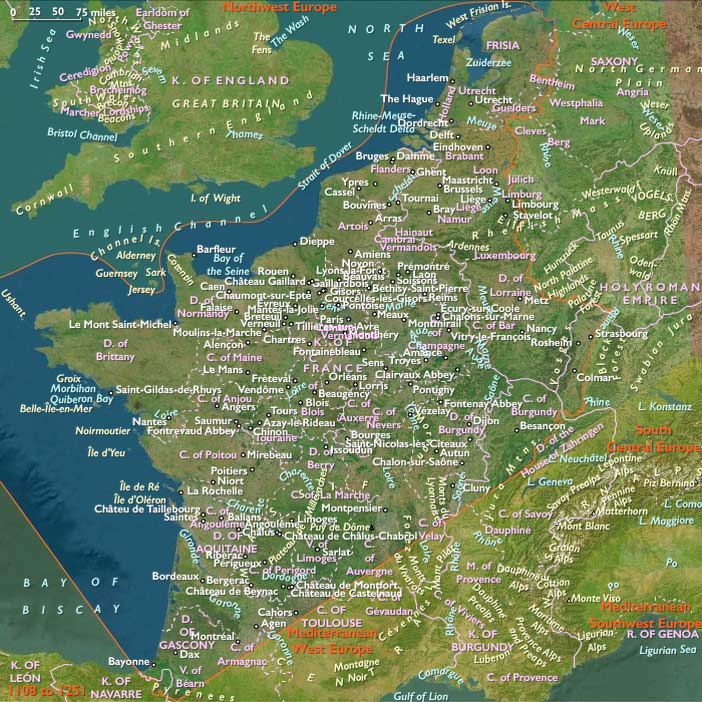
Between 1192 and 1203, Atlantic West Europe—including the Low Countries, Brittany, Normandy, Aquitaine, Burgundy, central France, Alsace, and Franche-Comté—experienced dramatic shifts marked by the decline of Angevin power, a significant expansion of Capetian authority under Philip II Augustus, intensified economic prosperity, and remarkable cultural and intellectual growth.
Political and Military Developments
-
Decline of the Angevin Empire and Rise of Capetian France
- Richard I ("the Lionheart," r. 1189–1199), frequently absent from his continental territories due to crusading and captivity, saw Angevin authority weaken significantly.
- Upon Richard’s death (1199), his brother John Lackland (r. 1199–1216) inherited an empire in turmoil, facing immediate challenges from Philip Augustus of France.
- Philip II Augustus skillfully exploited John's vulnerabilities, gradually undermining Angevin control, particularly in Normandy, Anjou, and parts of Aquitaine.
-
Loss of Normandy and Angevin Territories
- Philip II’s military campaigns culminated in the decisive Siege of Château Gaillard (1203), significantly weakening Angevin defenses in Normandy.
- By 1203, Angevin territories were on the brink of collapse, setting the stage for Normandy’s complete loss (1204).
-
Brittany’s Ambiguous Position
- Brittany, under Duchess Constance and later her young son Arthur of Brittany, became embroiled in the Angevin-Capetian conflict, exacerbating regional instability.
- Arthur’s capture (1202) by King John further destabilized the region, ultimately benefiting Capetian ambitions.
-
Burgundy and the Low Countries: Stability Amid Conflict
- Odo III of Burgundy (r. 1192–1218) maintained stable rule, skillfully navigating alliances between France and the Empire.
- The Low Countries, particularly Flanders, continued to prosper economically and maintained relative political autonomy despite external tensions.
Economic and Social Developments
-
Trade Expansion and Urban Prosperity
- Economic activity in Flanders flourished, particularly in Bruges, Ghent, and Ypres, becoming European centers of textile manufacturing and trade.
- Continued growth of the Champagne fairs integrated markets, strengthening Atlantic West Europe's centrality in European commerce.
-
Rural Productivity and Agricultural Innovation
- Increased agricultural productivity and population growth supported further urbanization, with widespread improvements in agricultural technology and crop rotation.
Cultural and Intellectual Developments
-
Gothic Architecture Reaches New Heights
- Gothic construction reached a high point in this era, particularly at Chartres Cathedral (rebuilt after 1194), which became an influential model across Europe.
-
Courtly Literature and Intellectual Activity
- Courtly literature flourished further, notably in the works of Chrétien de Troyes’ successors, who expanded Arthurian romance and courtly poetry.
- Universities, especially the University of Paris, became dominant intellectual hubs, attracting students and scholars from across Europe.
Religious Developments
-
Crusading Zeal and the Fourth Crusade
- Atlantic West Europe actively supported crusading efforts, culminating in regional participation in preparations for the ill-fated Fourth Crusade (1202–1204).
-
Monasticism and Religious Reform
- Continued expansion of Cistercian monasticism influenced regional religious practice, economy, and education, reinforcing their societal significance.
Legacy and Significance
The era 1192–1203 marked a critical turning point in Atlantic West Europe, characterized by the dramatic weakening of Angevin rule and corresponding rise of Capetian dominance under Philip II Augustus. Combined with robust economic growth, cultural achievements, and intense crusading fervor, this era fundamentally reshaped the political and cultural landscape, establishing a clear foundation for Capetian dominance, regional prosperity, and cultural vitality throughout the thirteenth century.
People
Groups
- Flanders, County of
- Anjou, County of
- Normandy, Duchy of
- Brittanny, Duchy of
- Aquitaine, (Angevin) Duchy of
- France, (Capetian) Kingdom of
- Burgundy, Duchy of
- Christians, Roman Catholic
- Cistercians, Order of the (White Friars)
- England, (Plantagenet, Angevin) Kingdom of
Topics
- Western Architecture: 1108 to 1252
- Literature: 1108 to 1252
- Renaissance of the Twelfth Century
- Crusade, Fourth
Commodoties
Subjects
- Commerce
- Architecture
- Faith
- Government
- Scholarship
- Custom and Law
- Theology
- Philosophy and logic
- religious movement
Regions
Subregions
Related Events
Showing 10 events out of 47639 total
Years: 1204 - 1215
People
Groups
- Flanders, County of
- Anjou, County of
- Normandy, Duchy of
- Brittanny, Duchy of
- Aquitaine, (Angevin) Duchy of
- France, (Capetian) Kingdom of
- Burgundy, Duchy of
- Christians, Roman Catholic
- Cistercians, Order of the (White Friars)
- England, (Plantagenet, Angevin) Kingdom of
Topics
- Western Architecture: 1108 to 1252
- Literature: 1108 to 1252
- Renaissance of the Twelfth Century
- Crusade, Fourth
Commodoties
Subjects
- Commerce
- Architecture
- Faith
- Government
- Scholarship
- Custom and Law
- Theology
- Philosophy and logic
- religious movement
Regions
Subregions