
Atlantic West Europe (1180–1191): Capetian Revival, Angevin …
Years: 1180 - 1191
Atlantic West Europe (1180–1191): Capetian Revival, Angevin Strains, and Cultural Dynamism
Between 1180 and 1191, Atlantic West Europe—including the Low Countries, Brittany, Normandy, Aquitaine, Burgundy, central France, Alsace, and Franche-Comté—experienced a significant shift in regional dynamics, marked by a Capetian revival under Philip II Augustus, growing strains within the Angevin Empire, vibrant cultural and economic activity, and intensified crusading zeal.
Political and Military Developments
-
Capetian Revival under Philip II Augustus
- Philip II Augustus (r. 1180–1223) ascended the French throne, inaugurating an era of renewed royal strength, asserting Capetian authority by actively challenging Angevin dominance.
- Philip skillfully exploited internal Angevin rivalries to reclaim territories, significantly strengthening royal authority and centralization in France.
-
Internal Strife within the Angevin Empire
- Henry II (r. 1154–1189) faced escalating internal revolts led by his sons, including Richard (the future Richard I "the Lionheart") and John, with support from Queen Eleanor and external backing from the Capetian crown.
- Persistent revolts weakened Angevin cohesion, culminating in the defeat and subsequent death of Henry II (1189), and the accession of Richard I (r. 1189–1199).
-
Brittany and Normandy Amid Shifting Alliances
- Brittany’s ducal authority was increasingly tied to the Angevin family through the marriage of Geoffrey Plantagenet and Duchess Constance (1181), integrating Brittany deeper into Angevin politics and struggles.
- Normandy remained an Angevin stronghold, though increasingly contested by Philip Augustus.
-
Burgundy and the Low Countries: Stability and Growth
- Hugh III of Burgundy (r. 1162–1192) successfully navigated regional rivalries, maintaining stability through diplomatic neutrality and economic prosperity.
- The Low Countries, particularly Flanders, thrived economically despite minor conflicts and remained politically stable.
Economic and Social Developments
-
Economic Prosperity and Urban Growth
- Rapid expansion of trade networks supported prosperity in Flanders (Bruges, Ghent, Ypres), Normandy (Rouen, Caen), and Champagne.
- Increased urbanization supported communal institutions and early civic self-government, particularly in towns of northern France and the Low Countries.
-
Rural Development and Agricultural Innovation
- Advances in agricultural methods facilitated population growth and supported the expansion of market-oriented farming, especially in the fertile regions of northern and central France.
Cultural and Intellectual Developments
-
Gothic Architecture and Artistic Patronage
- Gothic architecture flourished dramatically, notably through continued construction at Notre-Dame de Paris and the cathedrals of Chartres and Laon, marking a golden era for architectural innovation and artistic achievement.
-
Literary and Courtly Culture
- Troubadour poetry and courtly literature thrived, heavily influenced by Eleanor of Aquitaine’s patronage and the aristocratic courts of Aquitaine and Normandy.
- Chrétien de Troyes produced his most influential Arthurian romances during this period, profoundly impacting European literary culture.
-
Intellectual Expansion
- The University of Paris attracted leading scholars, solidifying its place as Europe's intellectual capital, advancing scholastic theology, philosophy, and canon law.
Religious Developments
-
Third Crusade (1189–1192) and Regional Impact
- The fall of Jerusalem (1187) to Saladin triggered widespread religious fervor, influencing significant crusading participation from the region, notably by Philip II Augustus and Richard I.
-
Monastic Influence and Spiritual Movements
- Cistercian monasteries continued their rapid expansion, promoting monastic reforms, educational development, and agricultural innovations across Atlantic West Europe.
Legacy and Significance
The period 1180 to 1191 was transformative, characterized by a Capetian resurgence under Philip Augustus, internal Angevin turmoil, and vibrant cultural activity. This era laid crucial foundations for the enduring rivalry between Capetian France and the Angevin territories, shaped regional political alignments, and saw significant cultural achievements—especially in Gothic architecture and literature—that defined Atlantic West Europe's trajectory into the thirteenth century.
People
- Chrétien de Troyes
- Constance
- Eleanor of Aquitaine
- Geoffrey II, Duke of Brittany
- Henry II of England
- Hugh III
- Philip II of France
- Richard I of England
- Saladin
Groups
- Flanders, County of
- Anjou, County of
- Normandy, Duchy of
- Brittanny, Duchy of
- Aquitaine, (Angevin) Duchy of
- France, (Capetian) Kingdom of
- Burgundy, Duchy of
- Christians, Roman Catholic
- Cistercians, Order of the (White Friars)
- England, (Plantagenet, Angevin) Kingdom of
Topics
- Western Architecture: 1108 to 1252
- Literature: 1108 to 1252
- Renaissance of the Twelfth Century
- Crusade, Third
Commodoties
Subjects
- Commerce
- Architecture
- Faith
- Government
- Scholarship
- Custom and Law
- Theology
- Philosophy and logic
- religious movement
Regions
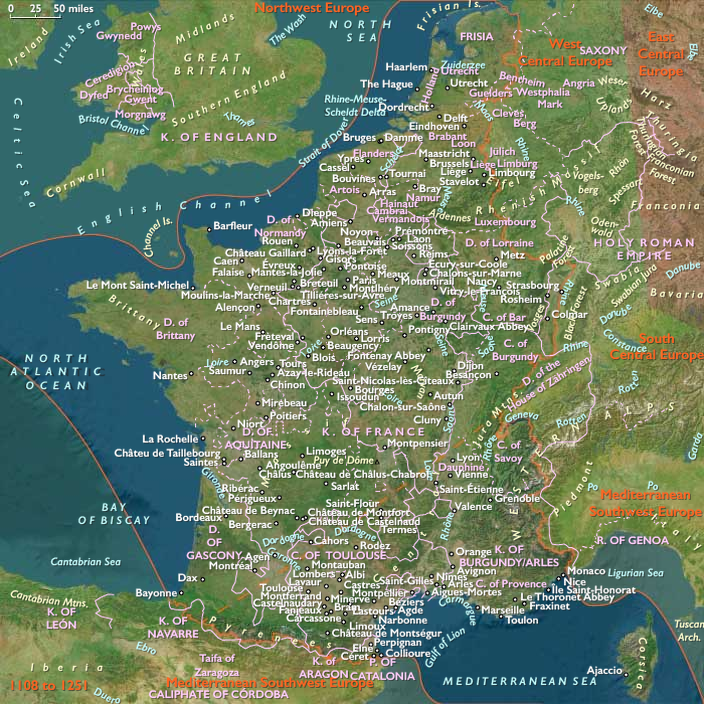
Subregions
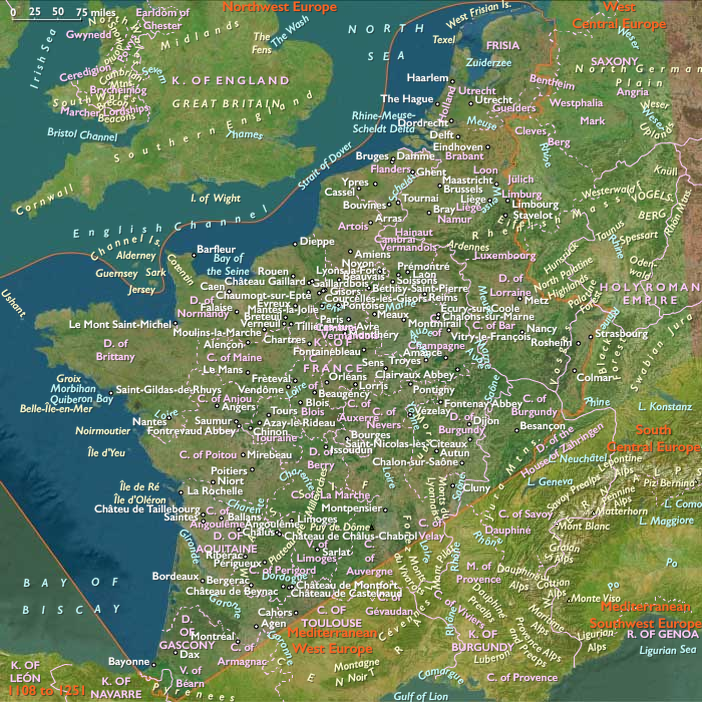
Related Events
Showing 10 events out of 48192 total
Years: 1180 - 1191
People
- Chrétien de Troyes
- Constance
- Eleanor of Aquitaine
- Geoffrey II, Duke of Brittany
- Henry II of England
- Hugh III
- Philip II of France
- Richard I of England
- Saladin
Groups
- Flanders, County of
- Anjou, County of
- Normandy, Duchy of
- Brittanny, Duchy of
- Aquitaine, (Angevin) Duchy of
- France, (Capetian) Kingdom of
- Burgundy, Duchy of
- Christians, Roman Catholic
- Cistercians, Order of the (White Friars)
- England, (Plantagenet, Angevin) Kingdom of
Topics
- Western Architecture: 1108 to 1252
- Literature: 1108 to 1252
- Renaissance of the Twelfth Century
- Crusade, Third
Commodoties
Subjects
- Commerce
- Architecture
- Faith
- Government
- Scholarship
- Custom and Law
- Theology
- Philosophy and logic
- religious movement
Regions
Subregions