
Atlantic West Europe (1156–1167): The Angevin Ascendancy, …
Years: 1156 - 1167
Atlantic West Europe (1156–1167): The Angevin Ascendancy, Royal Rivalries, and Cultural Flourishing
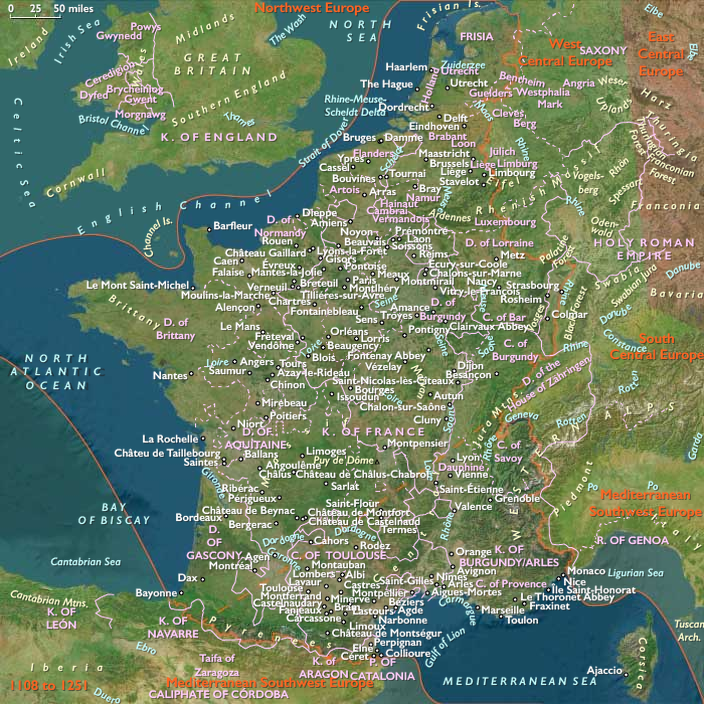
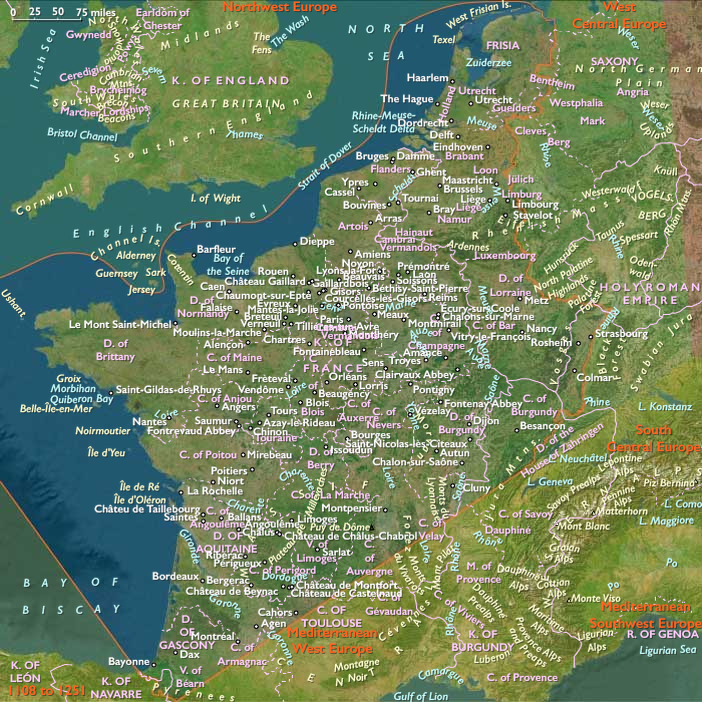
Between 1156 and 1167, Atlantic West Europe—including the Low Countries, Brittany, Normandy, Aquitaine, Burgundy, central France, Alsace, and Franche-Comté—witnessed the rise of Angevin dominance, intensifying royal rivalries, continued economic prosperity, and significant cultural and intellectual advances.
Political and Military Developments
-
The Rise of the Angevin Empire
- Henry II Plantagenet (r. 1154–1189), through his marriage to Eleanor of Aquitaine, consolidated territories from Normandy to Aquitaine, creating a vast realm rivaling France itself.
- Henry's power provoked increased tensions with Louis VII of France (r. 1137–1180), initiating decades of intermittent warfare.
-
France: Royal Authority Challenged
- Louis VII faced difficulties containing Angevin expansion, resulting in frequent conflicts aimed at limiting Henry II's growing influence in French territories.
-
Brittany: Maintaining Autonomy
- Conan IV of Brittany (r. 1156–1166) navigated political pressures from Henry II and France, ultimately compelled to acknowledge Angevin overlordship to preserve regional stability.
-
Burgundy and the Low Countries: Relative Stability
- Burgundy remained relatively stable under Duke Eudes II (r. 1143–1162) and his successor, Hugh III (r. 1162–1192), preserving autonomy amid broader regional conflicts.
- The Low Countries, especially Flanders, experienced economic prosperity, though political tension increased between local counts and external powers.
Economic and Social Developments
-
Expanding Trade and Economic Integration
- Trade through the Champagne fairs and Flemish cities (Bruges, Ghent, Ypres) flourished, further linking northern and southern European economies.
- Textile industries in Flanders and wool exports from England and Normandy strengthened regional economies.
-
Agricultural Productivity and Rural Stability
- Ongoing agricultural improvements supported population growth, urbanization, and market expansion, reinforcing economic stability.
Cultural and Intellectual Developments
-
Growth of Scholasticism and Intellectual Centers
- Paris emerged definitively as Europe's intellectual hub, driven by scholars such as Peter Lombard, whose influential theological work, the "Sentences," shaped medieval intellectual life.
-
Gothic Architecture and Artistic Expression
- Gothic architecture flourished, notably in the ongoing construction of Notre-Dame de Paris (begun in 1163), symbolizing France's cultural and spiritual influence.
Religious Developments
-
Thomas Becket and Church-State Relations
- The conflict between Henry II and Archbishop Thomas Becket (appointed 1162) of Canterbury highlighted tensions between secular authority and ecclesiastical independence, impacting church-state relations across the region.
-
Cistercian Influence and Monastic Reform
- Cistercian monasteries, particularly Clairvaux, continued expanding spiritually and economically, strengthening their influential role in religious reform.
Legacy and Significance
The period from 1156 to 1167 established the Angevin Empire as a dominant force in Atlantic West Europe, laying the foundation for prolonged conflicts between England and France. The growth of Paris as a major intellectual and cultural center, alongside advancements in architecture and scholasticism, solidified this era's lasting impact on European history.
People
- Conan IV
- Eleanor of Aquitaine
- Geoffrey Plantagenet
- Henry II of England
- Hugh III
- Louis VII of France
- Odo III
- Peter Abelard
- Peter Lombard
- Thomas Becket
Groups
- Flanders, County of
- Normandy, Duchy of
- Brittanny, Duchy of
- Aquitaine, (Angevin) Duchy of
- France, (Capetian) Kingdom of
- Burgundy, Duchy of
- Christians, Roman Catholic
- Cistercians, Order of the (White Friars)
- England, (Plantagenet, Angevin) Kingdom of
Topics
Commodoties
Subjects
- Commerce
- Architecture
- Faith
- Government
- Scholarship
- Custom and Law
- Theology
- Philosophy and logic
- religious movement
Regions
Subregions
Related Events
Showing 10 events out of 48604 total
Years: 1156 - 1167
People
- Conan IV
- Eleanor of Aquitaine
- Geoffrey Plantagenet
- Henry II of England
- Hugh III
- Louis VII of France
- Odo III
- Peter Abelard
- Peter Lombard
- Thomas Becket
Groups
- Flanders, County of
- Normandy, Duchy of
- Brittanny, Duchy of
- Aquitaine, (Angevin) Duchy of
- France, (Capetian) Kingdom of
- Burgundy, Duchy of
- Christians, Roman Catholic
- Cistercians, Order of the (White Friars)
- England, (Plantagenet, Angevin) Kingdom of
Topics
Commodoties
Subjects
- Commerce
- Architecture
- Faith
- Government
- Scholarship
- Custom and Law
- Theology
- Philosophy and logic
- religious movement
Regions
Subregions