
Atlantic West Europe (1144–1155): Dynastic Shifts, Royal …
Years: 1144 - 1155
Atlantic West Europe (1144–1155): Dynastic Shifts, Royal Ambitions, and Cultural Expansion
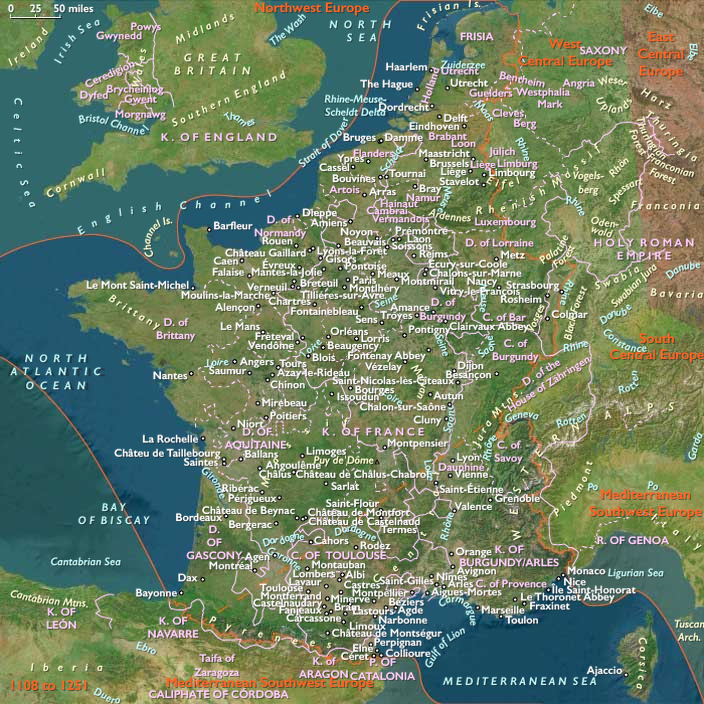
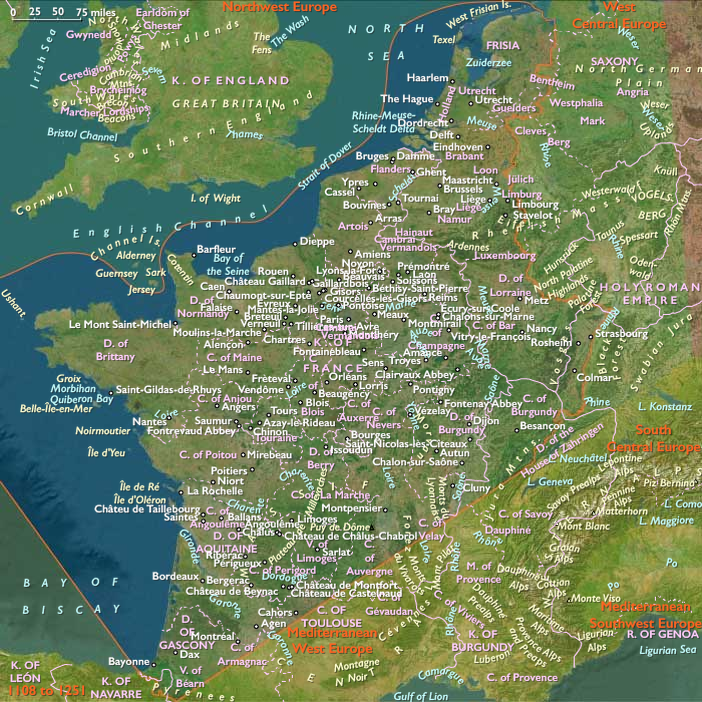
Between 1144 and 1155, Atlantic West Europe—which includes the Low Countries, Brittany, Normandy, Aquitaine, Burgundy, central France, Alsace, and Franche-Comté—experienced significant dynastic shifts, intensified royal ambitions, continued economic expansion, and notable cultural developments.
Political and Military Developments
-
France: Capetian Authority and Territorial Expansion
-
Louis VII (r. 1137–1180) embarked on the Second Crusade (1147–1149), temporarily leaving governance to trusted advisors, but ultimately strengthened royal authority despite the Crusade’s failure.
-
Ongoing feudal struggles and territorial disputes required constant negotiation and occasional military action.
-
-
Normandy and England: The Anarchy Continues
-
The succession war between Stephen of Blois and Matilda persisted, deeply destabilizing Normandy and England.
-
Geoffrey Plantagenet, Count of Anjou, successfully captured Normandy (1144), significantly altering regional power dynamics.
-
-
Aquitaine: Eleanor's Influence Expands
-
Eleanor of Aquitaine (r. 1137–1204) divorced Louis VII in 1152, marrying Henry Plantagenet (future Henry II of England) soon afterward, dramatically reshaping political alliances and strengthening the Angevin realm.
-
-
Brittany and Burgundy: Continued Stability Amid Challenges
-
Conan III of Brittany (r. 1112–1148) and his successor Hoël III (r. 1148–1156) navigated increasing pressures from Normandy and France, maintaining regional autonomy.
-
Burgundy remained stable under Eudes II (r. 1143–1162), preserving local authority and managing external threats.
-
Economic and Social Developments
-
Urban Growth and Trade Networks
-
Commercial expansion continued, especially in textile-producing cities like Bruges and Ghent, which strengthened economic ties across Europe.
-
The Champagne fairs maintained their crucial role in European trade, further integrating northern and southern markets.
-
-
Rural Prosperity and Agricultural Innovation
-
Advances in agricultural methods supported rural prosperity, facilitating continued urbanization and population growth.
-
Cultural and Intellectual Developments
-
Rise of Gothic Architecture
-
The beginnings of Gothic architecture emerged, exemplified by the construction of the Basilica of Saint-Denis (consecrated in 1144), influencing church-building throughout the region.
-
-
Intellectual Growth and Scholasticism
-
Continued development of scholastic thought at the University of Paris, with Bernard of Clairvaux exerting significant theological influence.
-
Religious Developments
-
Second Crusade and Religious Zeal
-
The failed Second Crusade (1147–1149), preached by Bernard of Clairvaux, impacted regional religious enthusiasm and subsequent perceptions of crusading ideals.
-
-
Monastic Influence and Reform
-
Cistercian monasteries, especially Clairvaux, continued to expand their influence both spiritually and economically.
-
Legacy and Significance
The period from 1144 to 1155 was marked by significant shifts in political power, notably Eleanor of Aquitaine’s remarriage, which altered the balance of regional alliances. Cultural developments, particularly Gothic architecture and intellectual expansion, left enduring legacies shaping Atlantic West Europe's trajectory through the High Middle Ages.
People
- Bernard of Clairvaux
- Conan III
- Eleanor of Aquitaine
- Empress Matilda
- Geoffrey Plantagenet
- Henry I of England
- Henry II of England
- Hoèl III
- Hugh II
- Louis VII of France
- Odo II
- Peter Abelard
- Stephen of Blois
Groups
- Flanders, County of
- Normandy, Duchy of
- Brittanny, Duchy of
- Aquitaine, (Angevin) Duchy of
- France, (Capetian) Kingdom of
- Burgundy, Duchy of
- Christians, Roman Catholic
- England, (Norman) Kingdom of
- Cistercians, Order of the (White Friars)
- England, (Plantagenet, Angevin) Kingdom of
Topics
- Western Architecture: 1108 to 1252
- Literature: 1108 to 1252
- Renaissance of the Twelfth Century
- Crusade, Second
Commodoties
Subjects
- Commerce
- Architecture
- Faith
- Government
- Scholarship
- Custom and Law
- Theology
- Philosophy and logic
- religious movement
Regions
Subregions
Years: 1144 - 1155
People
- Bernard of Clairvaux
- Conan III
- Eleanor of Aquitaine
- Empress Matilda
- Geoffrey Plantagenet
- Henry I of England
- Henry II of England
- Hoèl III
- Hugh II
- Louis VII of France
- Odo II
- Peter Abelard
- Stephen of Blois
Groups
- Flanders, County of
- Normandy, Duchy of
- Brittanny, Duchy of
- Aquitaine, (Angevin) Duchy of
- France, (Capetian) Kingdom of
- Burgundy, Duchy of
- Christians, Roman Catholic
- England, (Norman) Kingdom of
- Cistercians, Order of the (White Friars)
- England, (Plantagenet, Angevin) Kingdom of
Topics
- Western Architecture: 1108 to 1252
- Literature: 1108 to 1252
- Renaissance of the Twelfth Century
- Crusade, Second
Commodoties
Subjects
- Commerce
- Architecture
- Faith
- Government
- Scholarship
- Custom and Law
- Theology
- Philosophy and logic
- religious movement
Regions
Subregions