
Atlantic West Europe (1132–1143): Dynastic Tensions, Economic …
Years: 1132 - 1143
Atlantic West Europe (1132–1143): Dynastic Tensions, Economic Expansion, and Cultural Flourishing
Between 1132 and 1143, Atlantic West Europe—which includes the Low Countries, Brittany, Normandy, Aquitaine, Burgundy, central France, Alsace, and Franche-Comté—underwent significant changes marked by dynastic tensions, continued economic expansion, and dynamic cultural developments.
Political and Military Developments
-
France: Capetian Consolidation and Baronial Struggles
-
Louis VI (r. 1108–1137) continued to strengthen royal authority but faced persistent opposition from powerful feudal barons.
-
His successor, Louis VII (r. 1137–1180), inherited a stronger monarchy but encountered immediate challenges in maintaining royal dominance.
-
-
Normandy and England: Succession Crisis Intensifies
-
Following Henry I's death (1135), Normandy and England plunged into a succession crisis between Stephen of Blois and Matilda (daughter of Henry I), sparking the protracted conflict known as "The Anarchy."
-
-
Aquitaine: Ducal Authority and Expansion
-
William X (r. 1127–1137) maintained Aquitaine’s cultural prestige and political autonomy.
-
Upon his death, his daughter Eleanor became duchess (r. 1137–1204), significantly altering the political landscape of the region.
-
-
Brittany and Burgundy: Continued Autonomy
-
Brittany under Conan III (r. 1112–1148) preserved its autonomy, navigating diplomatic complexities between Normandy and France.
-
Burgundy, led by Duke Hugh II (r. 1103–1143), remained internally stable and retained local governance structures.
-
Economic and Social Developments
-
Expansion of Trade and Urbanization
-
Major cities like Bruges, Ghent, and Ypres continued flourishing, further integrating into broader European trade networks, especially textiles and wool trade.
-
The Champagne fairs grew increasingly influential as international commercial hubs, facilitating exchange between northern and southern Europe.
-
-
Agricultural Advances and Population Growth
-
Agricultural productivity increased due to improved farming techniques, supporting sustained population growth and greater urbanization.
-
Cultural and Intellectual Developments
-
Flourishing Scholasticism
-
Scholasticism thrived, especially at the University of Paris, attracting scholars such as Peter Abelard, whose philosophical and theological works gained widespread attention.
-
-
Literary and Troubadour Traditions
-
Eleanor of Aquitaine's accession reinforced Aquitaine's cultural prominence, fostering troubadour poetry and music, significantly influencing European literature and courtly culture.
-
Religious Developments
-
Monastic Growth and Influence
-
The expansion of the Cistercian order continued rapidly, with Clairvaux Abbey under Bernard of Clairvaux becoming particularly influential in religious and political affairs.
-
Monasteries remained crucial economic and cultural centers, promoting reform and spiritual renewal.
-
Legacy and Significance
The period from 1132 to 1143 saw intensified dynastic struggles, notably the English-Norman succession crisis, alongside ongoing economic prosperity and cultural dynamism. These developments significantly influenced the region’s political landscape, shaping Atlantic West Europe's trajectory into the High Middle Ages.
People
- Conan III
- Eleanor of Aquitaine
- Empress Matilda
- Henry I of England
- Hugh II
- Louis VI of France
- Louis VII of France
- Peter Abelard
- Stephen of Blois
- William X, Duke of Aquitaine
Groups
- Flanders, County of
- Normandy, Duchy of
- Brittanny, Duchy of
- Aquitaine, (Angevin) Duchy of
- France, (Capetian) Kingdom of
- Burgundy, Duchy of
- Christians, Roman Catholic
- England, (Norman) Kingdom of
- Cistercians, Order of the (White Friars)
Topics
Commodoties
Subjects
- Commerce
- Writing
- Faith
- Government
- Scholarship
- Custom and Law
- Theology
- Philosophy and logic
- religious movement
Regions
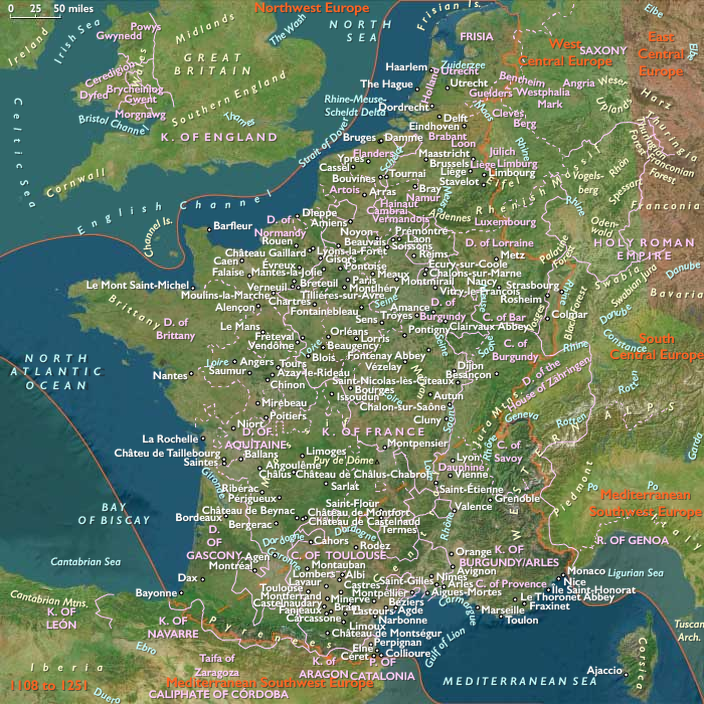
Subregions
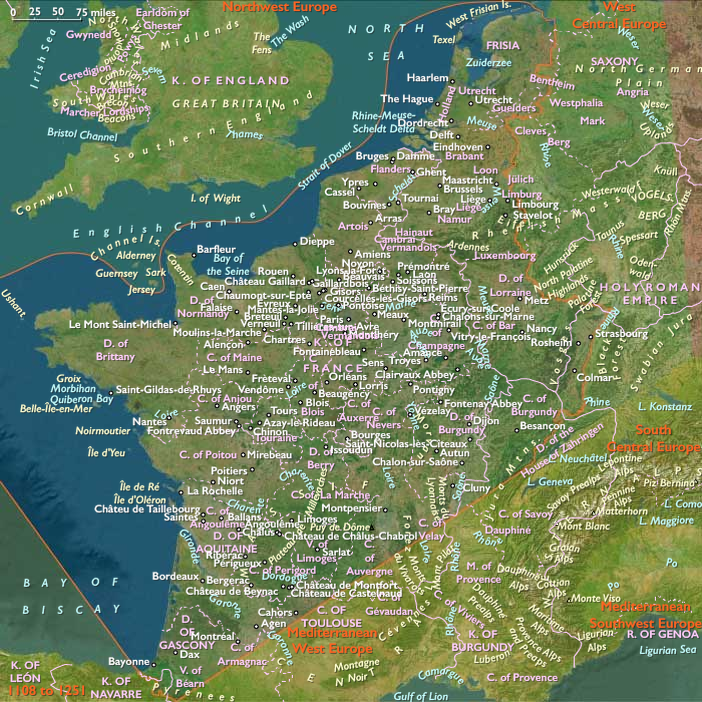
Years: 1132 - 1143
People
- Conan III
- Eleanor of Aquitaine
- Empress Matilda
- Henry I of England
- Hugh II
- Louis VI of France
- Louis VII of France
- Peter Abelard
- Stephen of Blois
- William X, Duke of Aquitaine
Groups
- Flanders, County of
- Normandy, Duchy of
- Brittanny, Duchy of
- Aquitaine, (Angevin) Duchy of
- France, (Capetian) Kingdom of
- Burgundy, Duchy of
- Christians, Roman Catholic
- England, (Norman) Kingdom of
- Cistercians, Order of the (White Friars)
Topics
Commodoties
Subjects
- Commerce
- Writing
- Faith
- Government
- Scholarship
- Custom and Law
- Theology
- Philosophy and logic
- religious movement
Regions
Subregions