
Atlantic West Europe (1120–1131): Dynastic Stability, Urban …
Years: 1120 - 1131
Atlantic West Europe (1120–1131): Dynastic Stability, Urban Growth, and Intellectual Expansion
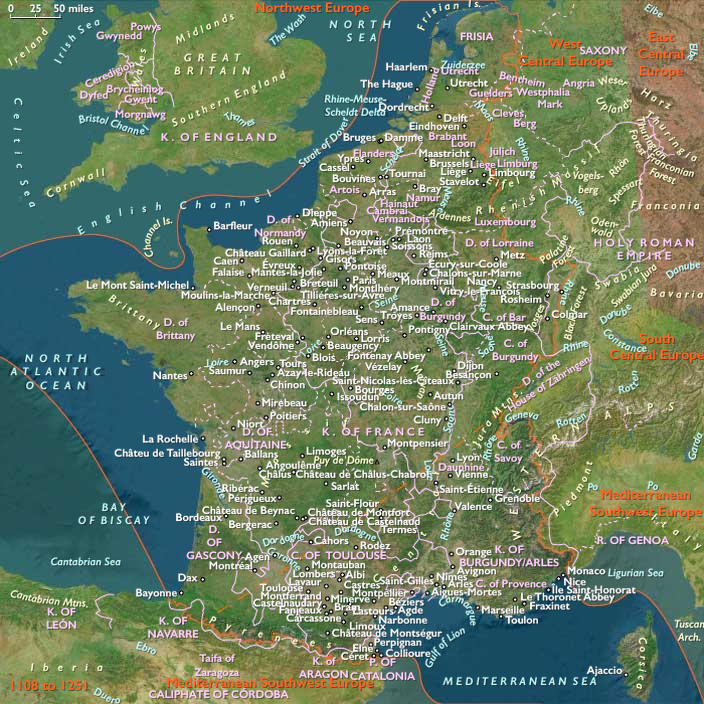
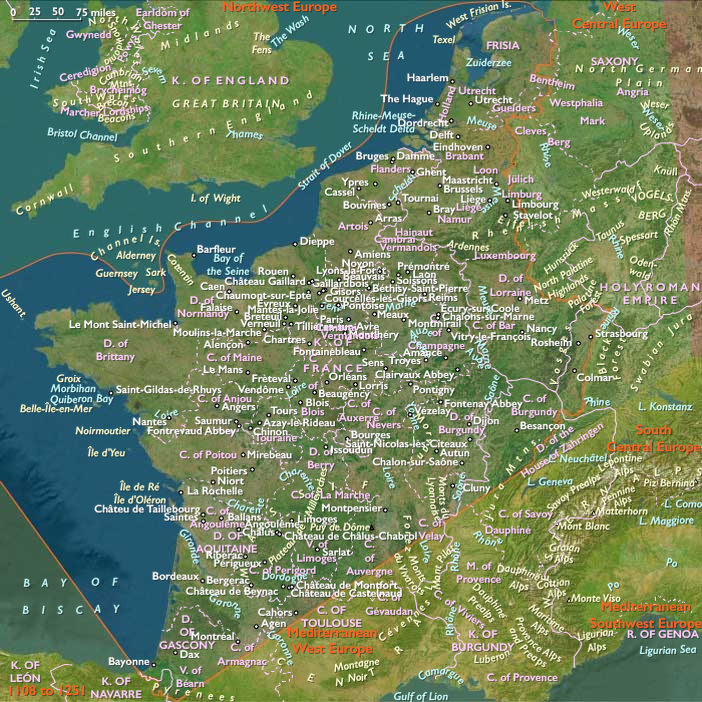
Between 1120 and 1131, Atlantic West Europe—which encompasses the Low Countries, Brittany, Normandy, Aquitaine, Burgundy, central France, Alsace, and Franche-Comté—experienced a period marked by dynastic consolidation, urban expansion, increased trade activity, and significant cultural and intellectual developments.
Political and Military Developments
-
France: Continued Royal Authority under Louis VI
-
Louis VI (r. 1108–1137) further consolidated royal power, suppressing baronial rebellions and centralizing administrative authority, thereby strengthening Capetian influence throughout central and northern France.
-
-
Normandy: Dynastic Crisis and Stability
-
The tragic sinking of the White Ship (1120) resulted in the loss of William Adelin, heir of Henry I of England, creating a succession crisis with lasting implications for Normandy and England.
-
Despite this setback, Henry I (r. 1100–1135) maintained firm control over Normandy, stabilizing the duchy through effective governance and diplomacy.
-
-
Aquitaine: Ducal Influence and Troubadour Culture
-
William IX, Duke of Aquitaine (r. 1086–1127), continued to promote courtly and troubadour culture, asserting significant ducal autonomy and fostering a vibrant intellectual and artistic environment.
-
His successor, William X (r. 1127–1137), faced early challenges but maintained Aquitaine’s regional prominence.
-
-
Brittany and Burgundy: Regional Autonomy
-
Brittany under Conan III (r. 1112–1148) sustained its independence, balancing diplomatic relationships with Normandy, England, and France.
-
Burgundy maintained internal stability under Duke Hugh II (r. 1103–1143), reinforcing feudal structures and local governance.
-
Economic and Social Developments
-
Urbanization and Expanding Trade Networks
-
Towns such as Bruges, Ghent, and Ypres in the Low Countries flourished economically, driven by expanding cloth and textile trade networks across Europe.
-
The Champagne fairs grew in prominence, serving as crucial hubs for commerce and financial exchange, significantly enhancing regional economic integration.
-
-
Agricultural Innovation and Demographic Growth
-
Continued agricultural improvements and land clearances facilitated population growth, stimulating both rural productivity and urban economic development.
-
Cultural and Intellectual Developments
-
Rise of Scholasticism and Intellectual Revival
-
The University of Paris became increasingly influential, attracting notable scholars and students from across Europe, significantly advancing theological and philosophical scholarship.
-
The influence of scholastic thinkers such as Peter Abelard, active during this period, began to profoundly shape European intellectual culture.
-
-
Troubadour Tradition and Courtly Literature
-
The cultural patronage of the Aquitanian ducal court continued to support troubadour poetry and music, deeply influencing courtly literature and culture across Western Europe.
-
Religious Developments
-
Expansion of Monasticism and Reform
-
The Cistercian monastic movement rapidly expanded, establishing influential abbeys across the region, notably Clairvaux (founded 1115), becoming centers of spiritual reform and economic activity.
-
Monastic houses remained influential in regional politics, economics, and intellectual discourse, driving significant religious reform.
-
Legacy and Significance
The era 1120–1131 in Atlantic West Europe was characterized by strengthened dynastic stability, significant urban and economic expansion, and a vibrant cultural and intellectual scene. These developments solidified regional foundations, laying essential groundwork for the later flourishing of the High Middle Ages.
People
- Conan III
- Henry I of England
- Hugh II
- Louis VI of France
- Peter Abelard
- William Adelin
- William IX, Duke of Aquitaine
- William X, Duke of Aquitaine
Groups
- Flanders, County of
- Normandy, Duchy of
- Brittanny, Duchy of
- Aquitaine, (Angevin) Duchy of
- France, (Capetian) Kingdom of
- Burgundy, Duchy of
- Christians, Roman Catholic
- England, (Norman) Kingdom of
- Cistercians, Order of the (White Friars)
Topics
Commodoties
Subjects
- Commerce
- Writing
- Faith
- Government
- Scholarship
- Custom and Law
- Theology
- Philosophy and logic
- religious movement
Regions
Subregions
Related Events
Showing 10 events out of 49346 total
Years: 1120 - 1131
People
- Conan III
- Henry I of England
- Hugh II
- Louis VI of France
- Peter Abelard
- William Adelin
- William IX, Duke of Aquitaine
- William X, Duke of Aquitaine
Groups
- Flanders, County of
- Normandy, Duchy of
- Brittanny, Duchy of
- Aquitaine, (Angevin) Duchy of
- France, (Capetian) Kingdom of
- Burgundy, Duchy of
- Christians, Roman Catholic
- England, (Norman) Kingdom of
- Cistercians, Order of the (White Friars)
Topics
Commodoties
Subjects
- Commerce
- Writing
- Faith
- Government
- Scholarship
- Custom and Law
- Theology
- Philosophy and logic
- religious movement
Regions
Subregions