
Atlantic West Europe (1096–1107): Crusading Zeal, Dynastic …
Years: 1096 - 1107
Atlantic West Europe (1096–1107): Crusading Zeal, Dynastic Struggles, and Economic Transformation
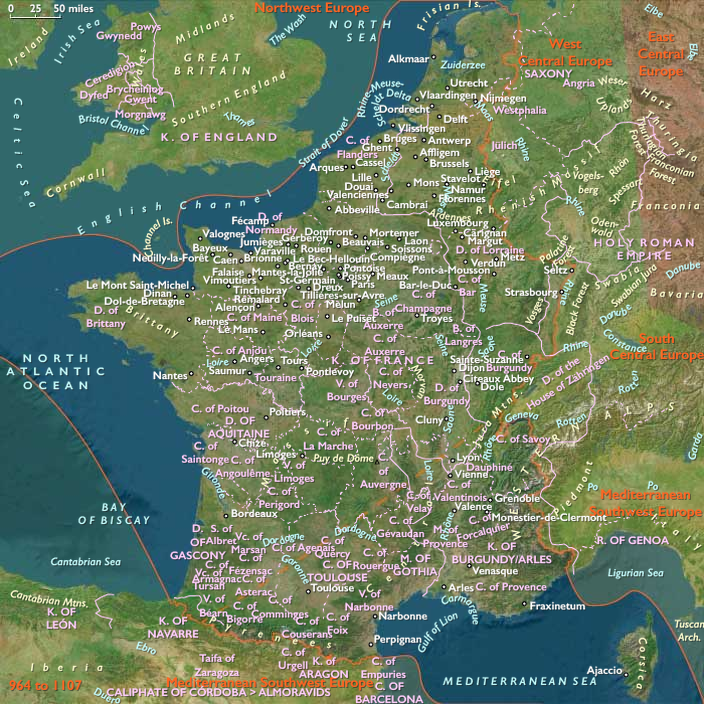
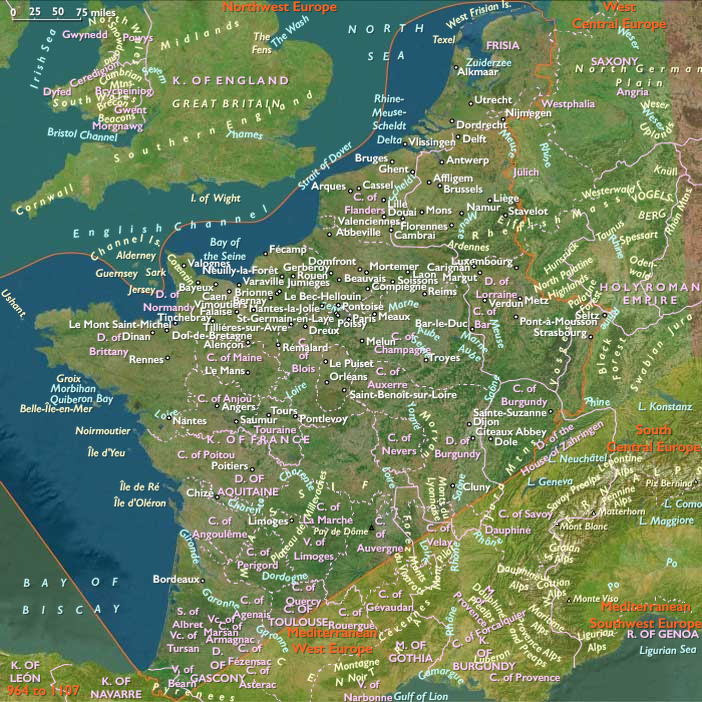
Between 1096 and 1107, Atlantic West Europe—including the Low Countries, Normandy, Brittany, Aquitaine, the Duchy of Burgundy, the County of Burgundy (Franche-Comté), Alsace, and central France—underwent significant transformation characterized by the profound impact of the First Crusade, continuing dynastic and territorial conflicts, urban expansion, and religious revitalization.
Political and Military Developments
-
France: Capetian Challenges and Limited Authority
- Philip I (r. 1060–1108) maintained only limited control over powerful vassals, focusing instead on internal stability and managing regional disputes.
- Philip's ongoing marital controversy continued to strain his relationship with the papacy, undermining royal prestige.
-
Normandy and England: Conflict and Succession Struggles
- Robert Curthose, Duke of Normandy (r. 1087–1106), departed for the First Crusade (1096–1099), temporarily leaving Normandy vulnerable to political instability and rebellion.
- William II Rufus of England died under suspicious circumstances (1100), and his younger brother, Henry I, swiftly seized the English throne, heightening tensions with Robert.
- In 1106, Henry decisively defeated Robert at the Battle of Tinchebray, capturing Normandy and reunifying the Anglo-Norman domains under his rule.
-
Flanders: Stable Leadership and Economic Growth
- Robert II of Flanders (r. 1093–1111) continued stable governance, benefiting from increasing urban prosperity and successful trade networks in northern Europe.
-
Aquitaine: Ducal Prosperity
- William IX (r. 1086–1127), known for his cultural patronage, strengthened Aquitaine's autonomy, focusing on internal economic development and literary patronage.
-
Brittany: Strategic Diplomacy
- Duke Alan IV (r. 1084–1112) sustained Breton independence, carefully balancing relations with Normandy, England, and France to secure regional autonomy.
-
Duchy of Burgundy: Continued Stability
- Eudes I (r. 1079–1103) and his successor Hugh II (r. 1103–1143) consolidated Burgundian territorial authority, managing local feudal relationships while keeping autonomy from direct Capetian control.
-
County of Burgundy (Franche-Comté) and Alsace: Imperial Alignment
- Reginald II (r. 1087–1097) and his successor William II (r. 1097–1125) maintained strong ties to the Holy Roman Empire, diverging politically from the French-controlled Duchy of Burgundy.
- Alsace remained prosperous, leveraging strategic trade positions and cultural exchanges between French and German territories.
Economic and Social Developments
-
Urbanization and Commercial Expansion
- Major cities in the Low Countries (Bruges, Ghent, Ypres) continued thriving as leading textile and trade hubs, reinforcing Atlantic West Europe's economic vitality.
- Champagne fairs gained prominence, integrating trade routes across northern and southern Europe.
-
Feudal Consolidation and Social Structures
- Feudal structures deepened in Normandy and the Duchy of Burgundy, with increasing delineation of aristocratic and knightly responsibilities, especially influenced by the Crusades.
Religious and Cultural Developments
-
Impact of the First Crusade (1096–1099)
- The First Crusade, launched in 1096, profoundly influenced the region, drawing away prominent nobles (like Robert Curthose and Robert II of Flanders) and reshaping the political landscape upon their return.
- The Crusade intensified religious fervor, reshaped ecclesiastical authority, and spurred popular enthusiasm across the region.
-
Monastic Reform and Expansion
- The rapid growth of Cluniac and early Cistercian monasteries continued, driven by widespread religious reform movements and increased lay patronage.
-
Cultural Patronage and Literary Growth
- Duke William IX of Aquitaine, considered the first troubadour poet, stimulated a new cultural renaissance in Aquitaine, promoting vernacular literature, poetry, and courtly culture.
Legacy and Long-term Significance
The era 1096–1107 significantly reshaped Atlantic West Europe:
- The successful conclusion of the First Crusade altered regional politics, redistributed feudal power, and heightened religious sentiment.
- Normandy's reunification under Henry I laid the groundwork for later Anglo-French conflicts, influencing centuries of rivalry.
- Economic growth and urbanization, particularly in the Low Countries, set a precedent for the later medieval economic prosperity of the region.
- William IX’s cultural patronage laid crucial foundations for the flourishing troubadour tradition and courtly literature of the High Middle Ages.
This era concluded the transformative eleventh century, setting Atlantic West Europe firmly onto a path of greater political complexity, economic vitality, and cultural sophistication.
People
- Alan IV
- Bertha of Holland
- Henry I of England
- Hugh II
- Odo I, Duke of Burgundy
- Philip I of France
- Pope Urban II
- Reginald II
- Robert Curthose
- Robert I of Burgundy
- Robert II of France
- Robert II, Count of Flanders
- Stephen I
- William I
- William II of England
- William IX, Duke of Aquitaine
- William the Conqueror
Groups
- Aquitaine, (Carolingian) Kingdom of
- Flanders, County of
- Anjou, County of
- Normandy, Duchy of
- Brittanny, Duchy of
- Burgundy, County of
- Aquitaine, (Angevin) Duchy of
- France, (Capetian) Kingdom of
- Burgundy, Duchy of
- England, (Norman) Kingdom of
Topics
Commodoties
Subjects
Regions
Subregions
Years: 1096 - 1107
People
- Alan IV
- Bertha of Holland
- Henry I of England
- Hugh II
- Odo I, Duke of Burgundy
- Philip I of France
- Pope Urban II
- Reginald II
- Robert Curthose
- Robert I of Burgundy
- Robert II of France
- Robert II, Count of Flanders
- Stephen I
- William I
- William II of England
- William IX, Duke of Aquitaine
- William the Conqueror
Groups
- Aquitaine, (Carolingian) Kingdom of
- Flanders, County of
- Anjou, County of
- Normandy, Duchy of
- Brittanny, Duchy of
- Burgundy, County of
- Aquitaine, (Angevin) Duchy of
- France, (Capetian) Kingdom of
- Burgundy, Duchy of
- England, (Norman) Kingdom of
Topics
Commodoties
Subjects
Regions
Subregions