
Atlantic West Europe (1084–1095): Capetian Challenges, Norman …
Years: 1084 - 1095
Atlantic West Europe (1084–1095): Capetian Challenges, Norman Expansion, and Monastic Renewal
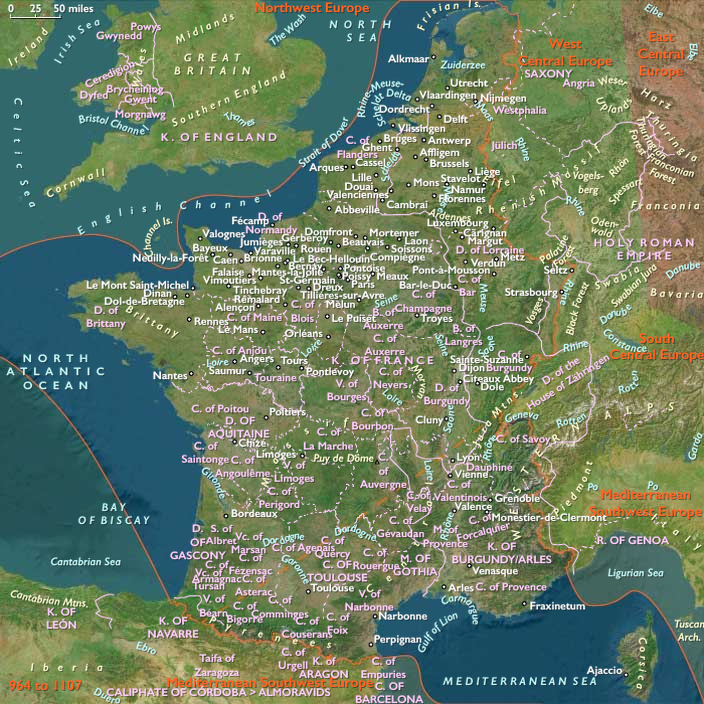
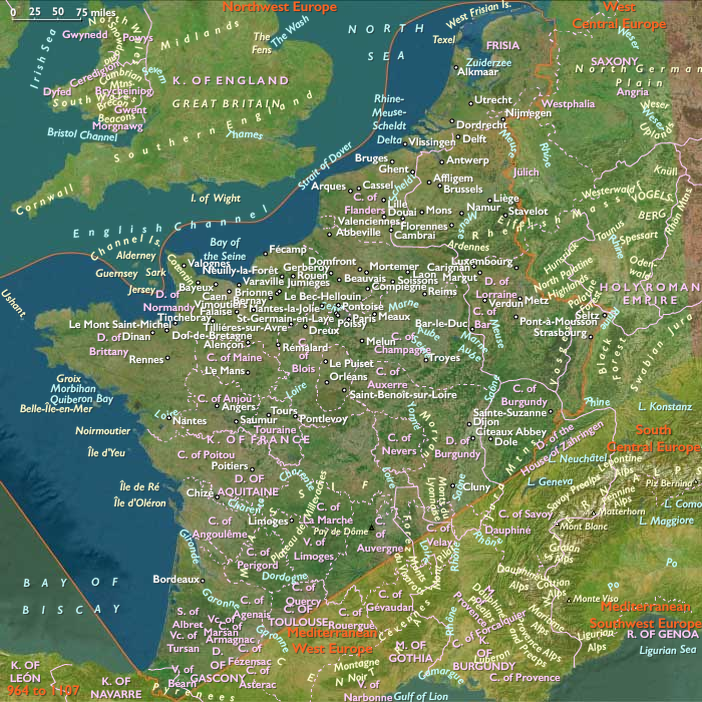
The era 1084–1095 in Atlantic West Europe—including the Low Countries, Normandy, Brittany, Aquitaine, the Duchy of Burgundy, the County of Burgundy (Franche-Comté), Alsace, and central France—was characterized by ongoing Capetian struggles to assert royal authority, the continued strengthening and expansion of Norman power, persistent regional autonomy, economic dynamism, and significant religious developments culminating in the First Crusade.
Political and Military Developments
-
France: Capetian Authority Challenged
- King Philip I (r. 1060–1108) faced continuous difficulty in asserting control over powerful feudal vassals, notably in Normandy, Aquitaine, and Flanders.
- Philip’s controversial marital arrangements (his repudiation of Bertha of Holland in favor of Bertrade de Montfort in 1092) provoked papal censure, complicating royal legitimacy.
-
Normandy and England: Norman Supremacy and William’s Succession
- William the Conqueror died in 1087, dividing his domains between his sons: Robert Curthose inherited Normandy, while William II Rufus received England.
- This division resulted in tension and conflict between the brothers, weakening overall Norman cohesion.
-
Flanders: Continued Stability and Influence
- Robert I the Frisian (r. 1071–1093) maintained a stable rule, successfully managing Flemish commerce and fortifying the region's prominence in European trade networks.
- His successor, Robert II (r. 1093–1111), continued this stability, promoting further economic and cultural growth.
-
Aquitaine: Ducal Stability
- William IX of Aquitaine (r. 1086–1127) maintained Aquitaine’s independence, promoting economic prosperity and cultural patronage, laying foundations for the later flowering of troubadour culture.
-
Brittany: Autonomy Amid External Pressures
- Breton autonomy continued under Alan IV (r. 1084–1112), who skillfully navigated between Norman and Capetian pressures, sustaining internal stability and regional identity.
-
Duchy of Burgundy: Ducal Consolidation
- Eudes I (r. 1079–1103) maintained Burgundian stability, navigating complex feudal relationships while reinforcing autonomy from direct Capetian interference.
-
County of Burgundy (Franche-Comté) and Alsace
- Franche-Comté under William I the Great (r. 1057–1087) and his successor, Reginald II (r. 1087–1097), maintained strong ties with the Holy Roman Empire, diverging politically and culturally from the French duchy.
- Alsace remained economically prosperous, bridging trade and culture between France and the Empire.
Economic and Social Developments
-
Urban Growth and Commercial Prosperity
- Cities in Flanders (Bruges, Ypres, Ghent) flourished as key textile production centers, enriching regional trade networks and urbanization.
- Normandy and Aquitaine benefited from increased stability and trade, contributing to urban and rural economic prosperity.
-
Feudal Consolidation and Territorial Dynamics
- Feudal structures became increasingly entrenched, particularly in Normandy and England, reshaping regional governance and landholding patterns.
Religious and Cultural Developments
-
First Crusade and Ecclesiastical Renewal
- Pope Urban II preached the First Crusade at the Council of Clermont (1095), dramatically impacting Atlantic West Europe by galvanizing widespread noble and popular participation.
- Monastic reforms, particularly through the Cluniac and emerging Cistercian movements, profoundly influenced ecclesiastical organization and spiritual life.
-
Cultural Growth and Patronage
- William IX of Aquitaine emerged as an influential cultural patron, eventually becoming one of the earliest troubadour poets, laying the groundwork for subsequent cultural developments.
Legacy and Long-term Significance
The era 1084–1095 marked critical shifts in Atlantic West Europe:
- The division of William the Conqueror’s empire weakened Norman unity but set the stage for future Anglo-Norman dynamics.
- Capetian royal power faced internal and external pressures, highlighting enduring weaknesses in central authority.
- Economic prosperity and urban growth continued, particularly in the Low Countries, laying critical foundations for later commercial dominance.
- Religious fervor spurred by the First Crusade reshaped regional identities, ecclesiastical structures, and social dynamics.
These developments significantly influenced the political, cultural, and economic trajectories of the region, setting critical foundations for the High Middle Ages.
People
- Alan IV
- Bertha of Holland
- Odo I, Duke of Burgundy
- Philip I of France
- Pope Urban II
- Reginald II
- Robert Curthose
- Robert I of Burgundy
- Robert I, Count of Flanders
- Robert II of France
- Robert II, Count of Flanders
- William I
- William II of England
- William IX, Duke of Aquitaine
- William the Conqueror
Groups
- Aquitaine, (Carolingian) Kingdom of
- Flanders, County of
- Anjou, County of
- Normandy, Duchy of
- England, (Anglo-Saxon) Kingdom of
- Brittanny, Duchy of
- Burgundy, County of
- Aquitaine, (Angevin) Duchy of
- France, (Capetian) Kingdom of
- Burgundy, Duchy of
- England, (Norman) Kingdom of
Topics
Commodoties
Subjects
Regions
Subregions
Years: 1084 - 1095
People
- Alan IV
- Bertha of Holland
- Odo I, Duke of Burgundy
- Philip I of France
- Pope Urban II
- Reginald II
- Robert Curthose
- Robert I of Burgundy
- Robert I, Count of Flanders
- Robert II of France
- Robert II, Count of Flanders
- William I
- William II of England
- William IX, Duke of Aquitaine
- William the Conqueror
Groups
- Aquitaine, (Carolingian) Kingdom of
- Flanders, County of
- Anjou, County of
- Normandy, Duchy of
- England, (Anglo-Saxon) Kingdom of
- Brittanny, Duchy of
- Burgundy, County of
- Aquitaine, (Angevin) Duchy of
- France, (Capetian) Kingdom of
- Burgundy, Duchy of
- England, (Norman) Kingdom of
Topics
Commodoties
Subjects
Regions
Subregions