
Atlantic West Europe (1060–1071): Norman Conquest, Capetian …
Years: 1060 - 1071
Atlantic West Europe (1060–1071): Norman Conquest, Capetian Consolidation, and Ecclesiastical Influence
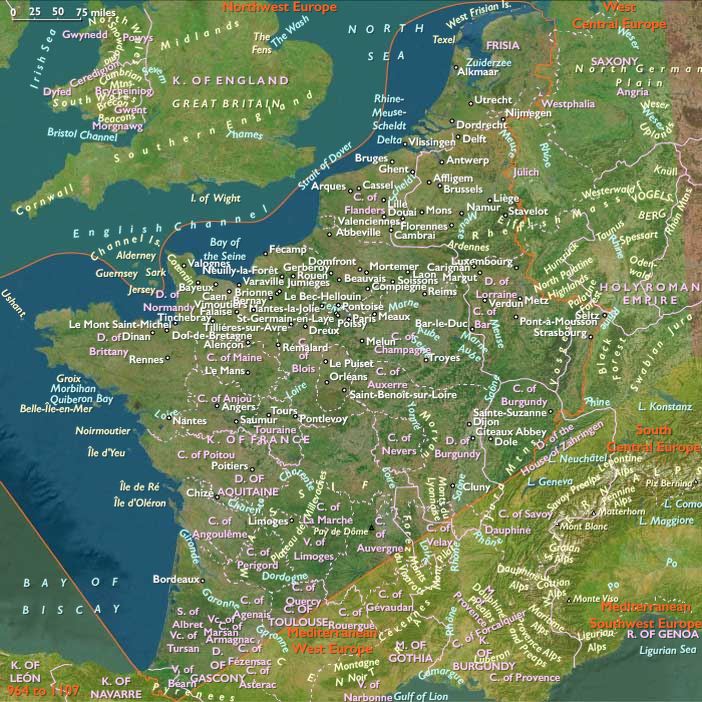
The era 1060–1071 in Atlantic West Europe—including the Low Countries, Normandy, Brittany, Aquitaine, the Duchy of Burgundy, the Franche-Comté (County of Burgundy), Alsace, and central France—was marked by significant territorial conquests, especially the Norman conquest of England, the Capetian dynasty’s attempts at internal stabilization, and the continuing influence of ecclesiastical reform movements.
Political and Military Developments
-
Normandy: William’s Conquest of England
- William II of Normandy (William the Conqueror, r. 1035–1087) decisively conquered England at the Battle of Hastings (1066), profoundly reshaping political alliances and dramatically expanding Norman influence beyond continental Europe. Normandy thus became a powerful cross-Channel duchy with vast resources.
-
France: Transition and Stabilization under Philip I
- King Henry I died in 1060, succeeded by his son, Philip I (r. 1060–1108). The young king’s minority initially saw his mother, Anne of Kyiv, and the powerful Count Baldwin V of Flanders acting as regents. Philip’s reign marked cautious royal consolidation, maintaining peace internally while acknowledging regional autonomy.
-
Aquitaine: Strengthening Ducal Authority
- William VIII of Aquitaine (Guy-Geoffrey, r. 1058–1086) actively defended and expanded Aquitanian interests, solidifying control over local nobility and enhancing regional stability.
-
Brittany: Navigating Between Powers
- Conan II (r. 1040–1066) and subsequently Hawise of Brittany and her husband, Hoël II (r. 1066–1084), navigated the delicate political balance between powerful neighbors Normandy and Anjou, preserving Breton autonomy amidst shifting alliances.
-
Burgundy: Stable Ducal Rule
- Robert I of Burgundy (r. 1032–1076) maintained stable governance, enhancing ducal authority, building internal cohesion, and remaining relatively independent from royal intervention.
-
County of Burgundy (Franche-Comté) and Alsace
- William I the Great (r. 1057–1087) in the Franche-Comté deepened ties with the Holy Roman Empire, reinforcing its separate identity from the Duchy of Burgundy.
- Alsace maintained its strategic position as an economic bridge, prospering under imperial protection.
-
Flanders and the Low Countries
- Count Baldwin V (r. 1035–1067) continued to fortify Flanders as a commercial powerhouse. His death in 1067 led to Baldwin VI’s short reign (r. 1067–1070), followed by succession disputes briefly destabilizing the region.
Economic and Social Developments
-
Urban and Commercial Expansion
- Flemish textile cities (Bruges, Ghent, Ypres) thrived as prominent commercial hubs, linking Atlantic trade with the wider European economy.
- Normandy and Aquitaine benefited economically from increased trade with newly conquered English territories.
-
Feudal Consolidation
- Feudal relationships crystallized further, with powerful regional lords consolidating their territories, enhancing local autonomy yet limiting centralized royal authority.
Religious and Cultural Developments
-
Ecclesiastical Reform Movement
- Cluniac monasteries continued expanding their influence, championing ecclesiastical reform and spiritual renewal, reshaping religious life across the region.
- Gregorian Reform ideals, advocating Church independence from secular authority, gained momentum, particularly affecting relationships between secular rulers and religious institutions.
-
Norman Cultural Influence
- Following William’s conquest, cultural and ecclesiastical exchanges intensified between Normandy, England, and continental Europe, significantly influencing architecture, governance, and language.
Legacy and Long-term Significance
The period 1060–1071 was transformative:
- The Norman conquest of England significantly redefined Normandy’s geopolitical influence, positioning it among the most influential powers of Western Europe.
- Philip I’s accession marked a period of cautious royal strengthening, though decentralized governance remained dominant.
- Continued ecclesiastical reform efforts, particularly from Cluny and the Gregorian movement, influenced political dynamics and church-state relationships.
This era laid critical groundwork for future conflicts and alliances, setting the stage for centralization efforts, cross-channel politics, and deepened cultural and economic ties across Atlantic West Europe.
People
- Anne of Kiev
- Baldwin V of Flanders
- Baldwin VI
- Conan II
- Geoffrey II, Count of Anjou
- Henry I of France
- Hoël II
- Philip I of France
- Robert II of France
- William I
- William VIII,Duke of Aquitaine
- William the Conqueror
Groups
- Aquitaine, (Carolingian) Kingdom of
- Flanders, County of
- Anjou, County of
- Normandy, Duchy of
- England, (Anglo-Saxon) Kingdom of
- Brittanny, Duchy of
- Burgundy, County of
- Aquitaine, (Angevin) Duchy of
- France, (Capetian) Kingdom of
- Burgundy, Duchy of
Topics
Commodoties
Subjects
Regions

Subregions
Years: 1060 - 1071
People
- Anne of Kiev
- Baldwin V of Flanders
- Baldwin VI
- Conan II
- Geoffrey II, Count of Anjou
- Henry I of France
- Hoël II
- Philip I of France
- Robert II of France
- William I
- William VIII,Duke of Aquitaine
- William the Conqueror
Groups
- Aquitaine, (Carolingian) Kingdom of
- Flanders, County of
- Anjou, County of
- Normandy, Duchy of
- England, (Anglo-Saxon) Kingdom of
- Brittanny, Duchy of
- Burgundy, County of
- Aquitaine, (Angevin) Duchy of
- France, (Capetian) Kingdom of
- Burgundy, Duchy of
Topics
Commodoties
Subjects
Regions
Subregions