
Atlantic West Europe (1048–1059): Ducal Dominance, Royal …
Years: 1048 - 1059
Atlantic West Europe (1048–1059): Ducal Dominance, Royal Challenges, and Ecclesiastical Reforms
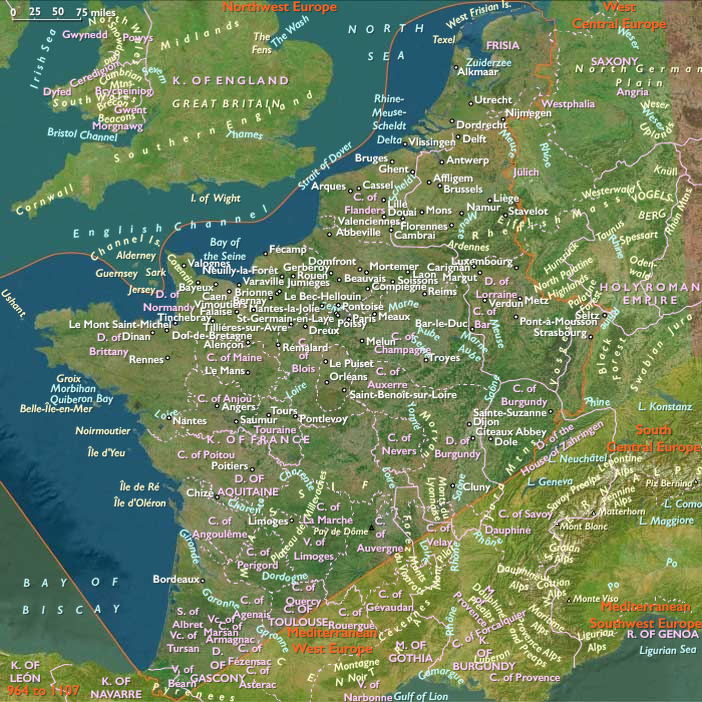
The era 1048–1059 in Atlantic West Europe—including the Low Countries, Normandy, Brittany, Aquitaine, the Duchy of Burgundy, the Franche-Comté (County of Burgundy), Alsace, and central France—was marked by ducal consolidation, royal efforts to reassert authority, continued ecclesiastical reform, and intensified regional rivalries.
Political and Military Developments
-
France: Henry I’s Struggle for Centralization
- King Henry I (r. 1031–1060) faced ongoing resistance from powerful regional nobles, notably William of Normandy and Geoffrey Martel of Anjou. The king sought alliances and employed diplomacy to maintain Capetian authority, though direct royal control remained limited outside the royal demesne around Paris.
-
Normandy: Strengthening Ducal Power under William
- Duke William II of Normandy (r. 1035–1087) firmly consolidated his authority following the decisive victory at the Battle of Val-ès-Dunes (1047), stabilizing Normandy through strategic castle-building and securing noble loyalty. His authority grew increasingly independent from royal oversight.
-
Aquitaine: Expansion under William VII and Guy-Geoffrey
- Duke William VII (r. 1039–1058) expanded control over Aquitaine and Poitou, notably clashing with rebellious vassals. Upon his death, Guy-Geoffrey (William VIII, r. 1058–1086) succeeded, pursuing aggressive territorial expansion and maintaining relative regional independence.
-
Brittany: Ducal Consolidation
- Conan II (r. 1040–1066) navigated diplomatic tensions between Normandy and Anjou, preserving Breton independence through careful political maneuvering, though pressures from neighboring principalities intensified.
-
Burgundy: Stability and Regional Independence
- Duke Robert I of Burgundy (r. 1032–1076) enjoyed relative autonomy, reinforcing ducal authority and carefully balancing ties with the French crown.
- The County of Burgundy (Franche-Comté) under Count Renaud I (r. 1026–1057), followed by William I the Great (r. 1057–1087), increasingly gravitated toward imperial influence, deepening the distinction from its French counterpart.
-
Alsace and the Low Countries
- Alsace maintained economic and political stability as a crucial conduit between France and the Holy Roman Empire.
- The Low Countries—especially Flanders—continued flourishing under Count Baldwin V (r. 1035–1067), whose astute governance enhanced trade, urban growth, and regional influence.
Economic and Social Developments
-
Urban Growth and Trade Networks
- The Flemish cities of Bruges, Ghent, and Ypres grew as vital textile-producing and trade hubs, connecting Atlantic West Europe with broader European markets.
- Increasing trade along the Rhine and Saône rivers boosted economic prosperity in Alsace and Burgundy.
-
Feudal Dynamics and Social Structures
- Noble power remained considerable, limiting direct royal control, with regional lords securing extensive autonomy in return for nominal allegiance to the crown.
Religious and Cultural Developments
-
Cluniac Reform and Monastic Expansion
- The powerful monastic network centered on Cluny continued to expand rapidly, promoting ecclesiastical reform and independence from secular influence, significantly shaping regional religious life.
- Reform-minded bishops and abbots gained prominence, influencing local and regional politics.
-
Architectural and Cultural Advancements
- Construction of Romanesque churches and monasteries proliferated, especially in Burgundy, Alsace, and Aquitaine, reflecting increased wealth and religious devotion.
Legacy and Long-term Significance
Between 1048 and 1059, key developments included:
- The consolidation of ducal power in Normandy under William II, establishing conditions that would later enable the Norman conquest of England (1066).
- Continued challenges to Capetian royal authority, exemplifying the decentralized feudal nature of French political life.
- Strengthening of regional identities, particularly in Burgundy, Brittany, and Aquitaine.
- Ongoing ecclesiastical reform that influenced future religious and political landscapes.
This era deepened regional autonomy, solidified powerful ducal states, and underscored the complex relationship between secular authority and ecclesiastical influence, setting important precedents for subsequent decades.
People
- Baldwin V of Flanders
- Conan II
- Geoffrey II, Count of Anjou
- Henry I of France
- Odilo of Cluny
- Reginald I
- Robert I, Duke of Normandy
- Robert II of France
- William I
- William VII, Duke of Aquitaine
- William VIII,Duke of Aquitaine
- William the Conqueror
Groups
- Aquitaine, (Carolingian) Kingdom of
- Flanders, County of
- Anjou, County of
- Normandy, Duchy of
- England, (Anglo-Saxon) Kingdom of
- Brittanny, Duchy of
- Burgundy, County of
- Aquitaine, (Angevin) Duchy of
- France, (Capetian) Kingdom of
- Burgundy, Duchy of
Topics
Commodoties
Subjects
Regions

Subregions
Years: 1048 - 1059
People
- Baldwin V of Flanders
- Conan II
- Geoffrey II, Count of Anjou
- Henry I of France
- Odilo of Cluny
- Reginald I
- Robert I, Duke of Normandy
- Robert II of France
- William I
- William VII, Duke of Aquitaine
- William VIII,Duke of Aquitaine
- William the Conqueror
Groups
- Aquitaine, (Carolingian) Kingdom of
- Flanders, County of
- Anjou, County of
- Normandy, Duchy of
- England, (Anglo-Saxon) Kingdom of
- Brittanny, Duchy of
- Burgundy, County of
- Aquitaine, (Angevin) Duchy of
- France, (Capetian) Kingdom of
- Burgundy, Duchy of
Topics
Commodoties
Subjects
Regions
Subregions