
Atlantic West Europe (1024–1035): Consolidation of Power, …
Years: 1024 - 1035
Atlantic West Europe (1024–1035): Consolidation of Power, Regional Stability, and the Emergence of Capetian Burgundy
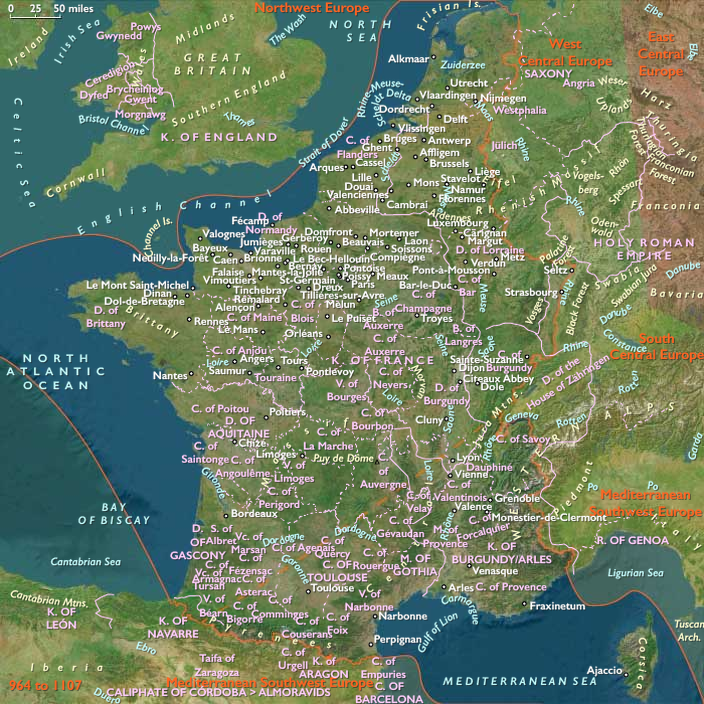
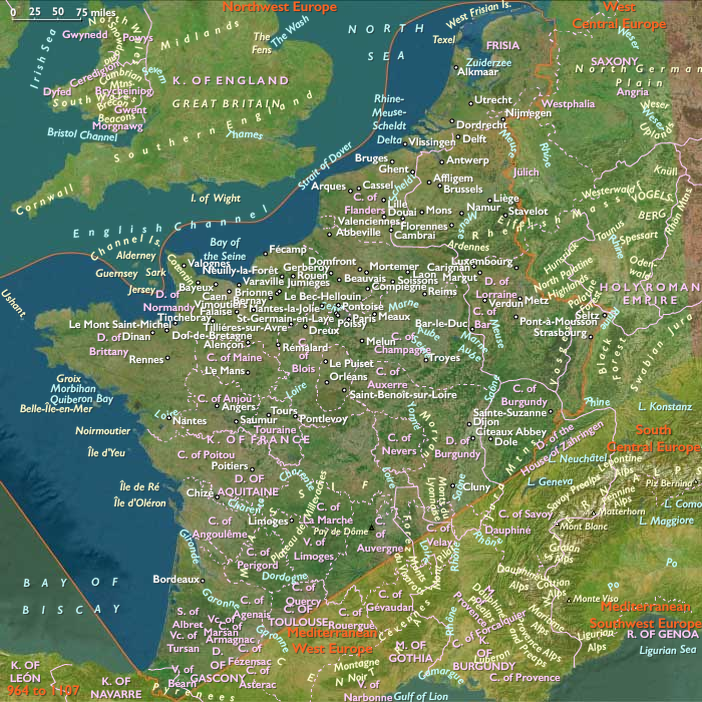
The era from 1024 to 1035 in Atlantic West Europe—which includes the Low Countries, Brittany, Normandy, Aquitaine, Burgundy, central France, Alsace, and Franche-Comté—was defined by ongoing consolidation of power, strategic alliances, territorial stabilization, and the pivotal establishment of Capetian Burgundy.
Political and Military Developments
-
France: Capetian Consolidation and Stability
-
King Robert II (the Pious, r. 996–1031) maintained domestic stability, strengthened central authority, and secured regional loyalties through strategic marriages and alliances.
-
His successor, Henry I (r. 1031–1060), initially faced internal conflicts and noble revolts but gradually consolidated royal authority through tactical diplomacy and territorial concessions.
-
-
Duchy of Burgundy: Formation of Capetian Burgundy
-
Following the succession crisis after Duke Henry the Venerable’s death in 1002, the prolonged dispute between Robert II and Otto-William ended in favor of Robert by around 1015, definitively placing the Duchy of Burgundy under French influence.
-
In 1032, King Henry I solidified this arrangement by formally granting the Duchy of Burgundy to his younger brother, Robert I, marking the beginning of the Capetian Dukes of Burgundy, distinct from the County of Burgundy (Franche-Comté), which remained under the sphere of the Holy Roman Empire.
-
-
County of Burgundy (Franche-Comté): Distinct Identity
-
Otto-William and his descendants retained the County of Burgundy, which became increasingly oriented toward the Holy Roman Empire, diverging politically and culturally from the Duchy.
-
-
Normandy and Brittany: Regional Power Dynamics
-
Duke Richard III of Normandy’s short reign (1026–1027) led to internal disputes, quickly resolved under his brother Robert I (r. 1027–1035), who stabilized the duchy and extended Norman influence.
-
Brittany remained relatively autonomous, managing external pressures from Normandy and strengthening its internal cohesion.
-
Economic and Social Developments
-
Continued Agricultural Expansion
-
Technological improvements in agriculture, including crop rotation and the widespread use of heavy plows, further enhanced productivity and supported growing populations.
-
-
Urban Revival and Trade Networks
-
Urban centers such as Paris, Rouen, and Dijon continued expanding economically, benefiting from improved trade routes and local production.
-
Religious and Cultural Developments
-
Monastic Reforms and Cluniac Influence
-
Cluny Abbey and its affiliated monasteries strengthened their spiritual and political roles, spreading Cluniac reforms throughout the region and beyond.
-
-
Cultural Flourishing and Manuscript Production
-
Monastic scriptoria continued to produce illuminated manuscripts, fostering literary and intellectual growth across Atlantic West Europe.
-
Legacy and Significance
The period 1024 to 1035 significantly shaped the political landscape of Atlantic West Europe. The establishment of Capetian Burgundy under Duke Robert I clarified regional political alignments, distinguishing the French-aligned Duchy from the Holy Roman-oriented County. This political delineation influenced subsequent territorial and diplomatic dynamics across the region, laying foundations for future developments in Atlantic West Europe.
People
- Alan III of Brittany
- Henry I of France
- Otto-William
- Reginald I
- Richard II, Duke of Normandy
- Richard III
- Robert I, Duke of Normandy
- Robert II of France
- William V, Duke of Aquitaine
- William VI
Groups
- Aquitaine, (Carolingian) Kingdom of
- Flanders, County of
- Normandy, Duchy of
- England, (Anglo-Saxon) Kingdom of
- Brittanny, Duchy of
- Burgundy, County of
- Aquitaine, (Angevin) Duchy of
- France, (Capetian) Kingdom of
- Burgundy, Duchy of
Topics
Commodoties
Subjects
Regions
Subregions
Years: 1024 - 1035
People
- Alan III of Brittany
- Henry I of France
- Otto-William
- Reginald I
- Richard II, Duke of Normandy
- Richard III
- Robert I, Duke of Normandy
- Robert II of France
- William V, Duke of Aquitaine
- William VI
Groups
- Aquitaine, (Carolingian) Kingdom of
- Flanders, County of
- Normandy, Duchy of
- England, (Anglo-Saxon) Kingdom of
- Brittanny, Duchy of
- Burgundy, County of
- Aquitaine, (Angevin) Duchy of
- France, (Capetian) Kingdom of
- Burgundy, Duchy of
Topics
Commodoties
Subjects
Regions
Subregions