
Atlantic Southwest Europe (1000–1011 CE): Almanzor’s Legacy, …
Years: 1000 - 1011
Atlantic Southwest Europe (1000–1011 CE): Almanzor’s Legacy, Leónese Recovery, and Regional Reorganization
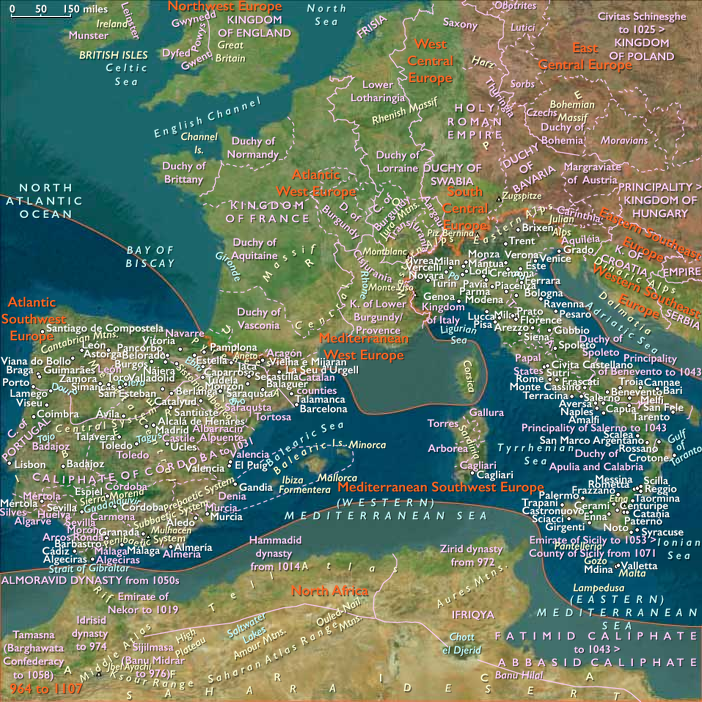
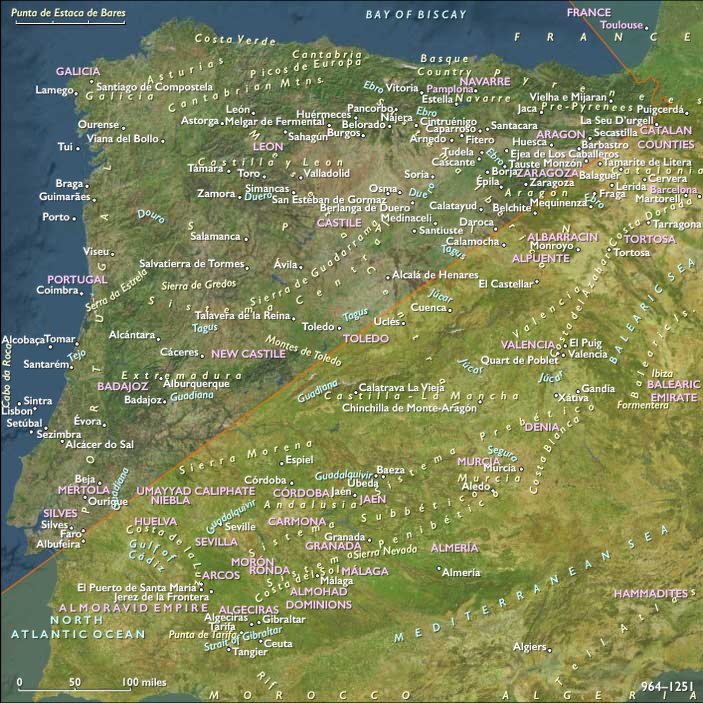
Between 1000 and 1011 CE, Atlantic Southwest Europe—including Galicia, northern and central Portugal, Asturias, Cantabria, and northern Spain south of the Franco-Spanish border (43.05548° N, 1.22924° W)—entered a crucial phase marked by the death of the formidable Almanzor (Al-Mansur) in 1002 CE and subsequent shifts in regional dynamics. With Córdoba’s power waning after Almanzor’s passing, Christian kingdoms began cautiously recovering and reorganizing. The Kingdom of León, under Alfonso V (999–1028 CE), embarked on political restoration, while Pamplona under Sancho III "the Great" (1004–1035 CE) began to emerge as a significant Iberian power. The County of Portugal, under Mendo Gonçalves (997–1008 CE) and subsequently Alvito Nunes (1008–1015 CE), consolidated further. These shifts significantly reshaped political, economic, and cultural identities, laying foundations for the High Middle Ages.
Political and Military Developments
Decline of Almanzor and Córdoba’s Weakening
Following Almanzor’s death in 1002 CE, the centralized authority of the Caliphate of Córdoba began a steady decline. His successors lacked his formidable leadership, allowing northern Christian kingdoms, particularly León and Pamplona, to gradually rebuild and reconsolidate after decades of instability.
Leónese Recovery under Alfonso V
León, under the young King Alfonso V (999–1028 CE), began the challenging process of political and territorial restoration. Despite his youth and early reliance on regents, Alfonso V’s reign marked a return to centralized authority, reestablishing strong local governance structures, frontier defenses, and administrative order after a prolonged period of raids and disruptions.
Rise of Pamplona under Sancho III “the Great”
In Pamplona, the reign of Sancho III Garcés ("the Great," 1004–1035 CE) ushered in a new era of political influence, diplomatic strength, and territorial expansion. Initially cautious, Sancho III quickly asserted himself as a dominant political figure in northern Iberia, laying foundations for future territorial consolidation and becoming a significant force shaping the region’s political dynamics.
Dissolution of the Kingdom of Viguera
The minor Kingdom of Viguera finally dissolved around 1005 CE, its territories reincorporated into Pamplona. This resolution reflected Sancho III’s broader goal of regional centralization and political unity within Basque territories.
Strengthening Autonomy of the County of Portugal
The County of Portugal, under Mendo Gonçalves until 1008 CE and subsequently Alvito Nunes (1008–1015 CE), continued its trajectory toward increasing administrative autonomy and regional cohesion. This county served as an effective frontier territory, maintaining stability, territorial integrity, and local governance that would support future Portuguese independence.
Economic Developments
Economic Restoration and Growth
As Córdoba’s raids subsided, the region entered a period of cautious economic recovery. Villa-based agriculture (grain, vineyards, olives), livestock farming, artisanal crafts, and mining (particularly gold and silver from Galicia and Asturias) rebounded strongly, underpinning regional prosperity and economic restoration.
Renewed Maritime and Regional Commerce
Coastal settlements, notably Bracara Augusta (Braga) and smaller ports in Galicia and northern Portugal, expanded maritime trade networks, reestablishing stable commercial interactions with broader Atlantic and Mediterranean markets. This resurgence of commerce significantly accelerated regional economic recovery.
Cultural and Religious Developments
Rebuilding and Revival of Santiago de Compostela
In the aftermath of Almanzor’s devastating 997 CE attack, the early years of the 11th century saw significant reconstruction at Santiago de Compostela. Rebuilding efforts restored pilgrimage routes, intensified religious devotion, and strengthened the city’s position as a major spiritual and cultural hub in Europe.
Ecclesiastical Authority and Community Cohesion
Bishoprics—especially Braga, Lugo, Asturica Augusta, and Santiago de Compostela—provided essential leadership, governance, and moral guidance, significantly facilitating recovery and reinforcing community cohesion during this restorative period.
Monastic Scholarly and Cultural Revival
Monastic communities actively supported regional reconstruction and renewal, preserving manuscripts, scholarly traditions, and agricultural innovations. Their sustained cultural vitality and educational leadership reinforced the intellectual continuity and resilience of Atlantic Southwest Europe.
Persistent Cultural Syncretism
Integration of orthodox Christianity with local Celtic and Iberian traditions persisted robustly, especially in rural Galicia, Asturias, and northern Portugal, reinforcing distinctive regional identities and ensuring cultural continuity through recovery efforts.
Civic Identity and Governance
Return of Centralized Authority and Stable Local Autonomy
Under Alfonso V, León effectively reestablished centralized royal authority, enhancing local governance structures and frontier defenses. Civic identities were reinforced through strong royal administration balanced with local aristocratic autonomy, ensuring political and social resilience.
Strengthened Basque Autonomy and Identity
Pamplona, under Sancho III “the Great,” significantly strengthened its territorial cohesion, political autonomy, and cultural distinctiveness, reshaping regional civic governance and identity, and laying the groundwork for Basque prominence in Iberian affairs.
Portuguese Regional Cohesion
The County of Portugal continued to develop autonomous governance, local cohesion, and distinctive civic identity, forming a resilient frontier region that significantly contributed to future Portuguese political structures and national identity.
Notable Tribal Groups and Settlements
-
Astures and Cantabri: Provided enduring military strength, local resilience, and cohesive regional identity, actively supporting Leónese reconsolidation and territorial integrity.
-
Galicians and Lusitanians: Actively participated in regional restoration, reinforcing local governance, economic stability, and cultural vitality, notably contributing to the revival of Santiago de Compostela and strengthening Portuguese territorial cohesion.
-
Basques (Pamplona): Strengthened territorial integrity and political autonomy under Sancho III “the Great,” decisively influencing regional political dynamics and identity.
-
Viguera (Rioja Region): Dissolved circa 1005 CE, its reincorporation into Pamplona reflecting broader regional centralization trends.
Long-Term Significance and Legacy
Between 1000 and 1011 CE, Atlantic Southwest Europe:
-
Initiated crucial political, economic, and cultural recovery following Almanzor’s devastating campaigns, laying foundations for significant regional reconsolidation.
-
Strengthened Leónese authority under Alfonso V, significantly restoring centralized royal governance and frontier security.
-
Witnessed the rise of Pamplona under Sancho III, significantly shaping future Iberian political dynamics through diplomatic strength and territorial expansion.
-
Reinforced Portuguese autonomy and cohesion, supporting the foundations for future political independence and distinct national identity.
This pivotal era profoundly shaped the political restoration, economic resurgence, and cultural revitalization of Atlantic Southwest Europe, decisively setting the stage for the region’s medieval trajectory and long-term historical legacy.
People
Groups
- Lusitanians, or Lusitani
- Gallaeci
- Cantabri (Celtic tribe)
- Astures (Celtic tribe)
- Moors
- Christianity, Chalcedonian
- Islam
- al-Andalus (Andalusia), Muslim-ruled
- Navarre, Kingdom of
- Basque people
- Portugal, (first) County of
- León, Kingdom of
- Córdoba, (Umayyad) Caliphate of
- Castile, County of
- Viguera, Kingdom of
Topics
Commodoties
- Fish and game
- Weapons
- Oils, gums, resins, and waxes
- Grains and produce
- Fibers
- Textiles
- Ceramics
- Strategic metals
- Salt
- Beer, wine, and spirits
- Lumber
Subjects
- Commerce
- Architecture
- Engineering
- Labor and Service
- Conflict
- Mayhem
- Faith
- Government
- Scholarship
- Custom and Law
- Technology
- religious movement
Regions
Subregions
Years: 1000 - 1011
People
Groups
- Lusitanians, or Lusitani
- Gallaeci
- Cantabri (Celtic tribe)
- Astures (Celtic tribe)
- Moors
- Christianity, Chalcedonian
- Islam
- al-Andalus (Andalusia), Muslim-ruled
- Navarre, Kingdom of
- Basque people
- Portugal, (first) County of
- León, Kingdom of
- Córdoba, (Umayyad) Caliphate of
- Castile, County of
- Viguera, Kingdom of
Topics
Commodoties
- Fish and game
- Weapons
- Oils, gums, resins, and waxes
- Grains and produce
- Fibers
- Textiles
- Ceramics
- Strategic metals
- Salt
- Beer, wine, and spirits
- Lumber
Subjects
- Commerce
- Architecture
- Engineering
- Labor and Service
- Conflict
- Mayhem
- Faith
- Government
- Scholarship
- Custom and Law
- Technology
- religious movement
Regions
Subregions