
Atlantic Southwest Europe (964–975 CE): Stabilization under …
Years: 964 - 975
Atlantic Southwest Europe (964–975 CE): Stabilization under Sancho I and Ramiro III, Frontier Security, and Cultural Resurgence
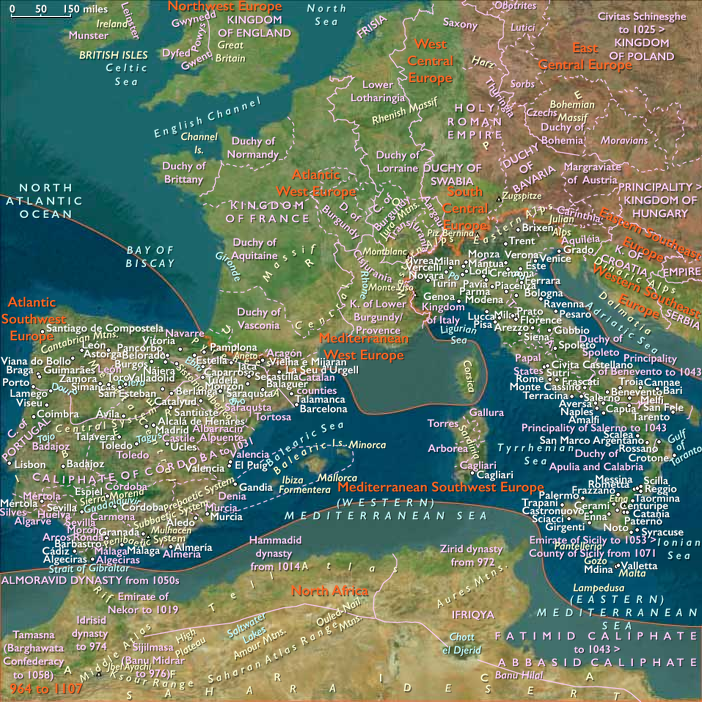
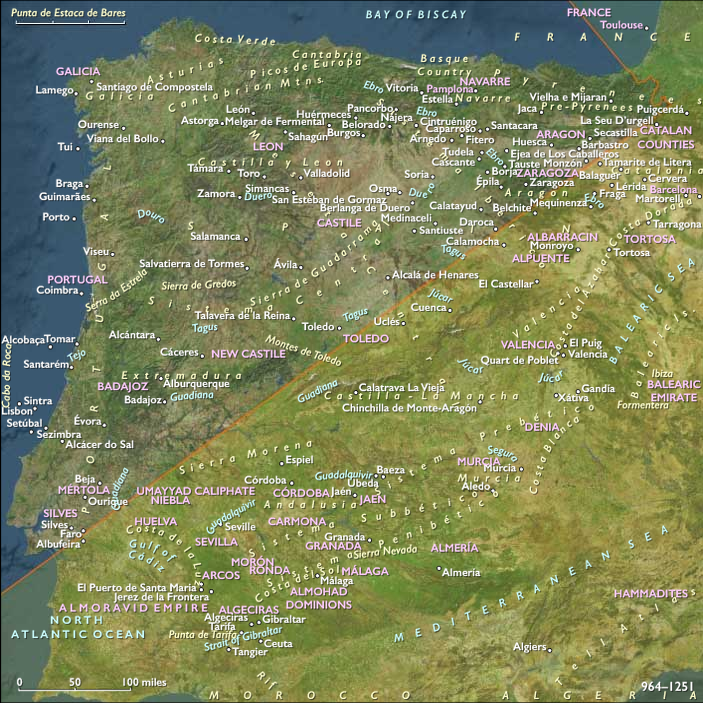
Between 964 and 975 CE, Atlantic Southwest Europe—including Galicia, northern and central Portugal, Asturias, Cantabria, and northern Spain south of the Franco-Spanish border (43.05548° N, 1.22924° W)—entered a period of renewed stability and consolidation following previous dynastic tensions. Under King Sancho I of León (960–966 CE)and his successor, the young Ramiro III (966–984 CE), the kingdom maintained territorial integrity, enhanced frontier defenses against al-Andalus, and ensured robust economic and cultural continuity. Meanwhile, the Basques under the Kingdom of Pamplona, led by García Sánchez I (925–970 CE) and subsequently his son, Sancho II Garcés Abarca (970–994 CE), continued their stable political autonomy, reinforcing distinct regional identities. Ecclesiastical institutions and the flourishing pilgrimage tradition to Santiago de Compostela further solidified regional cohesion and identity.
Political and Military Developments
Renewed Stability under Sancho I and Succession of Ramiro III
King Sancho I’s restored reign (960–966 CE) provided renewed political stability, reinforcing centralized royal authority following earlier dynastic uncertainty. Upon Sancho’s death in 966 CE, his young son Ramiro III succeeded, initially governed under the guidance of regents, ensuring continued internal stability and preventing renewed aristocratic fragmentation.
Effective Frontier Defense and Repopulation
Despite the monarch’s youth, León’s frontier defenses along the Duero River remained secure, with regional aristocratic leaders and ecclesiastical authorities maintaining fortified settlements and local military capabilities. This effective frontier management ensured continued territorial integrity and protection against Islamic incursions from al-Andalus.
Stable Basque Autonomy under García Sánchez I and Sancho II Garcés
Simultaneously, the Basques preserved political stability and autonomy under García Sánchez I until 970 CE, followed by his son, Sancho II Garcés Abarca. The Kingdom of Pamplona maintained its diplomatic independence, carefully balancing relationships with León, al-Andalus, and neighboring Frankish territories, decisively shaping Iberian political dynamics.
Economic Developments
Sustained Regional Economic Prosperity
The region continued enjoying steady economic prosperity, supported by villa-based agriculture (grain, olives, vineyards), livestock farming, artisanal industries, and mining—particularly gold and silver extraction in Galicia and Asturias. Economic stability underpinned social resilience and regional wealth.
Robust Maritime and Regional Commerce
Coastal settlements such as Bracara Augusta (Braga) and smaller ports along Galicia and northern Portugal maintained reliable maritime trade networks. Economic exchanges with broader Atlantic and Mediterranean markets remained robust, reinforcing regional prosperity and commercial stability.
Cultural and Religious Developments
Continued Growth of Santiago de Compostela
The pilgrimage tradition to Santiago de Compostela flourished unabated, attracting pilgrims from across Europe and further enhancing its religious, cultural, and economic importance. Santiago remained integral to regional identity, reinforcing cultural unity and religious devotion.
Strengthened Ecclesiastical Authority and Community Leadership
Influential bishoprics—particularly Braga, Lugo, Asturica Augusta, and Santiago de Compostela—continued providing critical moral leadership, education, and local governance. Ecclesiastical institutions remained central to civic identity, supporting regional cohesion and stability throughout the period.
Monastic Vitality and Scholarly Continuity
Monastic communities continued as key centers for manuscript preservation, literacy, scholarship, agricultural advancement, and social welfare. Their ongoing vibrancy significantly contributed to regional cultural heritage and educational continuity.
Persistent Cultural Syncretism
The enduring integration of orthodox Christianity with indigenous Celtic and Iberian traditions persisted robustly, particularly in rural Galicia, Asturias, and northern Portugal, reinforcing regional identity, social cohesion, and cultural resilience.
Civic Identity and Governance
Stable Royal and Ecclesiastical Governance Structures
Governance structures maintained effective centralization balanced with influential ecclesiastical institutions and meaningful regional autonomy. Civic identities remained anchored in loyalty to Leónese royal authority, ecclesiastical leadership, and pilgrimage traditions, preserving regional cohesion and effective governance.
Sustained Basque Political Autonomy and Distinctiveness
The Basques under Pamplona, transitioning from García Sánchez I to Sancho II Garcés, maintained clear territorial independence, political autonomy, and distinct civic governance, decisively influencing regional dynamics and identity.
Notable Tribal Groups and Settlements
-
Astures and Cantabri: Continued providing political stability, military leadership, and regional identity, decisively shaping León’s governance and defense.
-
Galicians and Lusitanians: Retained resilient local governance, economic prosperity, and cultural autonomy, pragmatically cooperating with Leónese royal authority.
-
Basques: Fully established politically and culturally, maintained territorial independence and governance under Pamplona, actively influencing broader Iberian politics.
Long-Term Significance and Legacy
Between 964 and 975 CE, Atlantic Southwest Europe:
-
Achieved renewed political stability and frontier security following earlier dynastic tensions, reinforcing long-term territorial cohesion and regional governance structures.
-
Sustained economic prosperity, ecclesiastical authority, pilgrimage traditions, and cultural vitality, significantly influencing the region’s medieval identity and historical continuity.
-
Maintained and reinforced Basque autonomy, decisively shaping subsequent Iberian regional political developments.
This era reinforced political cohesion, economic resilience, and cultural continuity, significantly shaping Atlantic Southwest Europe’s enduring historical trajectory and medieval legacy.
People
- García Sánchez I
- Ordoño III of León
- Ordoño IV of León
- Ramiro II of León
- Ramiro III of León
- Sancho Garcés II
- Sancho I of Léon
Groups
- Polytheism (“paganism”)
- Lusitanians, or Lusitani
- Gallaeci
- Cantabri (Celtic tribe)
- Astures (Celtic tribe)
- Moors
- Christianity, Chalcedonian
- Islam
- al-Andalus (Andalusia), Muslim-ruled
- Navarre, Kingdom of
- Basque people
- León, Kingdom of
- Córdoba, (Umayyad) Caliphate of
- Viguera, Kingdom of
Topics
Commodoties
- Fish and game
- Weapons
- Oils, gums, resins, and waxes
- Grains and produce
- Fibers
- Textiles
- Ceramics
- Strategic metals
- Salt
- Beer, wine, and spirits
- Lumber
Subjects
- Commerce
- Architecture
- Engineering
- Labor and Service
- Conflict
- Mayhem
- Faith
- Government
- Scholarship
- Custom and Law
- Technology
- religious movement
Regions
Subregions
Years: 964 - 975
People
- García Sánchez I
- Ordoño III of León
- Ordoño IV of León
- Ramiro II of León
- Ramiro III of León
- Sancho Garcés II
- Sancho I of Léon
Groups
- Polytheism (“paganism”)
- Lusitanians, or Lusitani
- Gallaeci
- Cantabri (Celtic tribe)
- Astures (Celtic tribe)
- Moors
- Christianity, Chalcedonian
- Islam
- al-Andalus (Andalusia), Muslim-ruled
- Navarre, Kingdom of
- Basque people
- León, Kingdom of
- Córdoba, (Umayyad) Caliphate of
- Viguera, Kingdom of
Topics
Commodoties
- Fish and game
- Weapons
- Oils, gums, resins, and waxes
- Grains and produce
- Fibers
- Textiles
- Ceramics
- Strategic metals
- Salt
- Beer, wine, and spirits
- Lumber
Subjects
- Commerce
- Architecture
- Engineering
- Labor and Service
- Conflict
- Mayhem
- Faith
- Government
- Scholarship
- Custom and Law
- Technology
- religious movement
Regions
Subregions