
Atlantic Southwest Europe (928–939 CE): Strengthening of …
Years: 928 - 939
Atlantic Southwest Europe (928–939 CE): Strengthening of León, Battle of Simancas, and Solidification of Regional Identities
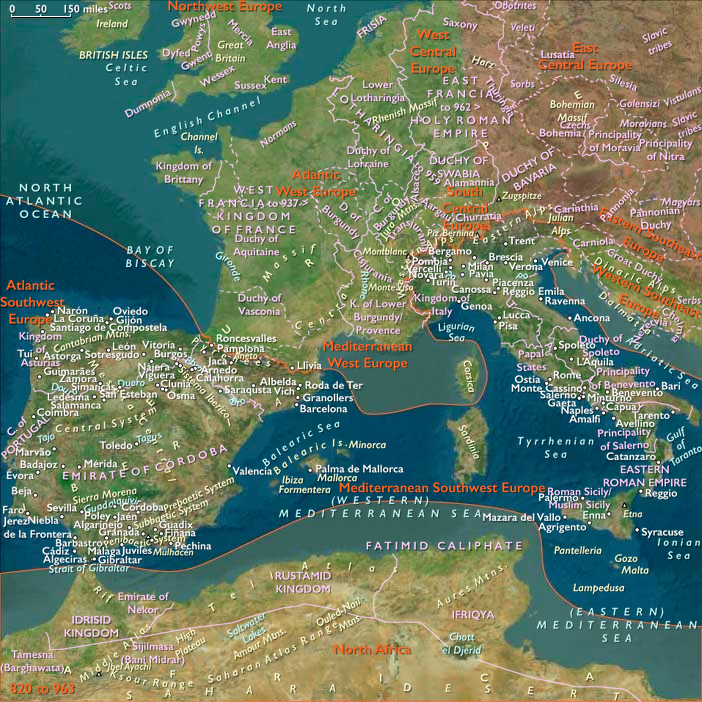
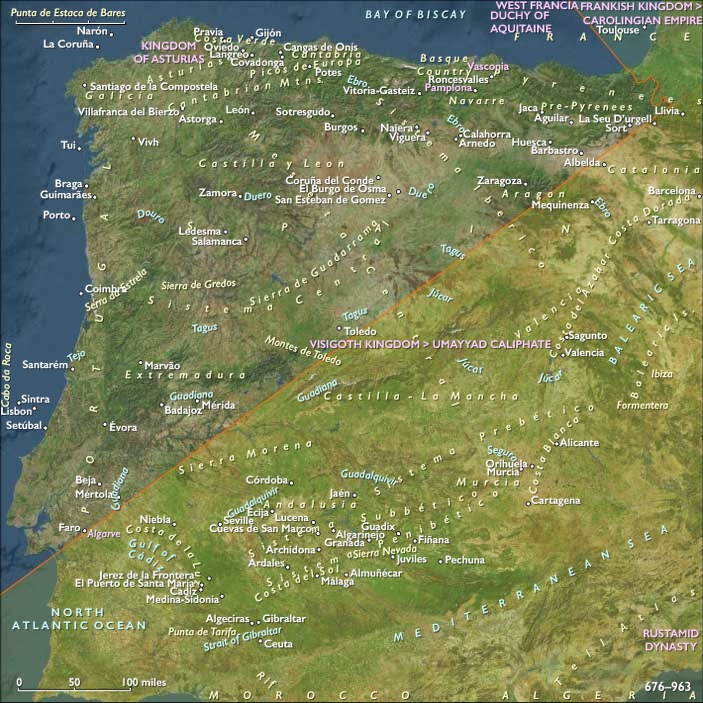
Between 928 and 939 CE, Atlantic Southwest Europe—including Galicia, northern and central Portugal, Asturias, Cantabria, and northern Spain south of the Franco-Spanish border (43.05548° N, 1.22924° W)—entered a decisive period characterized by military victories, political strength, and renewed regional identities. Under King Ramiro II of León (931–951 CE), the region achieved significant territorial security, notably through the landmark Battle of Simancas (939 CE) against Islamic al-Andalus. Meanwhile, the Basques under the Kingdom of Pamplona remained politically autonomous, further solidifying their distinct identity. Economic stability, ecclesiastical prominence, and the thriving pilgrimage tradition to Santiago de Compostela continued shaping the medieval trajectory of the region.
Political and Military Developments
Ramiro II’s Rise and Military Strengthening
Following internal uncertainties after Alfonso IV’s abdication in 931 CE, Ramiro II ascended the Leónese throne, swiftly restoring internal stability and strengthening centralized royal authority. His effective leadership reinforced frontier defenses along the Duero River, reasserting León’s position as the primary Iberian Christian stronghold.
Victory at the Battle of Simancas (939 CE)
In 939 CE, Ramiro II decisively defeated the forces of Caliph Abd al-Rahman III of Córdoba at the Battle of Simancas, near the Duero frontier. This significant victory halted Islamic military advances, greatly enhanced regional security, and enabled further Christian resettlement southward, deeply reinforcing León’s prestige and territorial integrity.
Continued Basque Autonomy under García Sánchez I
Simultaneously, the Basque kingdom under García Sánchez I of Pamplona (925–970 CE) maintained stable autonomy, skillfully balancing relations between León, al-Andalus, and neighboring Frankish territories. Their political independence and cohesive identity decisively shaped Iberian regional dynamics throughout this era.
Economic Developments
Sustained Regional Prosperity
Ramiro II’s stable reign supported sustained economic prosperity. Villa-based agriculture (grain, vineyards, olives), livestock husbandry, artisanal industries, and mining—particularly gold and silver extraction in Galicia and Asturias—remained robust, consistently enriching regional economic stability and wealth.
Reliable Maritime and Regional Trade
Coastal settlements, particularly Bracara Augusta (Braga) and smaller ports across Galicia and northern Portugal, maintained steady maritime trade networks. These resilient economic exchanges effectively connected the region with broader Atlantic and Mediterranean markets, supporting continued regional prosperity.
Cultural and Religious Developments
Continued Prominence of Santiago de Compostela
The pilgrimage tradition to Santiago de Compostela maintained its prominent cultural and religious position, steadily growing in popularity. The ongoing influx of pilgrims fostered economic prosperity, cultural exchange, and deepened religious devotion, solidifying Santiago’s pilgrimage as a defining element of regional identity.
Robust Ecclesiastical Leadership and Influence
Bishoprics—particularly Braga, Lugo, Asturica Augusta, and Santiago de Compostela—remained pivotal in regional governance, education, social welfare, and community cohesion. Ecclesiastical institutions provided stable moral and civic leadership, further embedding orthodox Christianity into regional cultural life.
Monastic Cultural Preservation and Scholarly Activity
Monastic communities continued flourishing, serving as vital centers for manuscript preservation, literacy, scholarship, agricultural innovation, and social welfare. Their continued vibrancy significantly enriched the region’s cultural heritage, educational continuity, and social stability.
Enduring Cultural Syncretism
The longstanding integration of orthodox Christianity with indigenous Celtic and Iberian traditions persisted robustly, particularly in rural Galicia, Asturias, and northern Portugal, reinforcing regional unity, resilience, and cultural distinctiveness.
Civic Identity and Governance
Consolidated Royal Authority and Regional Stability
Under Ramiro II, governance structures effectively balanced strong centralized royal authority and ecclesiastical influence with meaningful regional autonomy. Civic identities were strongly anchored to Leónese royal power, ecclesiastical institutions, and pilgrimage traditions, ensuring cohesive governance and robust regional identity.
Stable Basque Political and Cultural Autonomy
The Basques, under García Sánchez I, maintained their distinct territorial independence, political autonomy, and civic identity through the Kingdom of Pamplona, decisively shaping broader regional dynamics.
Notable Tribal Groups and Settlements
-
Astures and Cantabri: Continued providing essential political stability, military strength, and regional identity, decisively influencing Leónese governance structures and defensive strategies.
-
Galicians and Lusitanians: Maintained resilient local governance, economic prosperity, and cultural autonomy, pragmatically cooperating with Leónese central authority.
-
Basques: Clearly established politically and culturally, maintaining distinct territorial independence and governance under Pamplona, actively influencing Iberian regional developments.
Long-Term Significance and Legacy
Between 928 and 939 CE, Atlantic Southwest Europe:
-
Achieved a significant military victory at the Battle of Simancas, decisively shaping the region’s medieval geopolitical trajectory by firmly halting Islamic advances.
-
Reinforced political stability, territorial integrity, economic prosperity, and cultural resilience, deeply influencing the region’s historical continuity and medieval identity.
-
Maintained and consolidated Basque political autonomy, significantly shaping broader Iberian regional dynamics and political identities.
This pivotal era significantly strengthened regional political cohesion, cultural vitality, and economic stability, profoundly influencing Atlantic Southwest Europe’s enduring medieval historical trajectory.
People
Groups
- Polytheism (“paganism”)
- Lusitanians, or Lusitani
- Gallaeci
- Cantabri (Celtic tribe)
- Astures (Celtic tribe)
- Moors
- Christianity, Chalcedonian
- Islam
- al-Andalus (Andalusia), Muslim-ruled
- Córdoba, Umayyad Emirate of
- Navarre, Kingdom of
- Basque people
- Portugal, (first) County of
- Abbasid Caliphate (Baghdad)
- León, Kingdom of
- Córdoba, (Umayyad) Caliphate of
Topics
Commodoties
- Fish and game
- Weapons
- Oils, gums, resins, and waxes
- Grains and produce
- Fibers
- Textiles
- Ceramics
- Strategic metals
- Salt
- Beer, wine, and spirits
- Lumber
Subjects
- Commerce
- Architecture
- Engineering
- Labor and Service
- Conflict
- Mayhem
- Faith
- Government
- Scholarship
- Custom and Law
- Technology
- religious movement
Regions
Subregions
Years: 928 - 939
People
Groups
- Polytheism (“paganism”)
- Lusitanians, or Lusitani
- Gallaeci
- Cantabri (Celtic tribe)
- Astures (Celtic tribe)
- Moors
- Christianity, Chalcedonian
- Islam
- al-Andalus (Andalusia), Muslim-ruled
- Córdoba, Umayyad Emirate of
- Navarre, Kingdom of
- Basque people
- Portugal, (first) County of
- Abbasid Caliphate (Baghdad)
- León, Kingdom of
- Córdoba, (Umayyad) Caliphate of
Topics
Commodoties
- Fish and game
- Weapons
- Oils, gums, resins, and waxes
- Grains and produce
- Fibers
- Textiles
- Ceramics
- Strategic metals
- Salt
- Beer, wine, and spirits
- Lumber
Subjects
- Commerce
- Architecture
- Engineering
- Labor and Service
- Conflict
- Mayhem
- Faith
- Government
- Scholarship
- Custom and Law
- Technology
- religious movement
Regions
Subregions