
Atlantic Southwest Europe (856–867 CE): Ordoño I's …
Years: 856 - 867
Atlantic Southwest Europe (856–867 CE): Ordoño I's Expansion, Basque Consolidation, and Cultural Strengthening
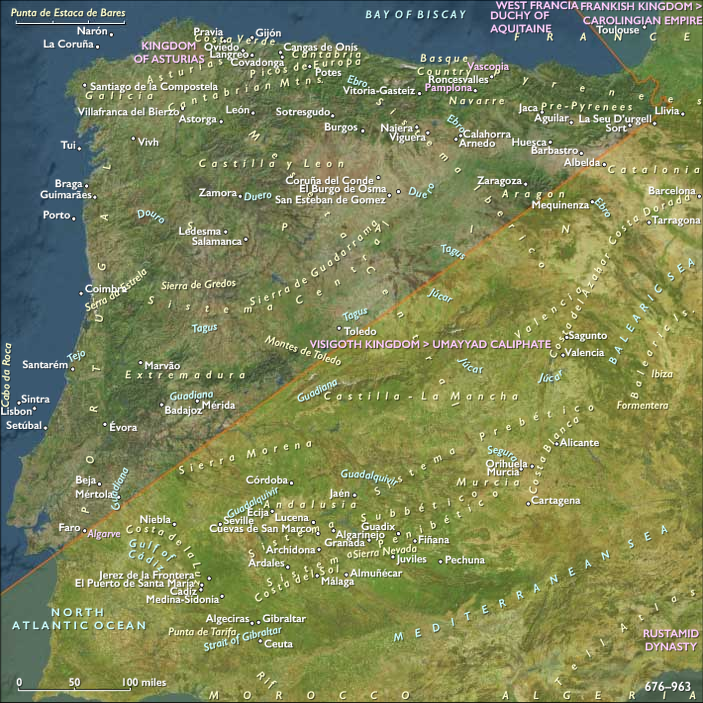
Between 856 and 867 CE, Atlantic Southwest Europe—covering Galicia, northern and central Portugal, Asturias, Cantabria, and northern Spain south of the Franco-Spanish border (43.05548° N, 1.22924° W)—experienced further political stabilization, territorial expansion, and cultural flourishing. The period, dominated by the effective reign of King Ordoño I (850–866 CE) and the early years of his successor Alfonso III (866–910 CE), saw decisive consolidation of Asturian power and the continued emergence of the Basques as independent political actors through the Kingdom of Pamplona. Economic stability, reinforced ecclesiastical authority, and the sustained prominence of Santiago de Compostela continued shaping the region’s distinct medieval identity.
Political and Military Developments
Ordoño I's Territorial Expansion and Consolidation
Ordoño I skillfully extended Asturian territory southward, actively repopulating and fortifying previously depopulated border zones along the Duero. This policy significantly strengthened frontier defenses against Islamic al-Andalus, firmly securing regional stability. Ordoño’s successful military expeditions and strategic repopulation efforts laid essential foundations for future territorial expansion.
Smooth Succession to Alfonso III
Upon Ordoño I’s death in 866 CE, his son Alfonso III ("the Great," 866–910 CE) ascended smoothly, maintaining dynastic stability. Alfonso quickly solidified royal authority, reinforcing territorial defenses and effectively managing alliances with regional aristocrats, further strengthening the Asturian kingdom's cohesion and political unity.
Basque Consolidation and Autonomy
The Basque political identity, having clearly emerged in the preceding decades from the earlier Vascones, was now firmly consolidated. Under the early rulers of the Kingdom of Pamplona (especially King García Íñiguez, c. 851–882 CE), the Basques maintained their distinctive political autonomy, diplomatically engaging with neighboring Asturias, al-Andalus, and the Frankish kingdom, decisively shaping broader Iberian political dynamics.
Economic Developments
Continued Economic Prosperity
The stable political environment enabled sustained economic prosperity. Villa-based agriculture, including grain cultivation, vineyards, olive orchards, and livestock husbandry, thrived. Regional artisanal industries and mining activities—especially gold and silver in Galicia and Asturias—remained economically vibrant, contributing significantly to overall regional wealth.
Steady Maritime and Regional Trade Networks
Coastal settlements such as Bracara Augusta (Braga) and smaller ports in Galicia and northern Portugal maintained steady maritime trade networks, effectively linking Atlantic Southwest Europe to broader Atlantic and Mediterranean markets. The stability of these economic exchanges reinforced regional prosperity and resilience.
Cultural and Religious Developments
Continued Growth and Influence of Santiago de Compostela
Santiago de Compostela’s significance as a pilgrimage destination continued to grow robustly. Pilgrimage activities enhanced regional religious unity, stimulated local economies, and reinforced cultural exchanges, decisively embedding Santiago’s pilgrimage traditions into the medieval cultural fabric of Iberia.
Reinforcement of Ecclesiastical Authority
Influential bishoprics—particularly Braga, Lugo, Asturica Augusta, and Santiago de Compostela—increasingly integrated themselves into regional governance, education, and social welfare. Bishops provided critical social cohesion, moral leadership, and community stability, embedding orthodox Christianity into local civic identity.
Monastic Expansion and Cultural Vitality
Monastic communities thrived further, maintaining their central role in manuscript production, scholarship, literacy, agricultural innovation, and social welfare. Monasteries significantly contributed to preserving and enriching regional cultural heritage and identity.
Enduring Cultural Syncretism
The persistent fusion of orthodox Christianity with indigenous Celtic and Iberian traditions remained strong, especially in rural Galicia, Asturias, and northern Portugal. This ongoing cultural integration reinforced regional unity, resilience, and local distinctiveness.
Civic Identity and Governance
Strong Royal-Ecclesiastical Centralization
Asturian governance structures continued integrating royal and ecclesiastical authority effectively, while maintaining significant regional autonomy. Civic identity was clearly defined by allegiance to Asturian royal authority, ecclesiastical institutions, and Santiago de Compostela’s pilgrimage tradition, solidifying Asturias as the primary Iberian Christian stronghold.
Solidified Basque Political Identity
In parallel, the Basques consolidated their distinctive civic identity and political autonomy under the early Kingdom of Pamplona, actively influencing broader regional political developments.
Notable Tribal Groups and Settlements
-
Astures and Cantabri: Continued providing critical political stability and military leadership, decisively shaping the Asturian kingdom’s identity and governance.
-
Galicians and Lusitanians: Maintained stable local governance, economic resilience, and cultural autonomy, pragmatically cooperating with Asturian central authority.
-
Basques: Now clearly identified politically and culturally, maintained distinct territorial independence, governance, and diplomatic relationships from their center in Pamplona.
Long-Term Significance and Legacy
Between 856 and 867 CE, Atlantic Southwest Europe:
-
Solidified Asturian territorial expansion, political stability, and regional security under Kings Ordoño I and Alfonso III, laying enduring foundations for future medieval kingdoms.
-
Witnessed the definitive consolidation of Basque identity and autonomy, significantly shaping regional political dynamics and Iberian history.
-
Continued strengthening ecclesiastical influence, cultural vitality, and economic resilience, decisively shaping medieval regional identity and historical continuity.
This pivotal era further established the political, economic, and cultural foundations for the region’s medieval trajectory, significantly shaping Atlantic Southwest Europe’s enduring historical legacy.
People
Groups
- Polytheism (“paganism”)
- Lusitanians, or Lusitani
- Gallaeci
- Cantabri (Celtic tribe)
- Astures (Celtic tribe)
- Moors
- Christianity, Chalcedonian
- Islam
- al-Andalus (Andalusia), Muslim-ruled
- Asturias, Kingdom of
- Córdoba, Umayyad Emirate of
- Navarre, Kingdom of
- Abbasid Caliphate (Samarra)
- Basque people
Topics
Commodoties
- Fish and game
- Weapons
- Oils, gums, resins, and waxes
- Grains and produce
- Fibers
- Textiles
- Ceramics
- Strategic metals
- Salt
- Beer, wine, and spirits
- Lumber
Subjects
- Commerce
- Architecture
- Engineering
- Labor and Service
- Conflict
- Mayhem
- Faith
- Government
- Scholarship
- Custom and Law
- Technology
- religious movement
Regions

Subregions
Related Events
Showing 10 events out of 54107 total
Years: 856 - 867
People
Groups
- Polytheism (“paganism”)
- Lusitanians, or Lusitani
- Gallaeci
- Cantabri (Celtic tribe)
- Astures (Celtic tribe)
- Moors
- Christianity, Chalcedonian
- Islam
- al-Andalus (Andalusia), Muslim-ruled
- Asturias, Kingdom of
- Córdoba, Umayyad Emirate of
- Navarre, Kingdom of
- Abbasid Caliphate (Samarra)
- Basque people
Topics
Commodoties
- Fish and game
- Weapons
- Oils, gums, resins, and waxes
- Grains and produce
- Fibers
- Textiles
- Ceramics
- Strategic metals
- Salt
- Beer, wine, and spirits
- Lumber
Subjects
- Commerce
- Architecture
- Engineering
- Labor and Service
- Conflict
- Mayhem
- Faith
- Government
- Scholarship
- Custom and Law
- Technology
- religious movement
Regions
Subregions