
Atlantic Southwest Europe (832–843 CE): Dynastic Continuity, …
Years: 832 - 843
Atlantic Southwest Europe (832–843 CE): Dynastic Continuity, Regional Prosperity, and Strengthened Pilgrimage Tradition
Between 832 and 843 CE, Atlantic Southwest Europe—comprising Galicia, northern and central Portugal, Asturias, Cantabria, and northern Spain south of the Franco-Spanish border (43.05548° N, 1.22924° W)—experienced continued political stability, economic growth, and cultural vitality toward the end of King Alfonso II’s reign (791–842 CE) and during the initial period of his successor, King Ramiro I (842–850 CE). The region solidified its central position in Christian Iberia, supported by enhanced ecclesiastical authority, sustained economic resilience, and the expanding significance of Santiago de Compostela as a major pilgrimage center.
Political and Military Developments
Succession Stability from Alfonso II to Ramiro I
The final decade of Alfonso II’s reign maintained political stability, enabling a seamless transition to Ramiro I in 842 CE. Ramiro swiftly consolidated royal authority, ensuring dynastic continuity. While initially faced with minor internal tensions, Ramiro effectively secured regional loyalty, reinforcing Asturian political unity.
Enhanced Frontier Security and Continued Islamic Pressure
Asturias continued to invest in robust border defenses, particularly along the strategic Duero frontier. While periodic skirmishes with Islamic forces from al-Andalus occurred, Asturian defensive preparations and regional alliances ensured that no significant territorial losses occurred, maintaining long-term territorial integrity.
Economic Developments
Steady Regional Economic Prosperity
Under stable political conditions, the region’s economy remained robust and productive. Rural villa-based agriculture (grain, olives, vineyards), livestock husbandry, artisanal crafts, and mining activities—particularly gold and silver extraction in Galicia and Asturias—continued to provide substantial economic stability and regional prosperity.
Consistent Maritime and Regional Trade
Coastal towns such as Bracara Augusta (Braga) and smaller ports across Galicia and northern Portugal sustained steady maritime commerce. These trading activities, although modest, maintained crucial economic continuity, enhancing the region’s integration into broader Atlantic and Mediterranean trade networks.
Cultural and Religious Developments
Expansion of Santiago de Compostela as a Pilgrimage Hub
The prominence of Santiago de Compostela as a pilgrimage destination continued to grow rapidly, significantly influencing regional identity and religious practices. The growing influx of pilgrims stimulated local economies, enhanced ecclesiastical prestige, and fostered broad cultural exchanges that profoundly shaped regional development.
Strengthened Ecclesiastical Leadership and Influence
Influential bishoprics—especially those in Braga, Lugo, Iria Flavia (Santiago de Compostela), and Asturica Augusta—further deepened their administrative and cultural roles. Bishops provided crucial social cohesion, moral guidance, educational initiatives, and community governance, further embedding orthodox Christianity into regional life.
Monastic Flourishing and Cultural Vitality
Monastic communities continued to thrive, significantly contributing to regional culture, education, and economy. Monasteries remained crucial centers for manuscript preservation, literacy, scholarship, agricultural innovation, and social welfare, profoundly shaping the region’s cultural heritage and identity.
Continued Cultural Syncretism
The persistent integration of orthodox Christianity with indigenous Celtic and Iberian traditions remained particularly robust, notably in rural Galicia, Asturias, and northern Portugal. These enduring practices reinforced regional identity, unity, and cultural resilience.
Civic Identity and Governance
Further Royal and Ecclesiastical Integration
Asturian governance structures under Alfonso II and Ramiro I continued integrating royal and ecclesiastical authority, maintaining significant regional autonomy while fostering cohesive civic identities. Civic allegiance increasingly centered around Asturian royal power, ecclesiastical institutions, and the pilgrimage site of Santiago de Compostela, firmly establishing Asturias as the symbolic heart of Iberian Christian resistance.
Notable Tribal Groups and Settlements
-
Astures and Cantabri: Continued to provide critical political cohesion and military stability, decisively shaping Asturian identity and governance structures.
-
Galicians and Lusitanians: Maintained stable local governance, economic resilience, and cultural autonomy, pragmatically cooperating with Asturian authority.
-
Vascones: Maintained longstanding neutrality, territorial independence, and cultural distinctiveness, diplomatically engaging with Asturias but remaining largely insulated from broader conflicts.
Long-Term Significance and Legacy
Between 832 and 843 CE, Atlantic Southwest Europe:
-
Reinforced political stability and dynastic continuity, ensuring robust regional governance and territorial integrity under Alfonso II and Ramiro I.
-
Experienced sustained economic prosperity, ecclesiastical prominence, and cultural flourishing, decisively shaping regional identity and medieval social structures.
-
Further elevated the cultural and religious significance of Santiago de Compostela, laying the foundation for enduring pilgrimage traditions that defined the medieval and later historical identity of northern Iberia.
This era marked an essential phase in the consolidation and cultural enrichment of the Asturian kingdom, significantly shaping Atlantic Southwest Europe's medieval trajectory.
People
Groups
- Polytheism (“paganism”)
- Vascones
- Lusitanians, or Lusitani
- Gallaeci
- Cantabri (Celtic tribe)
- Astures (Celtic tribe)
- Moors
- Christianity, Chalcedonian
- Islam
- al-Andalus (Andalusia), Muslim-ruled
- Asturias, Kingdom of
- Córdoba, Umayyad Emirate of
- Abbasid Caliphate (Baghdad)
- Navarre, Kingdom of
- Abbasid Caliphate (Samarra)
Topics
Commodoties
- Fish and game
- Weapons
- Oils, gums, resins, and waxes
- Grains and produce
- Fibers
- Textiles
- Ceramics
- Strategic metals
- Salt
- Beer, wine, and spirits
- Lumber
Subjects
- Commerce
- Architecture
- Engineering
- Labor and Service
- Conflict
- Mayhem
- Faith
- Government
- Scholarship
- Custom and Law
- Technology
- religious movement
Regions
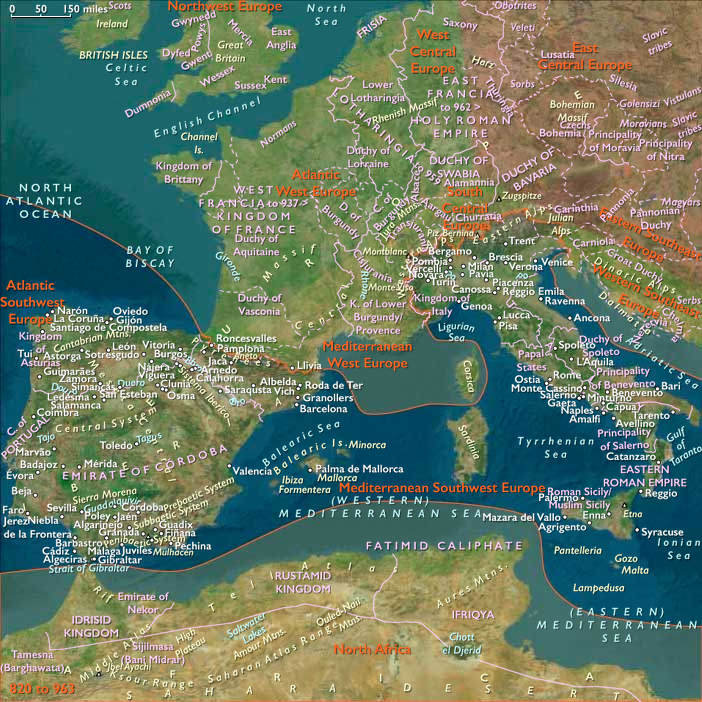
Subregions
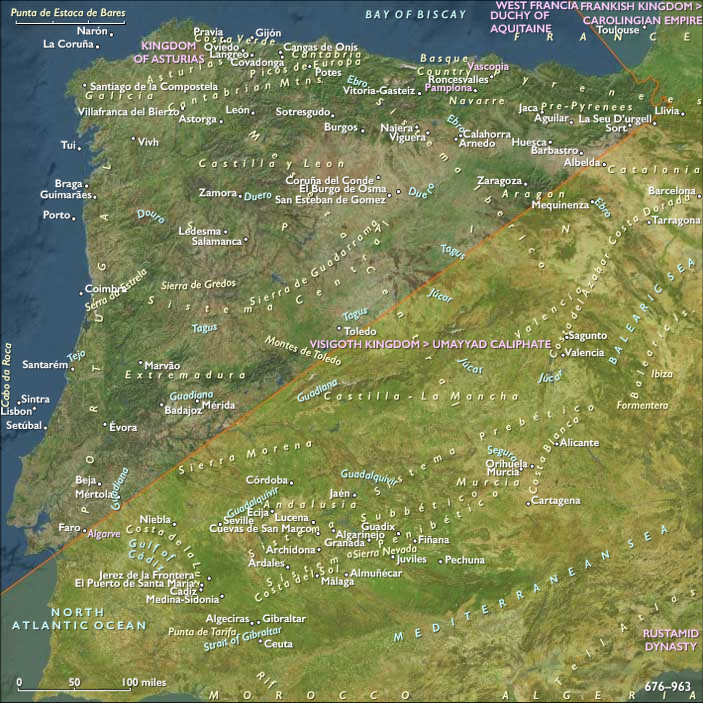
Years: 832 - 843
People
Groups
- Polytheism (“paganism”)
- Vascones
- Lusitanians, or Lusitani
- Gallaeci
- Cantabri (Celtic tribe)
- Astures (Celtic tribe)
- Moors
- Christianity, Chalcedonian
- Islam
- al-Andalus (Andalusia), Muslim-ruled
- Asturias, Kingdom of
- Córdoba, Umayyad Emirate of
- Abbasid Caliphate (Baghdad)
- Navarre, Kingdom of
- Abbasid Caliphate (Samarra)
Topics
Commodoties
- Fish and game
- Weapons
- Oils, gums, resins, and waxes
- Grains and produce
- Fibers
- Textiles
- Ceramics
- Strategic metals
- Salt
- Beer, wine, and spirits
- Lumber
Subjects
- Commerce
- Architecture
- Engineering
- Labor and Service
- Conflict
- Mayhem
- Faith
- Government
- Scholarship
- Custom and Law
- Technology
- religious movement
Regions
Subregions