
Atlantic Southwest Europe (69–58 BCE): Prelude to …
Years: 69BCE - 58BCE
Atlantic Southwest Europe (69–58 BCE): Prelude to Full Roman Integration and Persistent Northern Resistance
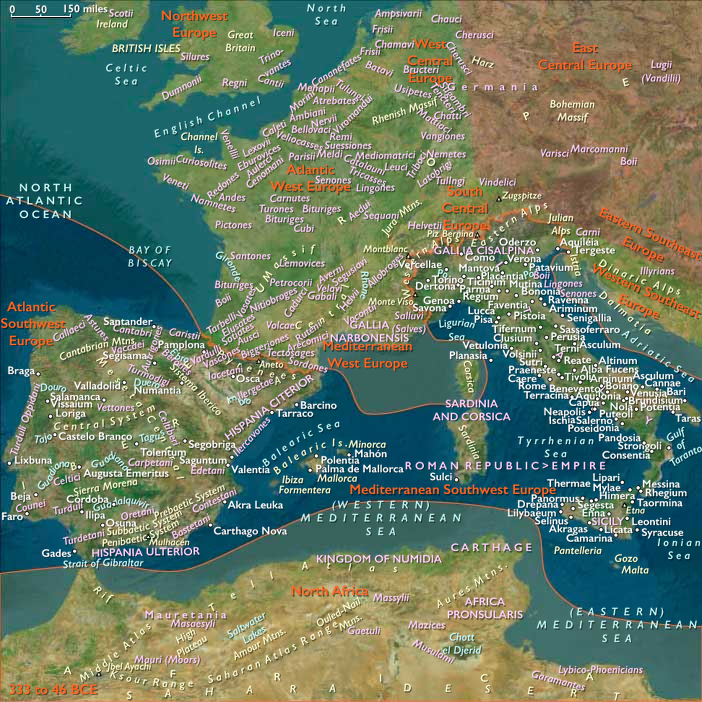
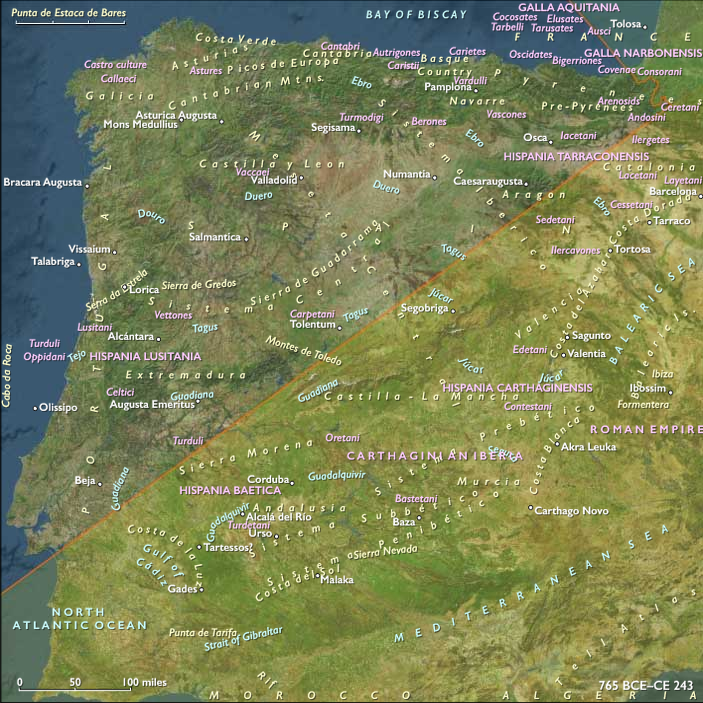
Between 69 and 58 BCE, Atlantic Southwest Europe—encompassing northern and central Portugal, Galicia, Asturias, Cantabria, and northern Spain south of the Franco-Spanish border (43.05548° N, 1.22924° W)—approached a critical juncture marked by near-complete Roman stabilization of Lusitanian and southern tribal territories. However, northern tribes, including the Gallaeci, Astures, Cantabri, and the Vascones, continued their resilient autonomy, effectively resisting Roman incursions. Economic integration into Mediterranean markets intensified further, sustained by the deeply embedded practice of slavery. Despite increased Roman influence, regional cultural identities remained notably robust, setting the stage for the final Roman campaigns of conquest.
Political and Military Developments
Increasing Roman Stability and Administrative Control
-
Roman provincial authority became deeply established in Lusitanian territories, securing internal stability through fortified military posts, effective governance structures, strategic diplomacy with tribal elites, and expanding road networks that strengthened administrative reach.
-
Cooperative relationships between Roman officials and local tribal elites significantly reduced resistance in southern and central regions, paving the way for stable provincial integration.
Ongoing Northern Tribal Resistance and Autonomy
-
Northern tribes—Gallaeci, Astures, and Cantabri—persisted in their defensive autonomy, maintaining fortified settlements and effective military resistance. Their successful defensive tactics deterred Roman incursions, preserving regional independence and shaping future Roman strategic considerations.
-
The Vascones continued successfully preserving territorial and cultural autonomy, maintaining cautious diplomatic neutrality that allowed sustained independence and internal stability.
Diplomatic Accommodation and Tribal Reorganization
-
Tribes such as the Lusitanians, Vettones, and Vaccaei continued adapting diplomatically to Roman governance. Tribal elites increasingly collaborated with Roman authorities to preserve internal autonomy, secure economic advantages, and ensure regional stability, signaling deeper provincial integration.
Economic and Technological Developments
Intensified Mediterranean Economic Integration
-
Economic connections with Roman-dominated Mediterranean markets became more extensive. Atlantic Southwest European tribes exported metals, agricultural produce, timber, salt, textiles, and notably slaves, and imported luxury goods, fine ceramics, sophisticated iron products, wine, and olive oil.
-
Tribal elites benefited substantially, reinforcing internal social stratification, economic specialization, and dependency on Roman commerce.
Continued Centrality of Slavery
-
Slavery remained foundational to regional economies, extensively employed in mining operations (silver, copper, tin), agricultural estates, domestic labor, and artisanal production. Slaves remained vital commodities within Mediterranean trade, reinforcing regional economic integration and societal hierarchies.
Advances in Metallurgical Technology
-
Iron metallurgy and artisanal production advanced further, significantly enhancing agricultural productivity, military effectiveness, and economic specialization. Skilled artisans from Lusitanian, Vettones, and Gallaeci communities produced finely crafted iron weapons, armor, tools, and decorative objects, integrating indigenous traditions with Mediterranean styles.
Cultural and Religious Developments
Cultural Fusion and Artistic Resilience
-
Material culture continued reflecting a dynamic blend of indigenous Iberian traditions, Celtic motifs, and increasingly pervasive Roman influences. Regional artistic expressions—elaborate metalwork, decorative jewelry, pottery designs, ceremonial weaponry, and household objects—highlighted robust cultural identities and pride.
-
Tribal cultures, especially among Lusitanians, Gallaeci, Astures, Cantabri, and Vascones, remained distinctive and resilient, asserting local identities amid growing Roman integration.
Persistent Ritual Complexity and Religious Identity
-
Ritual practices continued blending indigenous Iberian, Celtic, and Roman religious traditions. Sacred sites, ceremonial landscapes, and communal rituals persisted prominently, reinforcing tribal solidarity, cultural continuity, and regional identities.
-
Ancestral rites, warrior ceremonies, and communal festivals persisted, strengthening social cohesion, resistance memory, and cultural autonomy amidst increasing Roman authority.
Notable Tribal Groups and Settlements
-
Lusitanians: Further adapted diplomatically to Roman governance, preserving substantial local autonomy while continuing occasional localized resistance.
-
Vettones and Vaccaei: Strategically accommodated Roman governance, maintaining territorial integrity, regional economic prosperity, and internal autonomy.
-
Gallaeci, Astures, and Cantabri: Strengthened defensive resistance strategies, preserving extensive regional autonomy, setting the stage for future Roman confrontations.
-
Vascones: Retained effective diplomatic neutrality, maintaining cultural identity, societal stability, and territorial autonomy.
Long-Term Significance and Legacy
Between 69 and 58 BCE, Atlantic Southwest Europe:
-
Marked a critical period of increasing Roman provincial stability in Lusitanian and southern tribal territories, laying foundations for full Roman integration and cultural assimilation processes.
-
Demonstrated persistent tribal resistance and autonomy in northern regions, significantly shaping future historical dynamics, particularly the final military confrontations between Rome and resistant tribal groups.
-
Solidified economic dependency on Mediterranean trade networks, firmly entrenching slavery within regional economic and societal structures.
This era decisively shaped regional historical developments, positioning Atlantic Southwest Europe on the threshold of the final phase of Roman conquest, integration, and cultural transformation.
Groups
- Polytheism (“paganism”)
- Iberians
- Celts
- Carthage, Kingdom of
- Lusitanians, or Lusitani
- Celtiberians
- Roman Republic
- La Tène culture
- Vettones
- Caristii
- Gallaeci
- Vaccaei
- Cantabri (Celtic tribe)
- Astures (Celtic tribe)
- Berones
- Varduli
- Turmodigi
- Turduli Oppidani
- Celtici
- Autrigones
- Hispania Ulterior (region of Hispania)
- Hispania Citerior (region of Hispania)
Topics
Commodoties
- Weapons
- Domestic animals
- Oils, gums, resins, and waxes
- Grains and produce
- Fibers
- Ceramics
- Strategic metals
- Salt
- Slaves
- Beer, wine, and spirits
- Lumber
Subjects
- Commerce
- Language
- Labor and Service
- Decorative arts
- Conflict
- Faith
- Government
- Custom and Law
- Technology
Regions
Subregions
Years: 69BCE - 58BCE
Groups
- Polytheism (“paganism”)
- Iberians
- Celts
- Carthage, Kingdom of
- Lusitanians, or Lusitani
- Celtiberians
- Roman Republic
- La Tène culture
- Vettones
- Caristii
- Gallaeci
- Vaccaei
- Cantabri (Celtic tribe)
- Astures (Celtic tribe)
- Berones
- Varduli
- Turmodigi
- Turduli Oppidani
- Celtici
- Autrigones
- Hispania Ulterior (region of Hispania)
- Hispania Citerior (region of Hispania)
Topics
Commodoties
- Weapons
- Domestic animals
- Oils, gums, resins, and waxes
- Grains and produce
- Fibers
- Ceramics
- Strategic metals
- Salt
- Slaves
- Beer, wine, and spirits
- Lumber
Subjects
- Commerce
- Language
- Labor and Service
- Decorative arts
- Conflict
- Faith
- Government
- Custom and Law
- Technology
Regions
Subregions