
Atlantic Southwest Europe (784–795 CE): Dynastic Tensions, …
Years: 784 - 795
Atlantic Southwest Europe (784–795 CE): Dynastic Tensions, Asturian Strengthening, and Ecclesiastical Influence
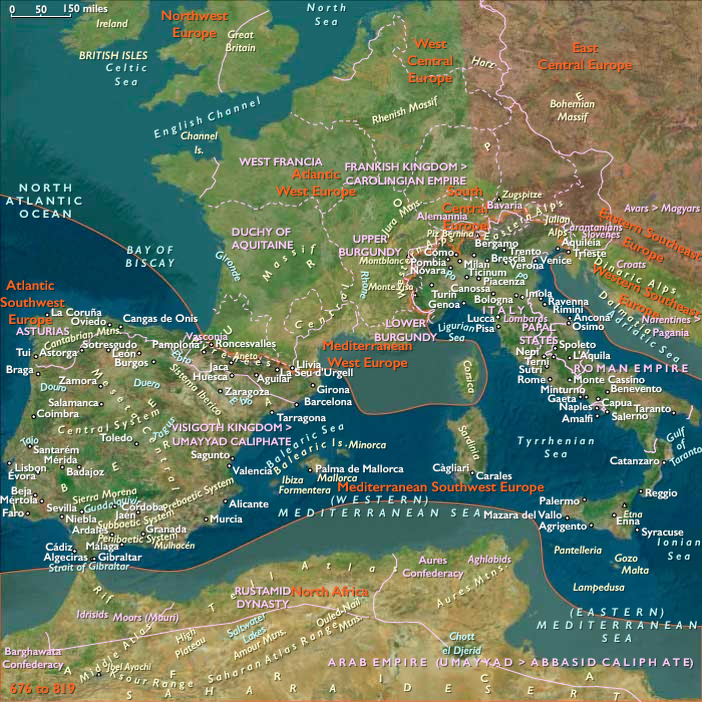
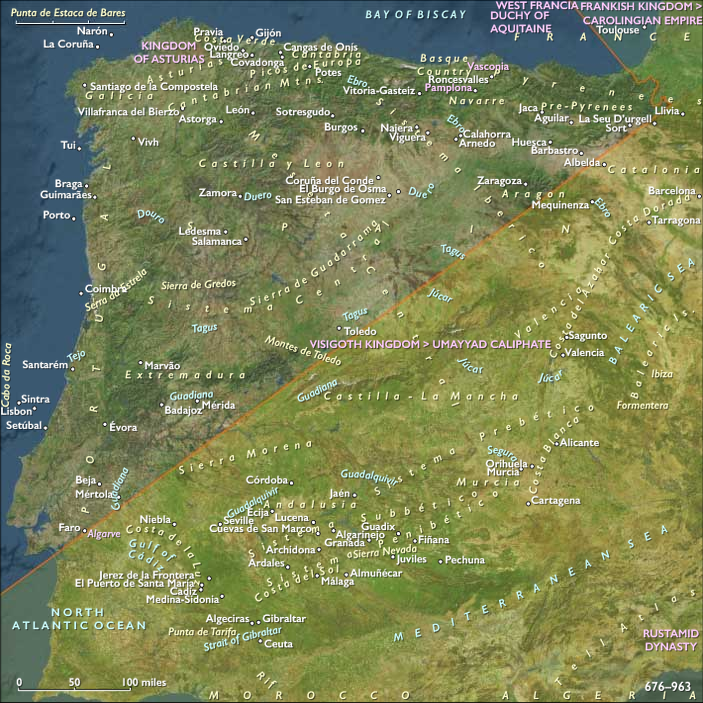
Between 784 and 795 CE, Atlantic Southwest Europe—covering Galicia, northern and central Portugal, Asturias, Cantabria, and northern Spain south of the Franco-Spanish border (43.05548° N, 1.22924° W)—experienced notable dynastic tensions followed by renewed political consolidation under the Asturian monarchy. The transition from King Silo (774–783 CE) to Alfonso II (791–842 CE) was marked initially by internal instability but ultimately resulted in stronger central authority, increased ecclesiastical influence, and economic stability, further shaping the distinctive medieval identity of the region.
Political and Military Developments
Dynastic Tensions and Succession Conflicts
After King Silo’s death in 783 CE, succession tensions briefly destabilized Asturias. Initially, Mauregato (783–789 CE) ascended through contested circumstances, leading to internal dissent due to his reputed illegitimacy and alleged diplomatic concessions to Islamic al-Andalus. This period of internal discord briefly weakened Asturian authority, although regional aristocrats maintained relative stability within their territories.
Ascension and Consolidation under Alfonso II
Following Mauregato’s controversial reign and a short interregnum under Bermudo I (789–791 CE), the rise of Alfonso II ("the Chaste," 791–842 CE) decisively restored royal legitimacy and centralized authority. Alfonso II swiftly reinforced Asturian stability through strategic alliances, military fortifications, and diplomatic leadership, significantly reducing internal discord and strengthening the kingdom’s defensive posture against al-Andalus.
Economic Developments
Sustained Economic Stability and Moderate Growth
Despite brief political instability, regional economies remained resilient and productive. Villa-based agriculture prospered, notably grain cultivation, vineyards, olive orchards, and livestock husbandry. Mining activities, particularly the extraction of gold and silver in Galicia and Asturias, maintained robust economic contributions, supporting ongoing stability and wealth.
Steady Maritime and Regional Trade Networks
Maritime commerce, especially through coastal towns such as Bracara Augusta (Braga) and smaller Galician and Portuguese ports, continued consistently. Although modest, this trade maintained vital economic continuity, connecting Atlantic Southwest Europe to broader Atlantic and Mediterranean trade networks.
Cultural and Religious Developments
Increased Ecclesiastical Authority
Bishoprics in Braga, Lugo, Iria Flavia, and Asturica Augusta expanded their administrative and civic influence, becoming pivotal institutions of local governance. Bishops continued providing essential social cohesion, education, and moral leadership, further integrating orthodox Christian practices into community identity.
Continued Monastic Influence and Cultural Preservation
Monastic communities expanded further, playing essential roles in preserving manuscripts, maintaining literacy, providing education, and advancing agricultural and economic practices. Monasteries served as cultural and economic centers, strengthening regional identity and resilience.
Enduring Cultural Syncretism
The longstanding blend of orthodox Christianity with indigenous Celtic and Iberian traditions remained particularly robust in rural Galicia, Asturias, and northern Portugal. These enduring cultural traditions significantly reinforced local identity and provided cohesion amid ongoing external pressures.
Civic Identity and Governance
Reassertion of Central Authority
Under Alfonso II, governance structures became increasingly centralized, strengthening royal authority while still preserving significant local autonomy. Civic identity gradually shifted toward unified allegiance to the Asturian monarchy and ecclesiastical institutions, emphasizing Asturias as the symbolic and practical center of Iberian Christian resistance.
Notable Tribal Groups and Settlements
-
Astures and Cantabri: Continued as the political and military core of the Asturian kingdom, strongly shaping the region’s emerging medieval identity.
-
Galicians and Lusitanians: Maintained stable governance, economic resilience, and cultural autonomy, cooperating pragmatically with Asturian central authority.
-
Vascones: Maintained their traditional neutrality, territorial independence, and cultural distinctiveness, largely insulated from broader regional conflicts but maintaining diplomatic relations with Asturias.
Long-Term Significance and Legacy
Between 784 and 795 CE, Atlantic Southwest Europe:
-
Overcame initial dynastic instability, emerging stronger under Alfonso II, whose reign decisively shaped the future direction of medieval Asturias.
-
Reinforced economic resilience, ecclesiastical authority, and local governance, laying crucial foundations for enduring regional identity and autonomy.
-
Preserved distinct regional cultural traditions, strongly influencing the enduring medieval character of northern Iberia.
This era solidified Asturian political stability, economic prosperity, and ecclesiastical influence, setting a robust foundation for the future historical trajectory of Atlantic Southwest Europe.
People
Groups
- Polytheism (“paganism”)
- Vascones
- Lusitanians, or Lusitani
- Gallaeci
- Cantabri (Celtic tribe)
- Astures (Celtic tribe)
- Moors
- Christianity, Chalcedonian
- Islam
- al-Andalus (Andalusia), Muslim-ruled
- Asturias, Kingdom of
- Córdoba, Umayyad Emirate of
- Abbasid Caliphate (Baghdad)
Topics
Commodoties
- Fish and game
- Weapons
- Oils, gums, resins, and waxes
- Grains and produce
- Fibers
- Textiles
- Ceramics
- Strategic metals
- Salt
- Beer, wine, and spirits
- Lumber
Subjects
- Commerce
- Architecture
- Engineering
- Labor and Service
- Conflict
- Mayhem
- Faith
- Government
- Scholarship
- Custom and Law
- Technology
- religious movement
Regions
Subregions
Related Events
Showing 10 events out of 55025 total
Years: 784 - 795
People
Groups
- Polytheism (“paganism”)
- Vascones
- Lusitanians, or Lusitani
- Gallaeci
- Cantabri (Celtic tribe)
- Astures (Celtic tribe)
- Moors
- Christianity, Chalcedonian
- Islam
- al-Andalus (Andalusia), Muslim-ruled
- Asturias, Kingdom of
- Córdoba, Umayyad Emirate of
- Abbasid Caliphate (Baghdad)
Topics
Commodoties
- Fish and game
- Weapons
- Oils, gums, resins, and waxes
- Grains and produce
- Fibers
- Textiles
- Ceramics
- Strategic metals
- Salt
- Beer, wine, and spirits
- Lumber
Subjects
- Commerce
- Architecture
- Engineering
- Labor and Service
- Conflict
- Mayhem
- Faith
- Government
- Scholarship
- Custom and Law
- Technology
- religious movement
Regions
Subregions