
Atlantic Southwest Europe (760–771 CE): Strengthening Asturian …
Years: 760 - 771
Atlantic Southwest Europe (760–771 CE): Strengthening Asturian Authority and Regional Stability
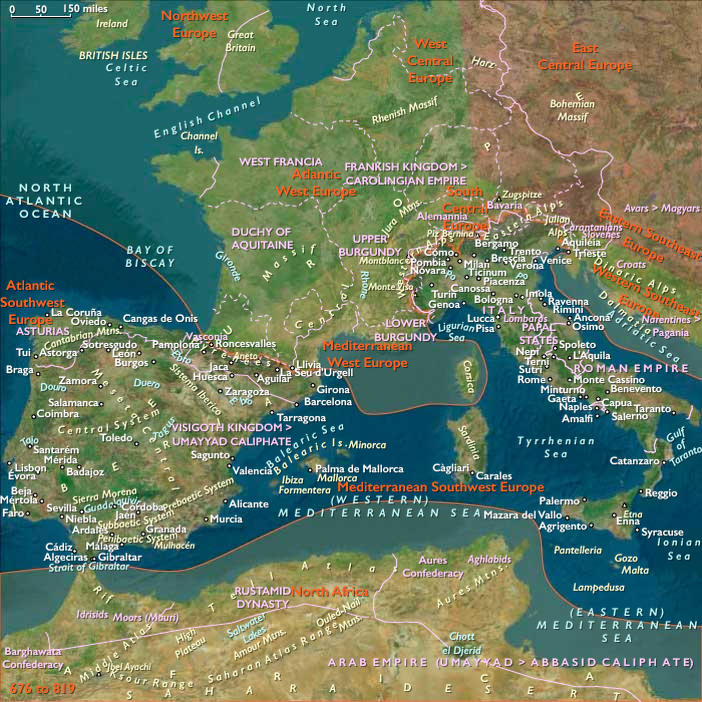
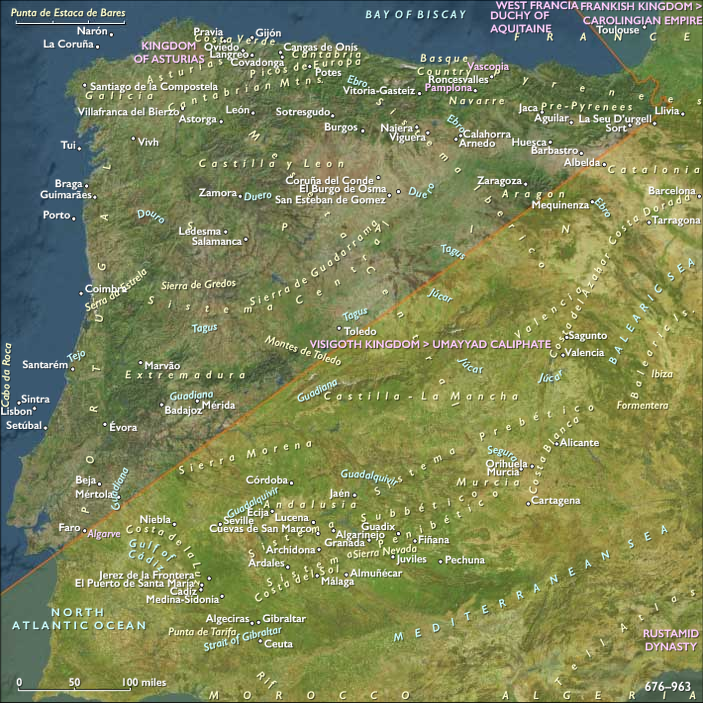
Between 760 and 771 CE, Atlantic Southwest Europe—covering Galicia, northern and central Portugal, Asturias, Cantabria, and northern Spain south of the Franco-Spanish border (43.05548° N, 1.22924° W)—experienced further political consolidation under the Asturian kingdom. The reign of King Fruela I (757–768 CE) and his successor Aurelius (768–774 CE) marked continued stabilization, economic resilience, enhanced ecclesiastical leadership, and strengthened regional identities amid ongoing pressure from Islamic al-Andalus.
Political and Military Developments
Asturian Centralization under Fruela I
King Fruela I, known for his energetic and ambitious rule, continued consolidating royal power and territorial security. He reinforced defensive measures along the kingdom’s southern frontiers, particularly the strategic "Desert of the Duero," effectively limiting Islamic incursions. Fruela’s assertive policies sometimes generated internal tensions, yet overall they bolstered central authority, enabling Asturias to emerge as a more unified political entity.
Regional Autonomy and Stability under Aurelius
After Fruela’s assassination in 768 CE, King Aurelius ascended to the throne, adopting a more diplomatic approach that reduced internal conflict. Aurelius respected regional autonomy and maintained cooperative relationships with local aristocrats, bishops, and tribal leaders. His reign stabilized the kingdom internally, setting the stage for sustained future growth.
Economic Developments
Stable and Expanding Regional Economies
Under Fruela I and Aurelius, regional economies continued their steady growth and diversification. Villa-based agriculture (grain, olives, wine), livestock husbandry, and artisanal production (textiles, pottery, metalwork) provided stable economic foundations. Mining, notably of gold and silver in Galicia and Asturias, remained economically significant, contributing considerably to the kingdom’s overall prosperity.
Moderate Revival of Maritime and Regional Trade
Coastal cities such as Bracara Augusta (Braga) and smaller ports along Galicia and northern Portugal sustained consistent maritime trade networks, connecting Atlantic Southwest Europe to broader Atlantic and Mediterranean commerce. Though modest, this renewed trade contributed essential economic stability.
Cultural and Religious Developments
Strengthened Ecclesiastical Governance
Influential bishoprics—particularly Braga, Lugo, Asturica Augusta, and Iria Flavia—further enhanced their roles as civic and cultural leaders. Bishops served as key administrators and moral authorities, significantly shaping local governance and embedding orthodox Christianity into regional identity.
Expansion and Influence of Monastic Communities
Monastic communities continued to expand, profoundly influencing regional culture, education, and economy. Monasteries functioned as vital centers of manuscript production, literacy, education, agricultural innovation, and social welfare, decisively shaping regional cultural continuity and religious devotion.
Enduring Cultural Syncretism
The synthesis of orthodox Christianity with indigenous Celtic and Iberian traditions remained robust, particularly in rural Galicia, Asturias, and northern Portugal. This enduring cultural blend reinforced regional identity, providing unity and continuity amid ongoing external challenges.
Civic Identity and Governance
Increasing Centralization of Regional Governance
Asturian political structures became increasingly centralized, especially under Fruela I’s active governance, though considerable local autonomy continued under Aurelius. Civic identities coalesced around Asturian royal authority, clearly identifying Asturias as the political center of Iberian Christian resistance.
Notable Tribal Groups and Settlements
-
Astures and Cantabri: Provided essential military strength and political stability, decisively shaping the emerging Asturian identity and governance structures.
-
Galicians and Lusitanians: Retained effective local governance, economic autonomy, and cultural identity, pragmatically cooperating with the Asturian kingdom.
-
Vascones: Maintained their historical neutrality, territorial independence, and cultural distinctiveness, largely isolated from broader Iberian conflicts.
Long-Term Significance and Legacy
Between 760 and 771 CE, Atlantic Southwest Europe:
-
Further solidified the Asturian kingdom’s central authority, enhancing territorial stability and governance, thus laying a robust foundation for future medieval kingdoms.
-
Reinforced regional economic prosperity, ecclesiastical authority, and resilient cultural identity, significantly shaping subsequent medieval society.
-
Sustained regional autonomy and distinctive cultural traditions, directly influencing the enduring medieval character of northern Iberia.
This era marked significant progress in Asturian political consolidation and provided lasting foundations for Atlantic Southwest Europe’s medieval trajectory.
People
Groups
- Polytheism (“paganism”)
- Vascones
- Lusitanians, or Lusitani
- Gallaeci
- Cantabri (Celtic tribe)
- Astures (Celtic tribe)
- Moors
- Christianity, Chalcedonian
- Islam
- al-Andalus (Andalusia), Muslim-ruled
- Asturias, Kingdom of
- Abbasid Caliphate (Kufa)
- Córdoba, Umayyad Emirate of
- Abbasid Caliphate (Baghdad)
Topics
Commodoties
- Fish and game
- Weapons
- Oils, gums, resins, and waxes
- Grains and produce
- Fibers
- Textiles
- Ceramics
- Strategic metals
- Salt
- Beer, wine, and spirits
- Lumber
Subjects
- Commerce
- Architecture
- Engineering
- Labor and Service
- Conflict
- Mayhem
- Faith
- Government
- Scholarship
- Custom and Law
- Technology
- religious movement
Regions
Subregions
Years: 760 - 771
People
Groups
- Polytheism (“paganism”)
- Vascones
- Lusitanians, or Lusitani
- Gallaeci
- Cantabri (Celtic tribe)
- Astures (Celtic tribe)
- Moors
- Christianity, Chalcedonian
- Islam
- al-Andalus (Andalusia), Muslim-ruled
- Asturias, Kingdom of
- Abbasid Caliphate (Kufa)
- Córdoba, Umayyad Emirate of
- Abbasid Caliphate (Baghdad)
Topics
Commodoties
- Fish and game
- Weapons
- Oils, gums, resins, and waxes
- Grains and produce
- Fibers
- Textiles
- Ceramics
- Strategic metals
- Salt
- Beer, wine, and spirits
- Lumber
Subjects
- Commerce
- Architecture
- Engineering
- Labor and Service
- Conflict
- Mayhem
- Faith
- Government
- Scholarship
- Custom and Law
- Technology
- religious movement
Regions
Subregions