
Atlantic Southwest Europe (33–22 BCE): The Cantabrian …
Years: 33BCE - 22BCE
Atlantic Southwest Europe (33–22 BCE): The Cantabrian Wars and the Final Roman Conquest
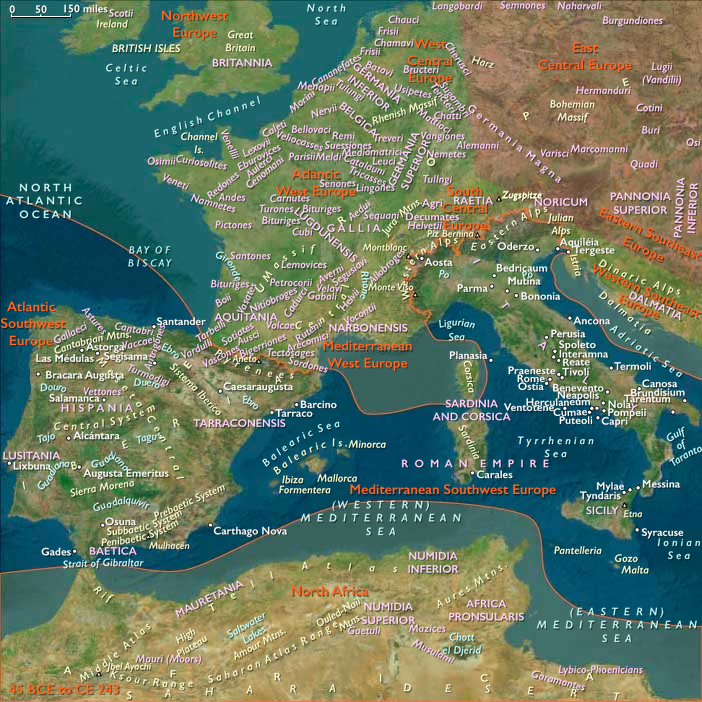
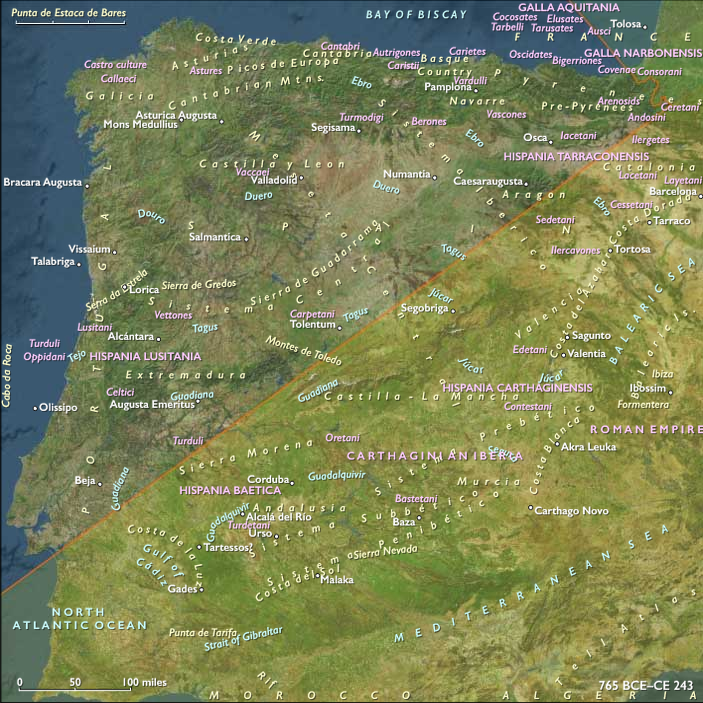
Between 33 and 22 BCE, Atlantic Southwest Europe—covering northern and central Portugal, Galicia, Asturias, Cantabria, and northern Spain south of the Franco-Spanish border (43.05548° N, 1.22924° W)—experienced a decisive turning point characterized by the outbreak and conclusion of the Cantabrian Wars (29–19 BCE). Rome committed extensive military resources to subdue the resilient northern tribes—especially the Gallaeci, Astures, and Cantabri—completing their conquest and formally integrating the entire region into the Roman Empire. Economic and social integration accelerated, further entrenching slavery within regional economies, while distinct local identities persisted despite intensified Roman influence.
Political and Military Developments
Outbreak and Escalation of the Cantabrian Wars
-
Between 29 and 22 BCE, Roman military forces under Emperor Augustus decisively targeted the fiercely independent tribes of the northern regions—particularly the Cantabri, Astures, and Gallaeci—launching comprehensive and sustained campaigns.
-
Roman military operations featured extensive troop deployments, siege warfare, and the construction of permanent fortifications, aiming to eliminate tribal resistance definitively.
Roman Provincial Expansion and Military Consolidation
-
As a result of these sustained military efforts, Rome successfully subdued resistant tribes and established stable administrative structures. This conquest allowed the consolidation of a unified provincial system, solidifying Roman rule across the entirety of Atlantic Southwest Europe.
-
The establishment of military garrisons and fortified towns facilitated the administrative control, cultural integration, and long-term stability of the region under Roman governance.
Diplomatic Neutrality of the Vascones
-
The Vascones continued to employ careful diplomatic neutrality, successfully preserving territorial integrity and cultural autonomy by navigating between resistant northern tribes and advancing Roman forces, ultimately securing favorable regional status within the Roman provincial structure.
Economic and Technological Developments
Intensified Economic Integration within the Roman Empire
-
Economic integration reached new heights, with increased exports of metals (silver, copper, tin), salt, agricultural produce, timber, livestock products, textiles, and especially slaves. Imports included Mediterranean luxury goods, fine ceramics, advanced iron implements, wine, and olive oil.
-
Tribal elites and newly formed provincial classes significantly benefited economically, reinforcing regional social hierarchies and deepening dependency on Roman economic networks.
Continued Reliance on Slave Labor
-
Slavery remained an essential component of regional economic structures, extensively employed in mining operations, agricultural estates, domestic service, artisanal production, and urban settings. The thriving slave trade became thoroughly embedded in the regional economic and social fabric.
Technological Advancements and Metallurgical Sophistication
-
Metallurgical technology, notably ironworking, continued its significant advancements, further enhancing agricultural productivity, artisanal craftsmanship, and military capabilities. Skilled artisans across the region, especially in Lusitania and among the Gallaeci and Celtici, produced finely crafted weapons, armor, tools, and decorative items, integrating Roman influences with local traditions.
Cultural and Religious Developments
Cultural Integration and Continued Resilience
-
Material culture increasingly exhibited a hybridization of indigenous Iberian, Celtic, and strong Roman influences. Artistic expressions—particularly evident in sophisticated metalwork, pottery, ceremonial artifacts, decorative jewelry, and household items—showcased the continuing vitality and resilience of regional identities.
-
Despite intensified Roman political dominance, local tribal identities—especially among the Gallaeci, Astures, Cantabri, and Vascones—persisted robustly, demonstrating enduring cultural resilience.
Ritual Adaptations and Cultural Continuity
-
Ritual and religious practices persisted and adapted, blending indigenous Iberian, Celtic, and Roman religious traditions. Major ritual sites, sanctuaries, and ceremonial landscapes continued to reinforce communal cohesion, cultural continuity, and tribal identities.
-
Ancestral rites, warrior ceremonies, and communal religious festivals actively sustained social solidarity and regional identity throughout the transition toward full Roman rule.
Notable Tribal Groups and Settlements
-
Lusitanians: Further integrated into Roman provincial administration, maintaining economic stability and cultural traditions within a stable provincial environment.
-
Vettones and Vaccaei: Successfully maintained local autonomy, territorial integrity, and economic prosperity within Roman governance structures through strategic diplomacy.
-
Gallaeci, Astures, Cantabri: Ultimately subdued by Roman forces after intense and prolonged resistance, their territories became fully incorporated into the Roman provincial system by the end of the era.
-
Vascones: Effectively navigated diplomatic neutrality, preserving territorial integrity, autonomy, and cultural distinctiveness within the Roman provincial framework.
Long-Term Significance and Legacy
Between 33 and 22 BCE, Atlantic Southwest Europe:
-
Witnessed the culmination of Roman military efforts with the decisive and historically critical Cantabrian Wars, achieving full Roman integration of the previously independent northern regions.
-
Deepened regional economic integration and established long-lasting economic structures heavily reliant on slavery and Roman Mediterranean trade.
-
Preserved strong regional cultural identities, shaping long-term processes of assimilation, cultural adaptation, and resilience within the Roman Empire.
This pivotal period marked the final transition from resilient tribal autonomy to comprehensive Roman provincial governance, laying essential foundations for the region’s subsequent historical trajectory under full Roman imperial rule.
People
Groups
- Vettones
- Cantabri (Celtic tribe)
- Hispania Ulterior (region of Hispania)
- Hispania Citerior (region of Hispania)
- Lusitania (Roman province)
- Roman Principate (Rome)
- Hispania Tarraconensis (Roman province)
- Hispania Baetica (Roman province)
Topics
Commodoties
- Weapons
- Domestic animals
- Oils, gums, resins, and waxes
- Grains and produce
- Textiles
- Fibers
- Ceramics
- Strategic metals
- Slaves
- Lumber
Subjects
Regions
Subregions
Years: 33BCE - 22BCE
People
Groups
- Vettones
- Cantabri (Celtic tribe)
- Hispania Ulterior (region of Hispania)
- Hispania Citerior (region of Hispania)
- Lusitania (Roman province)
- Roman Principate (Rome)
- Hispania Tarraconensis (Roman province)
- Hispania Baetica (Roman province)
Topics
Commodoties
- Weapons
- Domestic animals
- Oils, gums, resins, and waxes
- Grains and produce
- Textiles
- Fibers
- Ceramics
- Strategic metals
- Slaves
- Lumber
Subjects
Regions
Subregions