
Atlantic Southwest Europe (376–387 CE): Regional Stability …
Years: 376 - 387
Atlantic Southwest Europe (376–387 CE): Regional Stability Amid Imperial Crisis, Economic Adaptation, and Established Christian Dominance
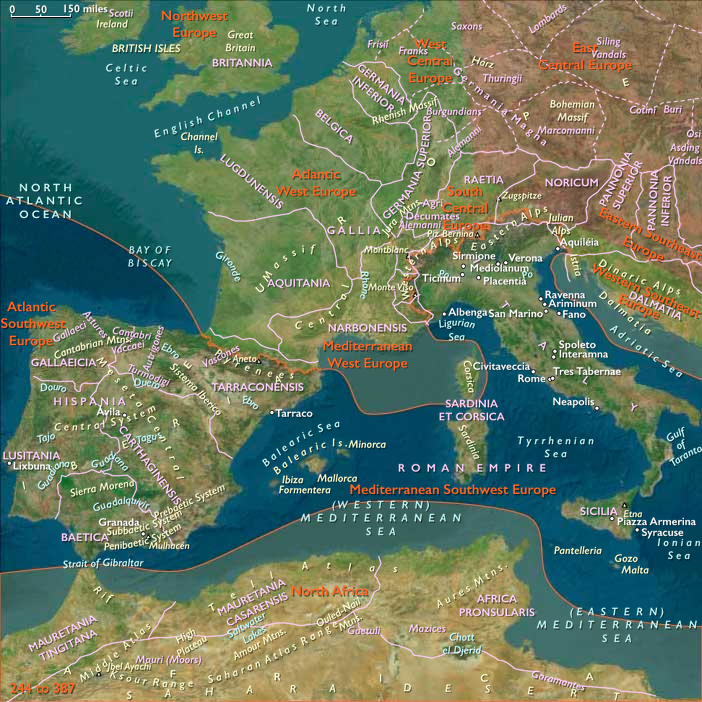
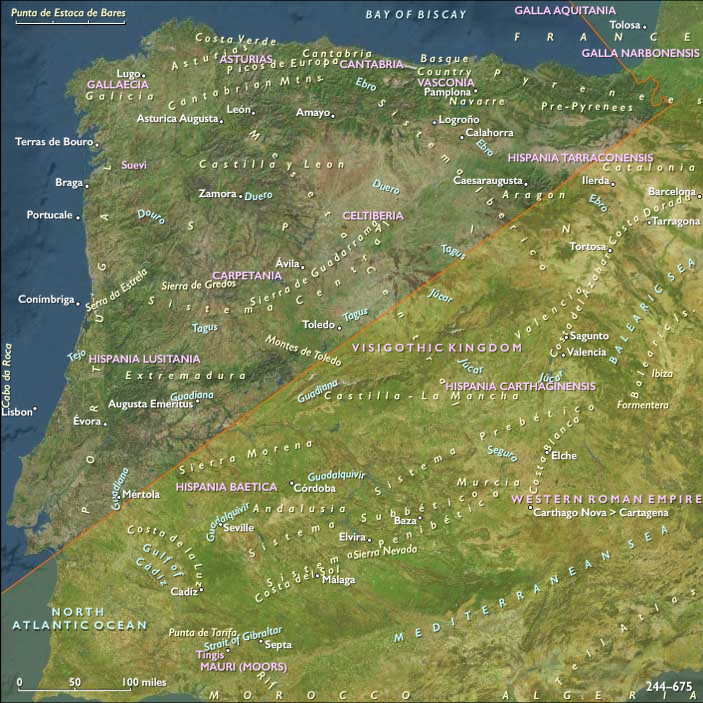
Between 376 and 387 CE, Atlantic Southwest Europe—covering northern and central Portugal, Galicia, Asturias, Cantabria, and northern Spain south of the Franco-Spanish border (43.05548° N, 1.22924° W)—encountered a period marked by increasing imperial instability and external crises, notably the Gothic incursions and the disastrous Roman defeat at Adrianople (378 CE). Despite broader turmoil affecting the Roman Empire, the region sustained considerable internal stability, economic resilience, and deepening institutionalization of Christianity. Strong local governance, adaptive economic strategies, and cultural resilience allowed Atlantic Southwest Europe to effectively navigate imperial uncertainties, solidifying its long-term regional identity.
Political and Military Developments
Continued Provincial Stability Amid Broader Imperial Crisis
-
Following Emperor Valens’s defeat and death at Adrianople in 378 CE, the empire faced severe military and political crises. However, Atlantic Southwest Europe remained largely insulated from direct external threats due to geographical distance and established regional governance systems. Local civic elites effectively managed administration, security, and economic resources, maintaining internal peace and administrative continuity.
-
Emperor Theodosius I (379–395 CE), originally from the neighboring province of Hispania, emerged as the dominant imperial authority by 379 CE, restoring a degree of central stability that further reinforced the region’s internal security and effective provincial governance.
Continued Stability and Integration of Northern Tribes
-
Northern tribes—including the Gallaeci, Astures, and Cantabri—remained stable, prosperous, and closely integrated into provincial governance structures. Their continued cooperation with provincial authorities preserved regional stability and cohesion amid broader imperial instability.
-
The Vascones successfully preserved their territorial autonomy, diplomatic neutrality, cultural distinctiveness, and internal stability, significantly contributing to regional resilience and continuity.
Economic and Technological Developments
Economic Adaptation and Continued Regional Prosperity
-
Atlantic Southwest Europe maintained economic resilience through effective local adaptation and sustainable regional strategies. Robust agricultural productivity, livestock husbandry, mining (silver, copper, tin), timber, textiles, pottery production, and resilient local trade networks preserved economic stability, despite disruptions elsewhere in the empire.
-
Provincial elites adeptly managed regional resources and imperial taxation demands, ensuring ongoing economic stability and sustainability amid changing external conditions.
Final Stages in the Transition from Slavery to Localized Labor
-
The transition away from traditional widespread slavery reached advanced stages, with regional economies relying predominantly on tenant farmers, semi-free laborers (coloni), free artisans, and localized, community-based labor systems.
Infrastructure Maintenance and Local Technological Innovation
-
Infrastructure—including roads, aqueducts, urban fortifications, public amenities, bridges, and temples—continued receiving necessary maintenance and targeted improvements, sustaining provincial connectivity, urban resilience, and economic efficiency.
-
Local technological innovations, especially in agriculture, metallurgy, and construction, supported continued productivity, resource management, and economic adaptation.
Cultural and Religious Developments
Established Dominance of Christianity
-
Christianity firmly established its dominance within the region, profoundly reshaping religious institutions, cultural identities, and social structures. Churches, bishoprics, monasteries, and urban Christian communities expanded significantly, embedding Christian leadership deeply into local governance and regional administration.
-
Bishops and clergy solidified their roles as influential civic leaders, further integrating religious authority into provincial administration and social frameworks.
Enduring Cultural Traditions and Syncretic Practices
-
Indigenous Iberian, Celtic, and traditional Roman cultural practices persisted robustly, dynamically integrated within an increasingly dominant Christian cultural context. Material culture—metalwork, jewelry, pottery, and ceremonial artifacts—continued reflecting resilient regional identities and adaptive cultural vitality.
-
Traditional ancestral rites, warrior rituals, and local festivals remained prevalent, increasingly blending Christian symbolism and practices, creating distinctive regional religious syncretism.
Civic Identity and Imperial Integration Under Theodosius I
-
Civic identity during Theodosius I’s reign balanced strong local traditions, deeply rooted Roman civic structures, and firmly institutionalized Christian affiliations. Universal citizenship continued influencing civic identity, now intertwined closely with emerging Christian regional frameworks.
Notable Tribal Groups and Settlements
-
Lusitanians: Maintained economic prosperity, vibrant cultural traditions, and profound institutional integration of Christianity, significantly influencing local governance and cultural identity.
-
Vettones and Vaccaei: Sustained regional stability, prosperity, and effective autonomy, adapting effectively to religious transformations and deepening Christian institutional influence.
-
Gallaeci, Astures, Cantabri: Continued prosperous integration and active preservation of indigenous traditions alongside firmly established Christianity.
-
Vascones: Successfully preserved diplomatic neutrality, territorial autonomy, internal stability, and cultural distinctiveness, significantly contributing to regional resilience.
Long-Term Significance and Legacy
Between 376 and 387 CE, Atlantic Southwest Europe:
-
Demonstrated remarkable provincial resilience and internal stability amid broader imperial crises, navigating external uncertainties through effective local governance, regional autonomy, and resilient civic institutions.
-
Sustained adaptive economic prosperity, significantly completing transitions away from traditional slavery toward sustainable local labor systems, establishing enduring regional economic foundations.
-
Firmly established Christianity as the dominant religious and cultural framework, profoundly reshaping social institutions, cultural identities, and governance structures, significantly influencing the region’s subsequent historical and cultural development.
This era decisively consolidated Atlantic Southwest Europe's historical legacy as a resilient, economically adaptive, culturally vibrant region experiencing profound religious and social transformation, laying enduring foundations for future regional stability, identity, and institutional continuity.
People
Groups
- Polytheism (“paganism”)
- Vascones
- Lusitanians, or Lusitani
- Vettones
- Vaccaei
- Cantabri (Celtic tribe)
- Astures (Celtic tribe)
- Gallaeci
- Hispania Tarraconensis (Roman province)
- Lusitania (Roman province)
- Hispania Baetica (Roman province)
- Gallaecia (Roman province)
- Christianity, Nicene
- Roman Empire: Constantinian dynasty (Constantinople)
- Roman Empire: Valentinian dynasty (Rome)
- Roman Empire: Theodosian dynasty (Constantinople)
Topics
Commodoties
- Oils, gums, resins, and waxes
- Grains and produce
- Textiles
- Ceramics
- Strategic metals
- Salt
- Slaves
- Beer, wine, and spirits
- Lumber
Subjects
Regions
Subregions
Years: 376 - 387
People
Groups
- Polytheism (“paganism”)
- Vascones
- Lusitanians, or Lusitani
- Vettones
- Vaccaei
- Cantabri (Celtic tribe)
- Astures (Celtic tribe)
- Gallaeci
- Hispania Tarraconensis (Roman province)
- Lusitania (Roman province)
- Hispania Baetica (Roman province)
- Gallaecia (Roman province)
- Christianity, Nicene
- Roman Empire: Constantinian dynasty (Constantinople)
- Roman Empire: Valentinian dynasty (Rome)
- Roman Empire: Theodosian dynasty (Constantinople)
Topics
Commodoties
- Oils, gums, resins, and waxes
- Grains and produce
- Textiles
- Ceramics
- Strategic metals
- Salt
- Slaves
- Beer, wine, and spirits
- Lumber
Subjects
Regions
Subregions