
Atlantic Southwest Europe (352–363 CE): Provincial Resilience …
Years: 352 - 363
Atlantic Southwest Europe (352–363 CE): Provincial Resilience Amid Imperial Turmoil and Maturing Christian Institutions
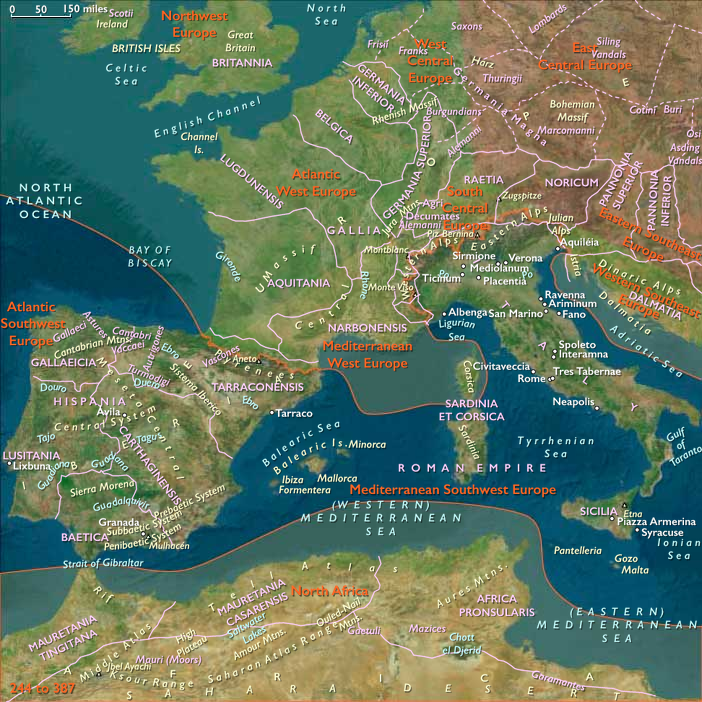
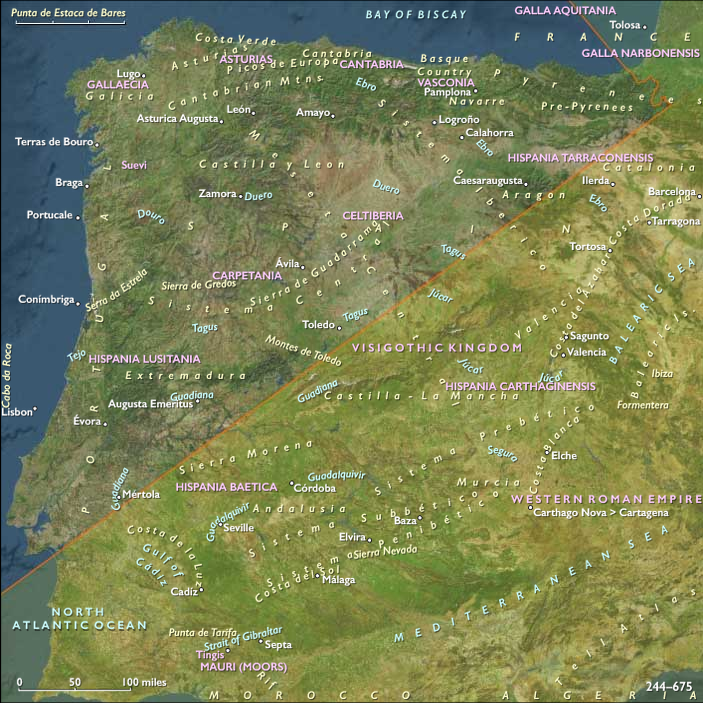
Between 352 and 363 CE, Atlantic Southwest Europe—encompassing northern and central Portugal, Galicia, Asturias, Cantabria, and northern Spain south of the Franco-Spanish border (43.05548° N, 1.22924° W)—navigated a complex period marked by imperial rivalries, military challenges, and religious shifts during the reigns of Constantius II (337–361 CE) and Julian the Apostate (361–363 CE). Despite broader imperial instability—especially following Magnentius’s failed rebellion (350–353 CE)—the region preserved significant provincial stability, economic prosperity, and cultural vitality, notably characterized by the maturing presence of Christian institutions that increasingly influenced local governance and social structures.
Political and Military Developments
Provincial Stability Amid Broader Imperial Uncertainty
-
Following Magnentius’s defeat in 353 CE, Constantius II reasserted imperial control over the western provinces, including Atlantic Southwest Europe. While central imperial authority faced continuing external threats and internal factionalism, the region benefited from established local governance structures, efficient administrative frameworks, fortified towns, and active civic elites, ensuring internal stability and effective provincial administration.
-
Julian’s brief rule (361–363 CE) and efforts to revive traditional Roman religion had limited direct impact on the region, given its geographical distance and well-established local governance systems.
Continued Stability and Integration of Northern Tribes
-
Northern tribes—including the Gallaeci, Astures, and Cantabri—remained stable, prosperous, and actively integrated into provincial governance frameworks. Ongoing collaboration with provincial authorities maintained effective regional stability and internal cohesion.
-
The Vascones successfully preserved their territorial autonomy, diplomatic neutrality, cultural distinctiveness, and internal stability, reinforcing overall regional resilience.
Economic and Technological Developments
Continued Economic Prosperity and Regional Stability
-
Economic prosperity persisted, supported by robust regional production in agriculture, livestock, mining (silver, copper, tin), timber, textiles, pottery, and sustained Mediterranean trade. Local economic structures demonstrated resilience, effectively navigating imperial taxation demands and fluctuating central authority.
-
Provincial elites skillfully managed economic resources, maintaining regional prosperity through strengthened internal commerce, efficient resource allocation, and prudent administrative strategies.
Further Transition from Slavery to Local Labor Systems
-
The shift away from traditional widespread slavery further deepened, reflecting ongoing economic and social restructuring. Regional economies relied increasingly on tenant farmers, free artisans, semi-free laborers (coloni), and community-based labor arrangements.
Infrastructure Consolidation and Technological Innovation
-
Infrastructure—roads, bridges, urban fortifications, aqueducts, temples, and public amenities—continued receiving critical maintenance and enhancements, significantly bolstering provincial connectivity, urban resilience, and economic efficiency.
-
Technological innovation persisted, particularly in agriculture, metallurgy, and construction, contributing to sustained regional productivity, economic viability, and resource management.
Cultural and Religious Developments
Mature Christian Institutions and Cultural Transformation
-
Christian institutions increasingly matured, firmly embedding themselves within local governance, social life, and cultural identities. Churches expanded, bishoprics became influential regional centers, and Christian leaders increasingly participated actively in civic administration, significantly reshaping regional social structures and cultural landscapes.
-
Traditional indigenous practices persisted robustly, particularly in rural and tribal communities, but gradually merged with, or adapted to, the expanding Christian religious context, creating distinct syncretic regional identities.
Syncretism and Continued Traditional Practices
-
Indigenous Iberian and Celtic religious traditions continued, blending dynamically with the increasingly dominant Christian religious framework. Material culture, rituals, local festivals, and social customs reflected enduring regional identities and adaptive cultural resilience.
-
Traditional ancestral rites, warrior rituals, and rural ceremonies continued robustly, though increasingly influenced and shaped by emerging Christian beliefs and practices.
Civic Identity Amid Religious and Imperial Shifts
-
Civic identity continued evolving amid imperial uncertainty and deepening Christian influence, blending local cultural traditions, Roman civic frameworks, and expanding Christian affiliations. Universal citizenship remained foundational, but local identities increasingly adapted dynamically to shifting religious and imperial circumstances.
Notable Tribal Groups and Settlements
-
Lusitanians: Sustained economic prosperity, vibrant cultural traditions, and significantly expanded Christian institutional influence, shaping local governance and regional identities.
-
Vettones and Vaccaei: Maintained regional stability, autonomy, and economic resilience, effectively adapting to religious shifts and strengthened local Christian institutions.
-
Gallaeci, Astures, Cantabri: Continued prosperous and stable integration, actively preserving indigenous traditions while embracing and adapting to expanding Christian practices.
-
Vascones: Successfully maintained diplomatic neutrality, territorial autonomy, internal stability, and cultural distinctiveness, reinforcing regional cohesion and resilience.
Long-Term Significance and Legacy
Between 352 and 363 CE, Atlantic Southwest Europe:
-
Demonstrated significant provincial resilience and stability, effectively navigating imperial uncertainty and complex administrative transitions, relying on established local governance and civic institutions.
-
Sustained economic prosperity and resourceful adaptation, further transitioning from traditional slavery toward sustainable localized labor systems, laying critical foundations for subsequent economic and social development.
-
Experienced the deepening maturity of Christian institutions, significantly reshaping social structures, regional identities, and cultural practices, profoundly influencing the region’s long-term historical trajectory.
This era reinforced Atlantic Southwest Europe's historical legacy as a resilient, economically prosperous, and culturally adaptive region undergoing significant religious and social transformations, establishing enduring foundations for future regional identities and institutions.
People
Groups
- Polytheism (“paganism”)
- Vascones
- Lusitanians, or Lusitani
- Vettones
- Cantabri (Celtic tribe)
- Astures (Celtic tribe)
- Gallaeci
- Vaccaei
- Lusitania (Roman province)
- Hispania Tarraconensis (Roman province)
- Hispania Baetica (Roman province)
- Christians, Early
- Gallaecia (Roman province)
- Christianity, Nicene
- Roman Empire: Constantinian dynasty (Constantinople)
Commodoties
- Oils, gums, resins, and waxes
- Grains and produce
- Textiles
- Ceramics
- Strategic metals
- Salt
- Slaves
- Beer, wine, and spirits
- Lumber
Subjects
Regions
Subregions
Years: 352 - 363
People
Groups
- Polytheism (“paganism”)
- Vascones
- Lusitanians, or Lusitani
- Vettones
- Cantabri (Celtic tribe)
- Astures (Celtic tribe)
- Gallaeci
- Vaccaei
- Lusitania (Roman province)
- Hispania Tarraconensis (Roman province)
- Hispania Baetica (Roman province)
- Christians, Early
- Gallaecia (Roman province)
- Christianity, Nicene
- Roman Empire: Constantinian dynasty (Constantinople)
Commodoties
- Oils, gums, resins, and waxes
- Grains and produce
- Textiles
- Ceramics
- Strategic metals
- Salt
- Slaves
- Beer, wine, and spirits
- Lumber
Subjects
Regions
Subregions