
Atlantic Southwest Europe (304–315 CE): Imperial Transitions, …
Years: 304 - 315
Atlantic Southwest Europe (304–315 CE): Imperial Transitions, Provincial Stability, and Emerging Christian Influence
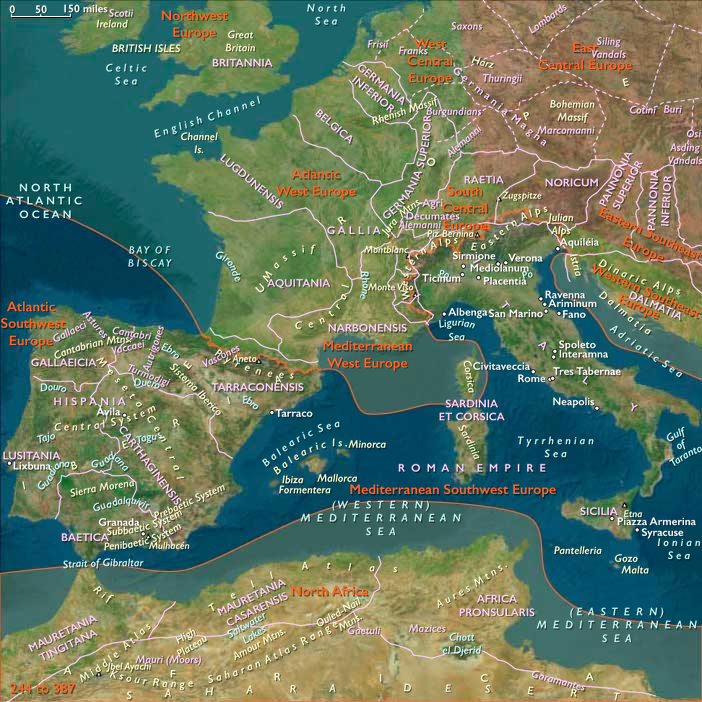
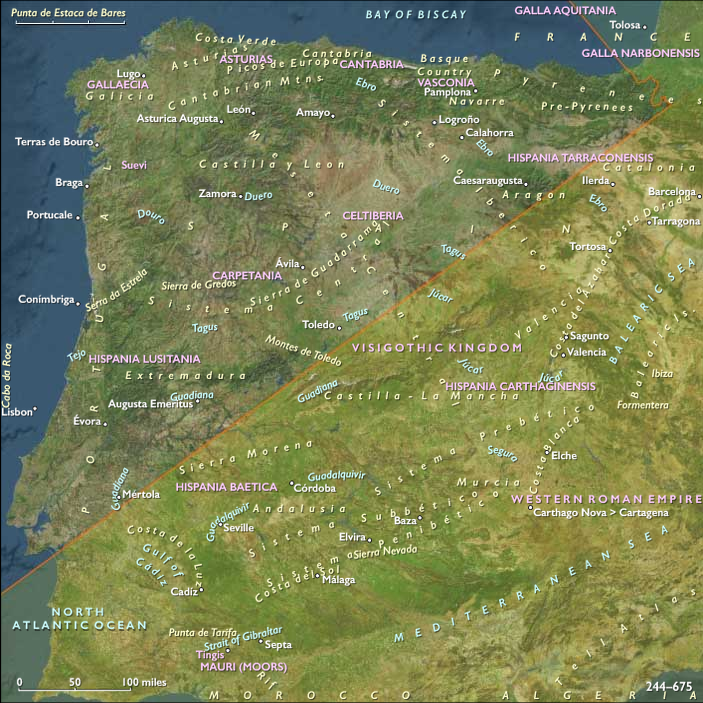
Between 304 and 315 CE, Atlantic Southwest Europe—encompassing northern and central Portugal, Galicia, Asturias, Cantabria, and northern Spain south of the Franco-Spanish border (43.05548° N, 1.22924° W)—experienced significant transformations during the final phase of Emperor Diocletian’s reign (ending in 305 CE), the collapse of the first tetrarchy, and the subsequent rise of Constantine the Great (306–337 CE). Amid these imperial transitions, the region maintained provincial stability, economic resilience, and robust cultural continuity, while beginning to encounter the early influence of Christianity, reshaping local religious landscapes and cultural dynamics.
Political and Military Developments
Stability Amid Imperial Power Shifts
-
The abdication of Diocletian in 305 CE and subsequent political struggles within the empire did not significantly disrupt Atlantic Southwest Europe’s provincial stability. The region’s well-established governance structures, local bureaucracies, fortified urban centers, and integrated tribal leadership ensured continuity of effective administration and internal peace.
-
Local civic elites continued to manage provincial affairs effectively, adapting to evolving central authorities and successfully maintaining internal order despite external uncertainties.
Continued Integration and Stability of Northern Tribes
-
Northern tribes—including the Gallaeci, Astures, and Cantabri—remained peaceful, stable, and actively integrated into provincial administration. Their cooperation with regional authorities maintained effective governance and internal cohesion.
-
The Vascones preserved territorial autonomy, cultural distinctiveness, diplomatic neutrality, and internal stability, significantly contributing to overall regional resilience.
Economic and Technological Developments
Economic Resilience and Local Adaptation
-
Atlantic Southwest Europe sustained economic resilience through increased regional self-sufficiency and internal trade networks, continuing to produce agricultural goods, livestock, metals (silver, copper, tin), textiles, pottery, and timber. Although Mediterranean trade gradually recovered under Constantine, local production remained key to economic stability.
-
Provincial elites effectively adapted to shifting economic conditions and imperial taxation policies, maintaining regional prosperity through prudent management of resources and trade relations.
Continued Decline in Slavery and Rise of Local Labor Systems
-
The transition away from traditional reliance on widespread slavery further intensified, with local economies increasingly depending on tenant farmers, free artisans, semi-free laborers (coloni), and community-based labor arrangements.
Infrastructure Maintenance and Technological Innovation
-
Maintenance and limited expansion of provincial infrastructure—including roads, aqueducts, public amenities, fortifications, and temples—continued, supporting economic efficiency, urban resilience, and administrative effectiveness.
-
Local technological innovations persisted, particularly in agriculture, metallurgy, and construction, enhancing productivity and supporting regional economic sustainability.
Cultural and Religious Developments
Persistent Cultural Identity and Early Christian Presence
-
Traditional indigenous cultures remained vibrant, dynamically blending Iberian, Celtic, and Roman influences. Material culture, including metalwork, jewelry, fine pottery, and ceremonial artifacts, continued reflecting robust regional identities and sustained cultural vitality.
-
Early Christian influences began emerging in urban centers, particularly among provincial elites and merchant communities. Christianity slowly spread along trade routes and through urban networks, initiating gradual religious and cultural transformations within the region.
Continued Ritual Practices and Religious Adaptation
-
Indigenous Iberian, Celtic, and traditional Roman religious practices persisted strongly in rural and tribal communities, reinforcing social cohesion, regional identity, and cultural continuity.
-
While traditional ancestral rites, warrior ceremonies, and local festivals remained prevalent, Christian ideas began subtly reshaping religious discourse and urban religious practices, laying foundations for later broader religious shifts.
Civic Identity and Imperial Integration under Constantine
-
Under Constantine’s early rule, regional civic identities continued reflecting a blend of local traditions and stronger imperial administrative integration. The foundational universal citizenship established by Caracalla remained influential, yet regional identities adapted increasingly to new imperial realities and emerging religious changes.
Notable Tribal Groups and Settlements
-
Lusitanians: Maintained economic stability and vibrant cultural traditions, adapting effectively to imperial transitions and emerging religious influences.
-
Vettones and Vaccaei: Preserved prosperity, autonomy, and stability, effectively managing economic and political shifts while actively engaging with early Christian influences in urban areas.
-
Gallaeci, Astures, Cantabri: Continued stable governance and active cultural resilience, preserving indigenous traditions amid evolving religious and imperial dynamics.
-
Vascones: Successfully preserved diplomatic neutrality, territorial autonomy, cultural distinctiveness, and internal stability, contributing significantly to regional cohesion.
Long-Term Significance and Legacy
Between 304 and 315 CE, Atlantic Southwest Europe:
-
Navigated complex imperial transitions effectively, maintaining significant provincial stability and administrative continuity amid broader imperial power struggles.
-
Sustained resilient economic adaptation, further shifting away from traditional reliance on slavery toward local labor systems and regional self-sufficiency.
-
Experienced initial exposure to Christianity, subtly reshaping religious practices and cultural identities, laying crucial foundations for subsequent religious transformations within the region.
This era marked a significant transitional phase, reinforcing Atlantic Southwest Europe's stability and resilience while introducing transformative religious influences, ultimately shaping its long-term cultural and historical trajectory.
People
Groups
- Polytheism (“paganism”)
- Vascones
- Lusitanians, or Lusitani
- Vettones
- Cantabri (Celtic tribe)
- Astures (Celtic tribe)
- Gallaeci
- Vaccaei
- Hispania Tarraconensis (Roman province)
- Lusitania (Roman province)
- Hispania Baetica (Roman province)
- Christians, Early
- Roman Empire: Tetrarchy
- Gallaecia (Roman province)
Commodoties
- Oils, gums, resins, and waxes
- Grains and produce
- Textiles
- Ceramics
- Strategic metals
- Salt
- Slaves
- Beer, wine, and spirits
- Lumber
Subjects
Regions
Subregions
Years: 304 - 315
People
Groups
- Polytheism (“paganism”)
- Vascones
- Lusitanians, or Lusitani
- Vettones
- Cantabri (Celtic tribe)
- Astures (Celtic tribe)
- Gallaeci
- Vaccaei
- Hispania Tarraconensis (Roman province)
- Lusitania (Roman province)
- Hispania Baetica (Roman province)
- Christians, Early
- Roman Empire: Tetrarchy
- Gallaecia (Roman province)
Commodoties
- Oils, gums, resins, and waxes
- Grains and produce
- Textiles
- Ceramics
- Strategic metals
- Salt
- Slaves
- Beer, wine, and spirits
- Lumber
Subjects
Regions
Subregions